Forty Autumns: A Family's Story of Courage and Survival on Both Sides of the Berlin Wall
Forty Autumns: A Family's Story of Courage and Survival on Both Sides of the Berlin Wall
A modern alternative to SparkNotes and CliffsNotes, SuperSummary offers high-quality Study Guides with detailed chapter summaries and analysis of major themes, characters, and more.
Summaries & Analyses
Quizzes
NEWReading Tools
Summary and Study Guide
Overview
Published in 2016, Forty Autumns is a work of narrative nonfiction by Nina Willner. A New York Times bestseller, this family memoir chronicles the true story of Willner’s family, which was divided for four decades by the Berlin Wall. It centers on the experience of Hanna, Willner’s mother, who made a daring escape from Soviet-occupied East Germany in 1948 to build a new life in America. Hanna’s parents and eight siblings remained behind the Iron Curtain under the repressive communist regime of the German Democratic Republic (GDR). Willner, a former US Army intelligence officer who led sensitive operations in East Berlin during the Cold War, draws on her professional experience as well as her personal background, to tell her family’s story.
Set against the backdrop of postwar Germany, the rise of the GDR, and the height of the Cold War, the memoir explores themes of Authoritarianism Versus the Human Spirit, Family as a Site of Security and Resistance, and The Price of Freedom. The narrative alternates between the experiences of Willner’s relatives as they navigate life under the constant surveillance of the Stasi secret police and her own story as an American intelligence officer operating just miles away on the other side of the Wall. Through her family’s decades-long struggle to maintain their bond and their dignity, Willner illustrates the human cost of ideological conflict and the resilience of familial love in the face of state-sponsored oppression.
This guide refers to the 2017 William Morrow paperback edition.
Content Warning: The source text and this guide feature depictions of graphic violence, rape, physical abuse, emotional abuse, and illness or death.
Plot Summary
Willner recalls learning as a young child that her father’s German Jewish family were killed during World War II, and that her mother’s family live far away behind the “Iron Curtain.” Confused about what this means, Willner wonders how families can be divided by a “curtain.” Willner recounts an episode when, working as an adult intelligence officer in Berlin, her vehicle is stopped by an armed Soviet officer.
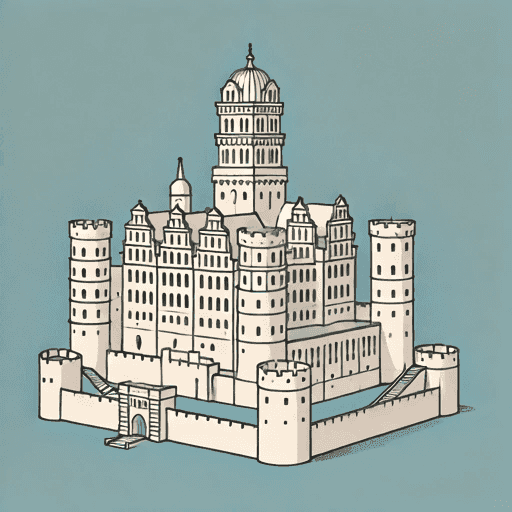
At the end of World War II in the German village of Schwaneberg, Willner’s grandmother, Oma, emerges from a cellar with her children. Her husband, Opa, a schoolteacher, and their eldest son, Roland, have been conscripted into the army. The American army arrives, bringing relief, but soon announces that Schwaneberg will fall under Soviet control. Oma decides to send her 17-year-old daughter, Hanna, to safety with the departing Americans. A flashback reveals Hanna’s spirited childhood and her fascination with a model of Heidelberg Castle built by Opa. Forced onto an American truck, a distraught Hanna jumps from the moving vehicle and runs home.
The Soviet Army arrives in July 1945, imposing harsh laws and confiscating food. As the family faces hunger, Hanna’s resentment of the new regime grows. Roland and Opa return from respective Soviet and American prisoner-of-war camps. Oma gives birth to a daughter, Helga, but a church christening is forbidden. Opa is reinstated as headmaster but must teach Soviet ideology under supervision, and Roland begins training as a teacher. To control the mass exodus to the West, the Soviets create an interzone pass system. After the birth of another daughter, Tutti, the family’s hardship increases, and 18-year-old Hanna is sent to live with her grandparents, Kallehn and Ama Marit, in Seebenau, a village near the East-West border.
Living on her grandparents’ farm, Hanna witnesses Kallehn’s struggles under Soviet agricultural laws. After a classmate is taken away by the authorities for making anti-regime jokes, Hanna resolves to leave East Germany. Her first attempt to cross the border fails when a Soviet guard sees her and fires a warning shot; Hanna is detained. Kallehn secures her release but advises Hanna to act again soon. With help from Kallehn and her aunt Frieda, Hanna successfully escapes to West Germany. In response, the authorities threaten Opa’s job. Oma travels west and persuades a guilt-ridden Hanna to return, and Oma and Hanna, joined by Aunt Frieda, sneak back across the border, narrowly avoiding arrest. Back home, a furious Opa ostracizes Hanna and places her under constant watch. Nearly a year later, as the Berlin Blockade begins, Hanna devises a plan to escape for good, pretending to agree to become a teacher.
On the pretext of attending a teacher registration in Magdeburg, Hanna prepares for her final escape. Oma discovers her packing a suitcase but says nothing, watching from a window as she leaves. On the train, Hanna joins another group of escapees, but they are ambushed by Soviet guards. Hanna evades capture and hides in a barn, where a refugee woman and her son help her. The son, who has a work permit, bribes the guards with cigarettes and pretends Hanna is his cousin, allowing her to walk safely into the West Zone on August 11, 1948.
In the West, Hanna must remain in hiding until she turns 21 and is eligible to become a legal resident. A West German policeman discovers her. He is obligated by an agreement between the two zones to return her, but he implies he will delay action, allowing her to reach legal age. Hanna travels to Heidelberg, the city of her childhood dreams. Back in the East, the GDR is founded in 1949, led by Walter Ulbricht. The Ministry for State Security, the Stasi, is formed and begins building a vast network of citizen informants. Opa becomes a marked man after writing to Ulbricht to protest the forced collectivization of farms. Hanna learns she has a new sister, Heidi, born in 1949. In 1952, the Inner German border is sealed and heavily fortified. Hanna secures a job as a bilingual secretary at the US Army headquarters in Heidelberg.
Following Stalin’s death, the GDR regime imposes higher production quotas, leading to the Workers’ Uprising, June 16-17, 1953. The Red Army violently crushes the rebellion. Oma is granted permission to visit Hanna on the condition that she pressure her daughter to cooperate with East German authorities. In 1954, Oma and five-year-old Heidi travel to Heidelberg for an emotional reunion, the only time the sisters meet until the reunification of Germany. Because Oma fails to recruit Hanna as a spy, future travel requests are denied. At her job, Hanna meets Lieutenant Eddie Willner, a US Army intelligence officer and Holocaust survivor, and they begin a relationship. In the East, life normalizes under the police state, and the children join state-run youth movements. In the West, Hanna and Eddie get engaged.
Hanna sends Oma a horse-hair coat, which arrives despite mail censorship. Concerned about the safety of Eddie’s engagement to a former East German citizen, US Army superiors expedite Hanna’s American citizenship. She and Eddie marry in Heidelberg in 1958 without her family present. The Stasi grants Oma and Opa permission to visit, instructing Opa to gather intelligence on his new son-in-law. The two-day visit is joyous, and Opa makes peace with Hanna’s decision. He returns having learned nothing for the Stasi, earning another “black mark.”
The Stasi sends Opa’s nephew to spy on Eddie, but the nephew confesses and defects to the West. Kallehn dies, having seen his farm collectivized against his will. Hanna and Eddie move to the United States and have their first child, Albert. The author of Forty Autumns, Nina Willner, is born in 1961. That August, the East German regime constructs the Berlin Wall, sealing the final route between East and West. Horrified, Hanna watches the news from Kansas. Fearing permanent separation, Oma establishes the “Family Wall,” a conceptual sanctuary of love and loyalty. Hanna’s younger brother, Kai, is conscripted and assigned as a border guard at the Wall. The world watches in horror as—in a famous historical incident—18-year-old Peter Fechter is shot and left to bleed to death while trying to scale the Wall. Opa’s continued defiance and anti-regime jokes lead to his denunciation and firing from his job. The family are expelled from the Communist Party, membership of which confers social and legal acceptance. Opa, Oma, and Heidi are banished to the remote hamlet of Klein Apenburg.
The family tries to adjust to a life of isolation and poverty. Opa sinks into a depression but slowly recovers with Oma’s care. Heidi is forced to drop out of high school and comes to idolize Hanna for her courage. After being denied jobs for not being a party member, Heidi marries Reinhard, who also refuses to join the party. They eventually find work in Karl Marx City. In 1970, Heidi gives birth to Cordula. In 1973, Hanna makes an emotional first phone call to Oma, the first in 15 years. The family learns that Kai is dying from a rare blood disorder, for which they cannot access medical treatment.
In the mid-1970s, mail restrictions briefly relax, allowing for the first regular correspondence and exchange of packages between Hanna and her family in nearly two decades. Roland is denied a promotion due to the family’s “politically unreliable” status, enraging Opa, who again begins to openly criticize the regime. The authorities commit him to a psychiatric facility for “reeducation.” Kai dies and Oma’s health fails. In a prophetic moment, she tells Heidi that justice will prevail and the family will one day reunite with Hanna. Opa is released, silenced by his experience. Oma dies on June 1, 1978. A month later, Hanna’s 18-year-old son, Albert, makes a surprise, unauthorized trip to East Germany for a joyous reunion. Cordula is recruited into the elite East German sports program. Heidi and Reinhard are awarded an allotment garden, where they build a small cabin, their “Paradise Bungalow,” which becomes a private sanctuary.
The narrative shifts to the author, Nina Willner, who becomes a US Army intelligence officer assigned to Berlin in 1982. She becomes the first woman to lead an intelligence team’s operations in East Berlin. She recalls meeting Major Arthur Nicholson of the US Military Liaison Mission who was later shot and killed by a Soviet sentry in March 1985, considered to be the Cold War’s last American casualty. During this time in the East, Opa dies, and Cordula switches from swimming to cycling. To protect Cordula’s burgeoning athletic career, Heidi severs contact with Hanna. On a mission, Willner’s team is detained at gunpoint by Soviet soldiers, but she bluffs her way out. After running the Berlin Marathon, Willner leaves the city.
In 1987, President Reagan delivers his “Tear down this Wall” speech. Cordula travels to the West for athletics competitions. Roland dies. Pro-democracy movements sweep Eastern Europe, and Hungary opens its border, allowing thousands of East Germans to flee. Public demonstrations erupt across the GDR. On November 9, 1989, an official mistakenly announces that all travel restrictions have been lifted with immediate effect. Crowds rush the border, and overwhelmed guards open the gates. The Berlin Wall falls. A few weeks later, Heidi and Reinhard drive into West Germany for the first time.
In the spring of 1990, Hanna flies to Germany for an emotional reunion with her siblings after more than 40 years. The family visits the graves of their parents and deceased brothers and tours significant locations from their past. In 2013, the extended family holds a large reunion. Willner, Albert, and Cordula run the now-unified Berlin Marathon together, finishing at the Brandenburg Gate.

Get in-depth, chapter-by-chapter summaries and analysis from our literary experts.
- Grasp challenging concepts with clear, comprehensive explanations
- Revisit key plot points and ideas without rereading the book
- Share impressive insights in classes and book clubs