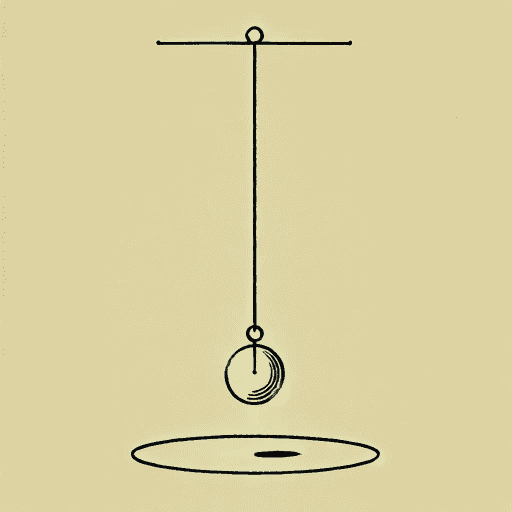
Foucault's Pendulum
73 pages • 2-hour read
Umberto EcoFoucault's Pendulum
A modern alternative to SparkNotes and CliffsNotes, SuperSummary offers high-quality Study Guides with detailed chapter summaries and analysis of major themes, characters, and more.
Summaries & Analyses
Quizzes
NEWReading Tools
Summary and Study Guide
Overview
Originally published in Italian in 1988, Foucault’s Pendulum is a postmodern conspiracy thriller by Italian author Umberto Eco. Eco, a scholar of semiotics, culture, and medieval philosophy, was best known for writing stories that investigated the overlap between these topics, such as his 1980 historical mystery novel, The Name of the Rose.
Foucault’s Pendulum concerns Casaubon, Belbo, and Diotallevi, three editors at an Italian publishing house who devise a grand narrative of world history based on conspiracy theories relating to the secret society of the Knights Templar. When this narrative, called “The Plan,” falls into the hands of the editors’ occult acquaintances, they realize that their fiction accidentally contains dangerous slivers of real-world truth. Eco uses this story to investigate humanity’s constant search for meaning, the instability of human history and memory, and curiosity as a virtue in contrast to the vice of pride.
This study guide refers to the paperback new edition of the novel, translated into English by William Weaver and published by Vintage in 2001.
Content Warning: This study guide and its source material feature depictions of graphic violence, illness, death, emotional abuse, religious discrimination, sexual content, antigay bias, animal death, racism, and anti-Semitism.
Plot Summary
The novel begins in medias res and is framed as the recollections of narrator Casaubon while he hides in the periscope display at the Musée des Arts et Métiers in Paris, which chronologically occurs toward the end of the narrative. For the sake of clarity, this summary will discuss the plot in chronological order.
In the early 1970s, a University of Milan student named Casaubon meets Jacopo Belbo and Diotallevi, both of whom are editors at a publishing house called Garamond Press. When Belbo learns that Casaubon is studying the Knights Templar, he consults Casaubon to assess new manuscripts on the same topic. This includes a manuscript from a man named Colonel Ardenti, who claims he has recovered a deciphered text that outlines the Templars’ plan for resurgence, following their supposed dissolution in the 14th century. Shortly after he presents his findings to the editors, Ardenti mysteriously disappears and is believed to have been murdered. Belbo archives Ardenti’s manuscript, fearing that Garamond may be implicated in the crimes surrounding Ardenti’s disappearance.
Casaubon moves to Brazil with his partner, Amparo, and makes the acquaintance of an elderly art collector named Signor Agliè. Through their frequent interactions, Casaubon gets the impression that Agliè is trying to make people believe that he is the Comte de Saint-Germain, a historical occultist rumored to have achieved eternal life. Casaubon becomes interested in a secret society called the Rosicrucians, believing there is a link between them and the Templars. After Amparo leaves him, Casaubon returns to Milan and starts working for Garamond as a researcher.
The owner of Garamond Press, Signor Garamond, conceives of a publication project centered around occult studies, which he calls Project Hermes. Though Casaubon, Belbo, and Diotallevi receive stacks of submissions for the project, they decide to hire a consultant to help them assess the strength of the manuscripts. Casaubon suggests Agliè for this purpose. Belbo becomes enamored with a woman named Lorenza Pellegrini, who frequently shows interest in other men. This includes Agliè, who is implied to have an intimate relationship with Lorenza because of the nicknames they have given each other. Though Belbo is mortified, he agrees to work with Agliè for the sake of the project. Eventually, the impulsive and vindictive Belbo sabotages his relationship with Lorenza during a visit to the rural town where Belbo grew up.
As Casaubon, Belbo, and Diotallevi read more occult manuscripts, Belbo gets the idea to feed some of their pages into his computer, which he calls Abulafia, to detect the hidden connections between them. The output becomes the foundation for an academic game the three editors start playing, which they call “The Plan.” The Plan revises world history from the perspective of the Knights Templar and suggests that every major development across the world is subtly related to the quest to possess the Templars’ secret knowledge. They conclude that the Templars’ Plan was to channel the Earth’s magnetic energies (or telluric currents) to reshape the continents and rule the world. Though the map to the Templars’ telluric control point was historically lost, the three editors reconstruct a navigational system using the Foucault’s pendulum to trace the currents’ movements.
Casaubon manages to distance himself from the Plan when his girlfriend, Lia, gives birth to their son, Giulio. Diotallevi, meanwhile, begins to show signs of illness and Belbo becomes increasingly obsessed with the Plan, connecting the Templars’ secret to modern developments such as Nazism and the construction of the Eiffel Tower. Shortly after being admitted to the hospital, Diotallevi takes a leave from work, disclosing that he has a tumor and must undergo treatment. A frustrated Belbo decides to tease Agliè with the Plan, passing it off as personal knowledge of the map that leads to the Templars’ secret control point. To extort the secret map from him, Agliè frames Belbo in a foiled terrorist plot, sending Belbo on the run to Paris. Diotallevi believes that their troubles are a form of divine retribution for creating the Plan. Belbo calls Casaubon and asks him for help.
Casaubon learns what happened to Belbo when he reviews Belbo’s files on Abulafia. He follows Belbo to Paris and waits in the periscope at the Musée des Arts et Métiers to attend a secret ritual taking place under the Foucault’s pendulum installed there. At midnight, an occult group led by Agliè tries to interrogate Belbo, who defiantly resists questioning. One of the other occult leaders discredits Agliè by summoning the spirit of the real Comte de Saint-Germain, and the gathering breaks into riot that results in Lorenza and Belbo’s deaths. That same night, Diotallevi dies of illness as well.
Casaubon escapes to Belbo’s family home in the countryside, where he discovers that Belbo experienced a direct connection to the origin point of the universe as a child. This reframes Belbo’s actions, which suggest he has spent his entire life trying to return to this transcendent experience. Anticipating that Agliè’s cult will try to pursue him, Casaubon surrenders himself to the inevitability of death and resolves to emulate Belbo’s grace and bravery.

Unlock all 73 pages of this Study Guide
Get in-depth, chapter-by-chapter summaries and analysis from our literary experts.
- Grasp challenging concepts with clear, comprehensive explanations
- Revisit key plot points and ideas without rereading the book
- Share impressive insights in classes and book clubs