56 pages • 1-hour read
Frederick Douglass: Prophet of Freedom
A modern alternative to SparkNotes and CliffsNotes, SuperSummary offers high-quality Study Guides with detailed chapter summaries and analysis of major themes, characters, and more.
Key Figures
Frederick Douglass
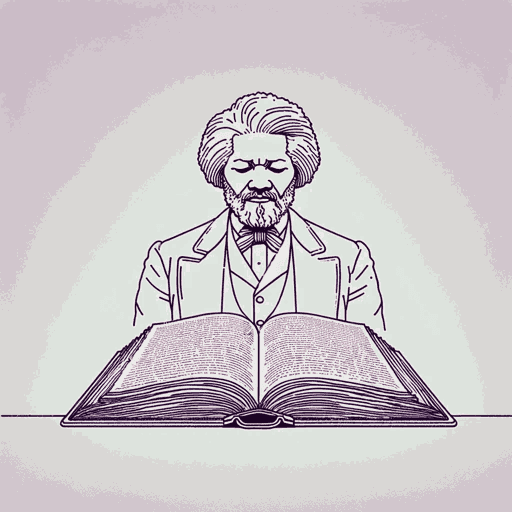
The son of a Black enslaved mother and a White father, Douglass spends much of his life trying to figure out his identity. When a kind mistress teaches him to read, the young Douglass realizes that literacy is the key to his freedom. He is sharp-witted and takes every opportunity to better his situation. Psychologically, Douglass never allows himself to be beaten into submission by the system and, quite literally, beats a slave master in a physical brawl.
This combination of physical and intellectual toughness leads Douglass to successfully escape slavery. His dreadful early experiences leave a lasting impression and become the defining theme of his abolitionist writing and speeches. Douglass is in the unique position of having experienced slavery firsthand and is articulate enough to convey the horrors of the institution to abolitionist sympathizers everywhere. He devotes the rest of his life to combating what he calls the Slave Power of the South. By the end of his life, he is regarded as the most important figure in the fight for Black emancipation.
Thomas Auld
Auld is a slave owner who inherits Douglass from the estate of his deceased wife, Lucretia. During his early years, Douglass views Auld as weak-willed and hypocritical. Although the slave owner finds religion, he never considers freeing his enslaved people because of it. Paradoxically, Auld is responsible for a life-changing opportunity that eventually leads to Douglass’s freedom. Rather than selling the young man to a Deep South plantation after an abortive escape attempt, Auld offers to free Douglass when he reaches the age of 25.
After his escape, Douglass spends years attacking Auld in print as the quintessential abusive slave master. However, the two men reconcile when Auld is near death. The old man tells Douglass he was always too smart to be an enslaved person, which Douglass views as validation. There is some speculation among historians that Auld is Douglass’s biological father.
Anna Murray Douglass
Anna is Douglass’s wife of more than four decades. During that time, she keeps the home fires burning and the children fed while her famous husband is out making speeches. Anna is a shadowy figure in Douglass’s story because he hardly ever mentions her in his writing. She is illiterate and is framed here as showing less interest in the life of the mind than some of Douglass’s other female companions.
Anna is an able manager of domestic affairs and supports her husband in his life’s work. Surprisingly, she tolerates houseguests who may be romantically involved with him. Her own views about Douglass and these women must remain forever a mystery because so little documentation remains about her life. When she dies of a stroke in her 60s, her husband is inconsolable at the loss of the woman who provided a solid foundation for his life.
William Lloyd Garrison
Garrison represents a constructive father figure for Douglass. As the publisher of the country’s most prominent abolitionist newspaper, he wields significant influence and takes Douglass under his wing to launch the former enslaved person’s career as a public speaker. Unlike Douglass, Garrison is a political idealist and a moral absolutist. He demands the immediate emancipation of enslaved people and votes for women. He sees the Constitution as a corrupt document and advises complete withdrawal from politics as a means of effecting change. He also condemns churches for their collusion in perpetuating slavery. Because Garrison preaches pacifism and political disengagement, he eventually parts ways with Douglass philosophically. For years, his faction wages a smear campaign against his former protégé.
Ottilie Assing
Ottilie is an attractive, freethinking German journalist who becomes infatuated with Douglass when she first reads his biography. For more than two decades, she is a frequent guest at Douglass’s home and an active correspondent. Many biographers have speculated that she and Douglass were lovers. In letters to her sister, she frequently implies that Douglass would marry her if he were single. Her letters indicate her attachment to him and her contempt for his wife. When Ottilie develops breast cancer, she chooses to drink a vial of cyanide rather than face a lingering death. Because she orders all her correspondence with Douglass to be destroyed after her suicide, it is difficult to gauge the level of Douglass’s reciprocal attachment to her.
Helen Pitts Douglass
Helen first works as Douglass’s secretary after Anna’s death and becomes his wife a few years later. She is White, well-educated, in her 40s, and comes from a liberal Yankee family. Despite her family’s abolitionist sentiments, they ostracize Helen after her marriage. Douglass’s children aren’t happy with the arrangement either. Family opposition notwithstanding, Helen and Douglass maintain a happy marriage until his death ten years later. Helen is chiefly responsible for preserving her husband’s literary legacy after his passing. In Helen, Douglass finds the perfect combination of a practical and intellectual mate.

Unlock analysis of every key figure
Get a detailed breakdown of each key figure’s role and motivations.
- Explore in-depth profiles for every key figure
- Trace key figures’ turning points and relationships
- Connect important figures to a book’s themes and key ideas