Freewater
Freewater
A modern alternative to SparkNotes and CliffsNotes, SuperSummary offers high-quality Study Guides with detailed chapter summaries and analysis of major themes, characters, and more.
Summaries & Analyses
Quizzes
NEWReading Tools
Games
Themes
The Challenges of Enslavement and Escape
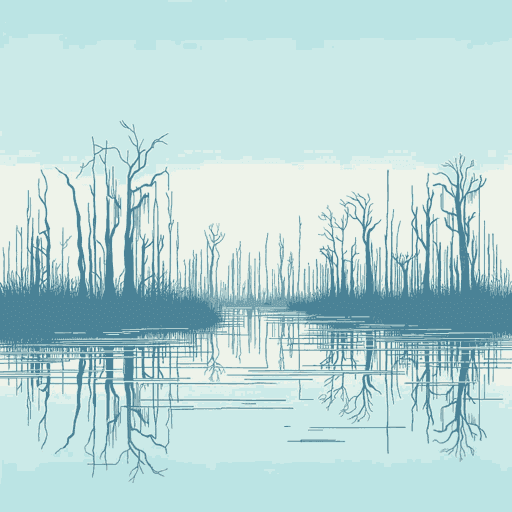
When Homer and Ada escape Southerland plantation into the swamp, Ada wonders if “monsters” exist, and at first, Homer understands this as her overactive imagination. However, “monsters” of various forms do exist: The siblings are actively fleeing overseer Stokes, the Crumbs, and enslavement itself. The “monsters” in the swamp—snakes and other unseen threats—are not nearly as daunting as enslavement. In fact, Freewater embraces the swamp as “Mother Swamp,” a safe haven that provides all they need to survive and remain free. Whereas Stokes’s brother-in-law Ron refuses to return to the swamp, saying “the devil himself couldn’t live in that place” (76), Homer knows the “devil” (enslavement) doesn’t reside in the swamp. Having never left Freewater, Sanzi and other children born there speculate “two-headed men, turtles without shells, and skeletons that rose from the dead” (vii-viii) exist outside. While inaccurate, this speculation succeeds in framing enslavement as a truly inhumane system.
Through Homer, Ada, and others’ flashbacks to their enslavement, as well as Rose and Anna’s current enslavement, the system is framed as difficult to escape. Plantations are heavily staffed and surrounded by either treacherous swampland or white strangers, eager to threaten and capture Black people lacking freedom passes. Enslaved people like Old Joe are too old to attempt the journey, while others are ill or injured. The journey to Freewater is difficult, but the journey North is even more so. Some people don’t want to escape without their families, but doing so with babies or children complicates the process. Rose didn’t tell Homer and Ada about her escape plan ahead of time, likely because the younger Ada wouldn’t have understood the need for urgency or secrecy. To avoid losing profit, plantation owners like Mr. Crumb do everything in their power to capture people who escape, then abuse them, sometimes publicly, to deter others from trying to escape. This happens to Rose, who is beaten for trying to flee with her children.
Successful escape doesn’t guarantee safety, as Freewater must remain on guard to ensure their continued safety and welcome new members. The residents and Suleman have a sense of responsibility to their community, as the continued existence of enslavement is unacceptable to them. Suleman actively creates diversions at plantations, giving people a better chance to escape, then guides them to Freewater—with Homer’s friends continuing his work with their own rescue. As for Nora, the Crumbs’ youngest daughter who was raised by Rose, she wrestles with the monstrosity of enslavement once she sees Rose abused. She realizes her family is complicit in an inhuman system, and actively resists becoming like them. Despite her relative lack of authority, she learns to forge passes for Rose, one such pass helping Anna escape instead. Most of Freewater’s characters provide hope that, over time and through various contributions, enslavement can end.
Familial Impact on Enslavement and Freedom
The notion of family impacts both enslavement and freedom, and vice versa. In the US, if an enslaved woman gave birth to a child, the child was also considered the “property” of their mother’s enslaver; the father’s status, whether enslaved or an enslaver, did not matter. This means plantation owners sometimes enslaved their own children, born of their sexual assault of enslaved women. It’s implied Crumb is Ada’s father because she shares his skin color and spots. Rose’s experience as an enslaved mother is complex because she wants to protect Homer and Ada, but also wants to see them free. Because she knows the penalties for failed escape attempts, she didn’t attempt to run with her children until Mrs. Crumb started abusing Ada out of frustration with her husband’s infidelity. She weighs the risks and decides an escape attempt is worth it. When this attempt fails, Rose is punished and Homer is left to wrestle with guilt for wanting Anna to join their escape.
The notion of family also impacts that of freedom. For example, Homer does not feel truly “free” at Freewater because Mama isn’t safe with him and Ada. However, after rescuing her, he finally feels “free” with his family and friends together. The concept of family in Freewater is also expansive: Both related and unrelated people live and dine together, taking care of each other and the community as a whole. When completing tasks such as building cabins and sky bridges, the residents form teams and enforce safety through rules—out of necessity and solidarity. While planning Mama’s rescue, Homer finds strength in this solidarity, his new family.
In contrast to Homer’s family, whose narrative is relatively straightforward, characters like Turner (Two Shoes) and Billy’s father Ibra were forced to act against other enslaved people—including their own families. Turner remarks “Lord only knows how many of us they keep from running, how many of us stay in these hateful places out of love” (344). In other words, many people, who are otherwise equipped to escape, find it impossible because they don’t want to be separated from loved ones. Turner directly served Crumb and spies on Freewater on his behalf in the hopes of being reunited with his son Desmond, who was sold elsewhere. However, he ultimately chooses to let go of Desmond—specifically, a chance at finding him—and prioritizes the well-being of his wife, Sally, and daughter, Minnie—who are within reach. Moreover, he chooses the well-being of Freewater, his new family. While enslaved, Ibra was given “special” tasks like Turner, forced to brand other enslaved people—including his son Billy. He and Billy didn’t want to escape their plantation without Billy’s mother, but she insisted they do so because she wanted her son to be free. Turner and Ibra’s experiences show how plantation owners often weaponized familial love to control both enslaved and formerly enslaved people.
The Power of Hope
Ada believes in both terrifying “monsters” and wondrous feats like “flying.” Homer dismisses her ideas as overimaginative, but after a couple days in the swamp, he “half felt like [he] was starting to live in one of her imaginings” (70). He doesn’t share the younger’s childlike belief in the “impossible,” his idea of “possible” being constructed by his life in enslavement. For example, when he sees Suleman wearing one of Crumb’s shirts, this is more shocking to him than his ability to “fly” by swinging from ropes or walking on sky bridges. Ada’s belief in the impossible might seem childish, but it’s a necessary skill in Freewater, as imagination leads to innovation, different ways to survive and thrive in the swamp. The residents consider “impossible” dangers, worst-case scenarios, so they can protect themselves. Whereas Rick and Ron’s belief that it’s impossible to survive the swamp prevents them from discovering Freewater, the residents’ belief that survival is possible allows them a safe haven.
The people of Freewater “fly” by climbing and swinging from trees, as well as walking on bridges suspended between trees. Ada’s so-called “tree people” aren’t “monsters” like she heard, but Freewater patrollers camouflaged with mud and greenery. Residents avoid and resist enslavers by preying on their fear: They are viewed as escaped “property,” but take on a folkloric quality with their survival tactics. While physically enslaved, formerly enslaved people like Suleman knew their minds didn’t have to be; the freeing of one’s mind was the first step to freedom. A successful escape is, in itself, a miracle, and can lead to further pursuit of the impossible, especially when one has a community to protect. To emphasize the power of hope, some children in Freewater are given names like Hope. Likewise, Mrs. Light chose a name befitting the feeling of freedom and often prays to “Mother Swamp.” Like Ada’s belief in the “impossible,” the residents recognize the swamp’s potential for danger and protection.

Unlock every key theme and why it matters
Get in-depth breakdowns of the book’s main ideas and how they connect and evolve.
- Explore how themes develop throughout the text
- Connect themes to characters, events, and symbols
- Support essays and discussions with thematic evidence