Garden Spells
48 pages • 1-hour read
Sarah Addison AllenGarden Spells
A modern alternative to SparkNotes and CliffsNotes, SuperSummary offers high-quality Study Guides with detailed chapter summaries and analysis of major themes, characters, and more.
Symbols & Motifs
Content Warning: This section of the guide includes discussion of death.
The Apple Tree
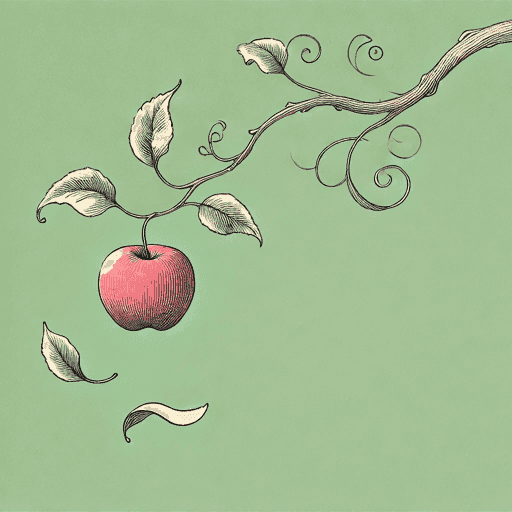
The apple tree serves as a symbol of the magical elements in the novel, indicating a world where plants can have special properties and impacts. The apple tree’s active, seemingly sentient presence indicates how these properties can be consciously used or distributed to manipulate a person’s feelings and, by extension, their emotions, contributing to the theme of The Appropriate Exercise of Talent. Given the fortune-telling properties of its fruit, the tree also functions as a kind of foreshadowing in the novel; just as when Evanelle gives gifts to people, the apple tree’s efforts to dole out its apples to a specific target signal that something is about to happen. The apple tree also represents the Waverley family, indicating with its rootedness their longevity in the town and representing the particular brand of Waverley magic.
Claire describes the tree this way: “It wasn’t very tall, but it grew long and sideways. Its limbs stretched out like a dancer’s arm and the apples grew at the very ends, as if holding the fruit in its palms. It was a beautiful old tree, the gray bark wrinkled and molting in places” (36-37). It isn’t explained how or when the Waverleys discovered that eating an apple gives someone a vision of the most important event in their life, but their efforts to keep other people from eating the tree allow the novel to debate the appropriate exercise of talent and whether the ability to know the most important event of one’s life is a privilege or a danger.
The tree becomes an amusing if unexpected character, suggesting a nurturing aspect to its efforts to give apples to Bay and a mischievous cast to its interactions with Claire, including a hint of smugness after she spends the night in the garden with Tyler. It’s also hinted that the tree already knows what the eater will see, for it’s suggested that the tree tried to keep its apples from Lorelei but made extra effort to share them with Tyler and David. The sentience of the tree and its human qualities overall support the novel’s suggestion that the ability to influence others should be applied with care, and if plants or growing things can have such important properties, they should be treated with respect.
Claire’s Cooking
Claire’s cooking serves as an introduction to the special properties of plants grown in the Waverley garden and becomes an early symbol of the Waverley heritage, which is to possess potentially magical abilities or skills. Fred observes that Claire is the first Waverley to share her magical plants and, through them, her special talent, which suggests Claire is bringing her own personality to bear on the Waverley traditions.
While Claire understands the special properties attributed to each plant and can design a menu and flower arrangement accordingly, the actual impact of her food and wines is unique to the person who consumes it. The rose geranium wine, for instance, recalls good times to whomever drinks it, but whatever memory it taps depends on the drinker. The bachelor buttons that allow one to see more clearly help Tyler be more perceptive and understanding of Claire’s confusion over her physical attraction to him. The mint and lemon balm she adds to the desserts at Emma and Hunter John’s party inspires the diners to feel remorse over uniting to embarrass and taunt Sydney. In this way, Claire’s cooking is not simply an act of nurture or display but a way to support connections between people, contributing to the theme of Healing Generational Wounds. However, just as with any offering, there can be unintended consequences: The honeysuckle wine served at the Fourth of July celebrations helps sharpen people’s sight to see in the dark, but it also leads to secrets being revealed. Claire’s cooking symbolizes that magical enhancement is really, most often, a metaphor for human nature and a language for describing the human condition.
Evanelle’s Gifts
Evanelle’s gifts serve as a motif of the Waverleys’ magical skills, but the way she uses them also models the appropriate exercise of talent. It also serves as foreshadowing for events in the book, creating suspense around the use to which the objects Evanelle dispenses will be put. More broadly, the role of Evanelle’s gifts is to create understanding and connection between characters, showing the importance of relationships and mutual support to human life and health.
Evanelle’s gifts always turn out to be valuable in some time of challenge or in making an important connection. The Bic lighter she gives Claire encourages her to approach Tyler for the first time, while the bedsheets and Pop-Tarts equip Claire for welcoming Sydney and Bay into her home. The maraschino cherries she gives Henry offer him a way to invite Sydney and Bay to his house, re-establishing their friendship and, in time, a deeper connection. The condoms she gave Luanna Clark would, if used, have prevented a pregnancy that exposed Luanna as unfaithful to her husband, causing her public shame. The mango splitter Evanelle gives to Fred offers him a reason to attend Steve’s cooking class when Fred badly needs to meet new people and find ways to rebuild his confidence. Even when the object has no visible function, like the brooch she gives Bay, Evanelle’s items turn out to be useful, as the brooch helps Bay find a sense of security in living in Bascom. While they add amusement to the plot, Evanelle’s gifts also support the theme of using one’s talents and abilities to help others.

Unlock the meaning behind every key symbol & motif
See how recurring imagery, objects, and ideas shape the narrative.
- Explore how the author builds meaning through symbolism
- Understand what symbols & motifs represent in the text
- Connect recurring ideas to themes, characters, and events