Garden Spells
48 pages • 1-hour read
Sarah Addison AllenGarden Spells
A modern alternative to SparkNotes and CliffsNotes, SuperSummary offers high-quality Study Guides with detailed chapter summaries and analysis of major themes, characters, and more.
Themes
Content Warning: This section of the guide includes discussion of physical abuse, emotional abuse, and death.
The Influence of Place on Identity
One of the novel’s first introductions to Claire describes how she felt, as a child newly arrived in Bascom, to be identified as part of the Waverley family; her response is nearly euphoric. The narrator goes on to say, “[F]rom that day on she would follow her grandmother out into the garden very morning, studying her, wanting to be like her, wanting to do all the things a true Waverley did to prove that, even though she wasn’t born here, she was a Waverley too” (9). Claire’s longing to be identified as part of this family introduces the theme of how a place can shape a person’s identity and the ways the expectations of a place can be confining, supportive, or liberating.
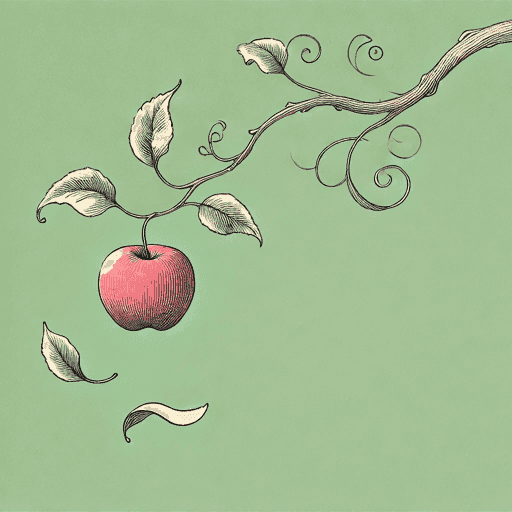
Claire’s personal example of imitating her grandmother shows how the land they live on contributes to the identity of the Waverleys, whose reputation in Bascom has been established around their apple tree’s power and the gifts that Waverley women seem to inherit. Being a Waverley outside of Bascom has no meaning without the town legend that Waverleys possess special gifts. This identity is rooted not just around the apple tree but also in the garden; as Claire notes, “Generations of Waverleys had tended this garden. Their history was in the soil, but so was their future” (5). Claire’s identity is wrapped around the Waverley home and gardens, and the local cultural knowledge that goes along with their place in the town.
Sydney, on the other hand, provides an example in the novel of how the link between place and identity can become oppressive. The reputation that Waverleys were odd or strange led to loneliness for her as a child, when Henry Hopkins—whose family has a reputation of its own—was her only friend. Later, Sydney understood that her identity as a Waverley was part of the reason that Hunter John didn’t want a future with her. He used the excuse of incompatible family identities to end their relationship, telling Sydney that he had an obligation to uphold his own family name and breaking her heart in the process. For Claire and Hunter John, identification with the family name has had a positive effect, leading to business opportunities and respect from the community. But Sydney found this link to a family name painful and rejected it when she left Bascom, taking the name Cindy Watkins—a name that had no associations with her family, her hometown, or the Waverley reputation.
While Sydney gradually comes to terms with her place in Bascom, in the family, and as a Waverley—an acknowledgement helped when Claire attributes Sydney’s gift with hair to part of the Waverley magic—Bay illustrates how a person can, rather than inheriting associations, use a location to consciously shape their identity or place of belonging. Throughout the novel, Bay seeks to replicate an image she has of lying beneath the apple tree, hearing the rustle of papers, and seeing small flecks of colored lights on the surfaces around her. She is convinced that, if she can recreate this scene, she can confirm that she belongs in this new place. She’s seeking signs that she can safely associate herself with this new family situation and find the nurturance and security that were missing from the home with her abusive father. For Sydney, Claire, and Bay, the sense of belonging they seek is centered around and defined by their family garden and its apple tree, symbolizing how an individual identity and a family heritage can be deeply tied to a specific place.
The Appropriate Exercise of Talent
One of the novel’s first introductions to Claire describes how she felt, as a child newly arrived in Bascom, to be identified as part of the Waverley family; her response is nearly euphoric. The narrator goes on to say, “[F]rom that day on she would follow her grandmother out into the garden very morning, studying her, wanting to be like her, wanting to do all the things a true Waverley did to prove that, even though she wasn’t born here, she was a Waverley too” (9). Claire’s longing to be identified as part of this family introduces the theme of how a place can shape a person’s identity and the ways the expectations of a place can be confining, supportive, or liberating.
Claire’s personal example of imitating her grandmother shows how the land they live on contributes to the identity of the Waverleys, whose reputation in Bascom has been established around their apple tree’s power and the gifts that Waverley women seem to inherit. Being a Waverley outside of Bascom has no meaning without the town legend that Waverleys possess special gifts. This identity is rooted not just around the apple tree but also in the garden; as Claire notes, “Generations of Waverleys had tended this garden. Their history was in the soil, but so was their future” (5). Claire’s identity is wrapped around the Waverley home and gardens, and the local cultural knowledge that goes along with their place in the town.
Sydney, on the other hand, provides an example in the novel of how the link between place and identity can become oppressive. The reputation that Waverleys were odd or strange led to loneliness for her as a child, when Henry Hopkins—whose family has a reputation of its own—was her only friend. Later, Sydney understood that her identity as a Waverley was part of the reason that Hunter John didn’t want a future with her. He used the excuse of incompatible family identities to end their relationship, telling Sydney that he had an obligation to uphold his own family name and breaking her heart in the process. For Claire and Hunter John, identification with the family name has had a positive effect, leading to business opportunities and respect from the community. But Sydney found this link to a family name painful and rejected it when she left Bascom, taking the name Cindy Watkins—a name that had no associations with her family, her hometown, or the Waverley reputation.
While Sydney gradually comes to terms with her place in Bascom, in the family, and as a Waverley—an acknowledgement helped when Claire attributes Sydney’s gift with hair to part of the Waverley magic—Bay illustrates how a person can, rather than inheriting associations, use a location to consciously shape their identity or place of belonging. Throughout the novel, Bay seeks to replicate an image she has of lying beneath the apple tree, hearing the rustle of papers, and seeing small flecks of colored lights on the surfaces around her. She is convinced that, if she can recreate this scene, she can confirm that she belongs in this new place. She’s seeking signs that she can safely associate herself with this new family situation and find the nurturance and security that were missing from the home with her abusive father. For Sydney, Claire, and Bay, the sense of belonging they seek is centered around and defined by their family garden and its apple tree, symbolizing how an individual identity and a family heritage can be deeply tied to a specific place.
The Appropriate Exercise of Talent
In Garden Spells, it’s taken as fact that families residing in Bascom share certain definitive qualities. The way that family members think about and employ their gifts, and the consequences of this exercise, invite discussion around the value, intention, and impact of these skills, raising questions about what obligation an individual has when making use of a special talent.
Although the Waverleys are the focus of the novel, many of the families in Bascom are given attributes that locals use to define family members. For some families, like the Hopkins, the reputation serves family members well. The Hopkins men, for example, are characterized as being wiser than their years, and so they tend to marry older women with more life experience, making strong, lasting matches. Emma and the women in her family are seen as being sexually skilled, a talent that Emma uses to manipulate others, using sexual provocation to both attract and keep Hunter John throughout the novel. Rather than accentuating emotions that might already exist, Emma hopes to redirect her husband’s feelings and distract him from entertaining any regrets about the choices he made in life. When this effort backfires and she ends up embarrassing herself, making her father-in-law uncomfortable, and angering Hunter John, her example suggests that using one’s abilities to manipulate or influence is indeed questionable behavior.
The Waverleys are Bascom’s most prominent example of a family with gifts and talents, but unlike Emma, they use those gifts to help others, not manipulate them. Evanelle illustrates how her talent eventually benefits the giver and offers peace of mind, even if the immediate value of the gift isn’t clear. Claire’s skill for preparing food and drink made of the plants in her garden is another example of a gift being used to help others; her honeysuckle wine at the Fourth of July celebration is believed to give one the helpful ability to see in the dark, and the rose geranium wine is desirable because of its special properties. When Claire adds elements to Tyler’s food in hopes of influencing his feelings, however, she intends to use her skill to manipulate him. She does the same with guests at Emma’s party, raising the question of whether using plants with special properties is morally permissible and highlighting how the question isn’t whether a talent is good or bad, but how it is used.
The apple tree offers a further moral complication around the question of proper administration of magical gifts. Claire believes the ability to see the most important event in one’s life is dangerous, and Lorelei’s tragic life seems to suggest this is a reasonable fear. It is a protective gesture on the part of the Waverleys to bury the apples and fence off the yard. However, when Tyler eats an apple, he dreams of intimacy with Claire, and he later has the pleasure of experiencing a dream come true. Claire would have kept this from him, given her choice. What a person sees when eating an apple is a reflection of their personality, and so, in a sense, the Waverley decision not to share the apples is a choice to restrict or deny this special awareness. In addition, the tree’s own eagerness to distribute its gifts suggests the Waverleys are actively working to suppress or limit access to a gift that by rights should be accessible to all. While the novel doesn’t offer judgment on the various characters’ use of their talents, it does offer an opportunity to reflect on when the exercise of certain talents may be appropriate and when a person goes too far.
Healing Generational Wounds
Several plotlines within the book have characters dealing with and trying to move beyond heartbreak, but with its central protagonists, the novel explores how healing from heartbreak takes place through coming to terms with wounds from the past, especially trauma inflicted by earlier generations.
Sydney’s journey over the course of the novel involves healing from her abusive marriage, her unresolved relationship with Hunter John, and the trauma of growing up as a Waverley. Years earlier, she fled Bascom to escape her discomfort with being a Waverley, her fractious relationship with Claire, and her heartbreak over Hunter John. She keeps her mother’s pictures with her, seeing Lorelei as an example of living a wild and rootless life, something to aspire to. Sydney related to her mother’s wish to reject the way life in Bascom confined and defined her, an impulse underlined by Sydney’s choice to take another name altogether, that of Cindy Watkins. The irony of this choice is that, just as with Lorelei’s tragic death, this life of apparent freedom didn’t end up offering Sydney joy; instead, it isn’t until she returns to Bascom that she can confront and resolve the trauma of her youth.
Unlike Sydney, Claire’s wounds come from the sense of being left out, a sense exacerbated by her mother’s abandonment, the knowledge that she wasn’t born in Bascom, and her grandmother’s death, which felt like abandonment. Claire clings to her Waverley identity not just for the business opportunities but for personal solace and belonging. The Waverley name and home give her the foundation of security she craves. Both Claire and Sydney suffered from their mother’s choice to leave them, and both women find that if they wish to have a sense of ease and optimism in their future, they need to build a new relationship with each other and a new understanding of their mother.
Evanelle’s suggestion that Lorelei was driven by her own personal fears around death, and not anything to do with her daughters specifically, helps both Claire and Sydney reach a new understanding about their mother’s motives. This shift in perspective helps them to forgive her and gain closure for themselves. Sydney rethinks her earlier perspective that this was a romantic and enviable way to live, especially when Claire reveals the impact this lifestyle had on her during her earliest years. In the same way, Claire reaches a more mature and nuanced understanding of her Grandmother Waverley. Rather than simply seeing her as the role model and mold for Claire’s life, Claire reconsiders her grandmother as someone who was once young, did daring things, took risks, had fun, and dated boys, allowing romance into her life.
Once they reach this new understanding of their role models, Claire and Sydney are both able to revisit their goals and decide what they want. For both, this turns out to be the security of living in Bascom, the passion and joy of a new love affair, their growing relationship, and the formation of their new family, which now includes Bay. Healing the wounds left by past generations allows the sisters to rebuild their relationship with forgiveness, compassion, and understanding, providing a solid foundation for trust and joy.

Unlock every key theme and why it matters
Get in-depth breakdowns of the book’s main ideas and how they connect and evolve.
- Explore how themes develop throughout the text
- Connect themes to characters, events, and symbols
- Support essays and discussions with thematic evidence