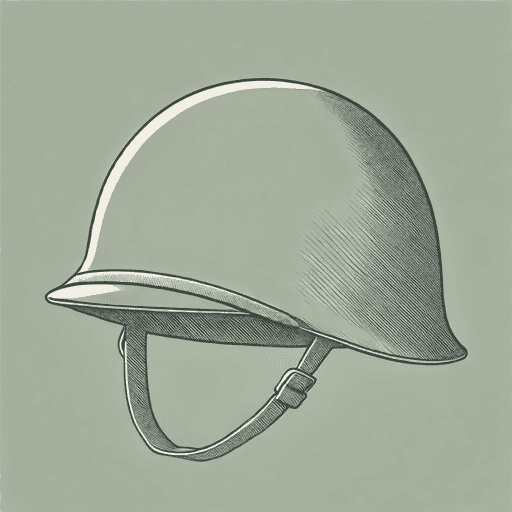
Generals Die In Bed
42 pages • 1-hour read
Charles Yale HarrisonGenerals Die In Bed
A modern alternative to SparkNotes and CliffsNotes, SuperSummary offers high-quality Study Guides with detailed chapter summaries and analysis of major themes, characters, and more.
Background
Authorial Context: Charles Yale Harrison
Charles Yale Harrison, born on June 16, 1898, was a Canadian American journalist and novelist. Although he was born in Philadelphia, Pennsylvania, he grew up in Montreal, Quebec. In 1917, he joined the Canadian Expeditionary Force. Within a few months, he found himself on the Western Front in France as a foot soldier engaged in trench warfare. On August 8, 1918, he participated in the Battle of Amiens, where he sustained an injury. He did not return to active duty after being wounded.
Although Harrison returned to Montreal after the war, he soon moved to New York City and continued his career as a writer. Most notably, he began work on stories that would eventually become the novel Generals Die in Bed. Public reception of anti-war books reached its zenith at the end of the 1920s with the publication of novels and memoirs such as All Quiet on the Western Front (1929) by German writer Erich Maria Remarque, Under Fire (1916) by French writer Henry Barbusse, and A Farewell to Arms (1929) by American writer Ernest Hemingway. Following this trend, the William Morrow Publishing Company brought out Generals Die in Bed in 1930.
The novel became an international bestseller and Harrison’s most successful novel, but Generals Die in Bed was not without controversy. Harrison’s depiction of Canadian troops looting the town of Arras and the execution of war prisoners raised the hackles of Canadians who viewed their soldiers as heroes. Despite its initial success, Harrison’s novel did not achieve lasting fame, unlike A Farewell to Arms and All Quiet on the Western Front. It did, however, enjoy a revival of popularity in the 1970s and again in the 2000s when it was republished.
In the 1930s, Harrison was a member of the Communist Party but later renounced this association. Throughout his life, he never ceased to be opposed to war. Harrison died on March 17, 1954, of a heart condition.
Historical Context: Canada in World War I
World War I was triggered by the assassination of Archduke Franz Ferdinand of Austria-Hungary on June 28, 1914, at the hands of a Serbian nationalist. A month later, on July 28, Austria-Hungary declared war on Serbia, with other great powers joining the conflict over the following week. The war pitted the Allied Powers (France, The United Kingdom, Russia, and eventually the United States) against the Central Axis Powers (Germany, Austria-Hungary, and the Ottoman Empire). Although Canada had home rule in 1914, the country’s foreign affairs were still under the control of Britain. Consequently, when the United Kingdom declared war on Germany, the declaration included Canada.
After failures on the part of both the Allied Powers and Central Powers to win a decisive battle in the war, the conflict devolved into a war of attrition, with soldiers fighting from a series of trenches throughout Belgium and France. Soldiers would venture out of the trenches in desperate front assaults on enemy trenches on the other side of No Man’s Land—the battlefield that spanned between trenches—often gaining very little territory.
Canadians played an important role in the war, beginning with the Battle of the Somme in 1915. In 1917, the Canadians were crucial in an Allied victory at Vimy Ridge. Due to their grit and determination, the Canadians were called in as shock-troops in several other major battles. After three months of fighting, the Canadians and British succeeded in capturing Passchendaele, with great loss of life. Throughout the war, at least 60,000 Canadian soldiers died and another 172,000 were wounded. While most Canadians retained pride in the patriotism and determination of their fighting force, losses were so heavy that many soldiers suffered disillusionment and despair.
On November 11, 1918, an armistice was officially declared between the warring parties, bringing the fighting to an end. This day is still commemorated as Remembrance Day in Canada and the other Commonwealth states. On June 28, 1919, the signing of the Treaty of Versailles took place, which determined the post-war shape of Germany and the reparations it would be expected to pay. Many historians believe that WWI led directly to Canada’s emergence as a nation distinct from the United Kingdom: The Canadians signed the Treaty of Versailles and were granted a seat in the League of Nations, independent of the United Kingdom. Canada joined the British Commonwealth as an independent nation in 1931.
Technological Context: Military Innovations During World War I
In the first year of WWI, nearly 5 million men were killed or wounded. The introduction of modern weapons led to these high losses and were frequently exacerbated by the failure of military leadership to recognize that old-style tactics were no longer effective on modern battlefields.
The widespread use of machine guns made traditional massed cavalry and foot assault obsolete. Generals Die in Bed mentions multiple times the use of the Lewis gun, a portable, lightweight machine gun developed in the United States and adopted by the British forces during the war. Machine guns could kill large numbers of men before they got close to enemy lines. This increased firepower led directly to trench warfare but also made trench fortifications an ineffective weapon of war, as armies lost large numbers of men, often gaining only inches of ground during attacks. Trying to reach men hiding in trenches also led to the development of artillery that had a greater range, and Harrison describes the effects of these long-range guns during bombardment in this novel. Combatants also used chlorine gas attacks to spread a fog of death over enemy lines. As armies began supplying gas masks to soldiers, the threat became less severe, but not before thousands of men had been killed or seriously wounded by the gas attacks.
Trench warfare led to the development of several more technologies. Barbed wire, a relatively recent invention (first patented in 1867), became widely used in the trenches. The barbed wire served as both a deterrent and protection, and No Man’s Land was laced with rows of barbed wire designed to stop assaults on frontlines. In Generals Die in Bed, it is a stray piece of barbed wire that snags Brown’s uniform, causing Captain Clark’s displeasure.
Ultimately, armies began adjusting their old tactics to accommodate new technologies. For example, Harrison’s narrator reveals that by 1918, the army had given up on large-scale front assaults and instead sent out soldiers in smaller groups of five or six, saying that they made a smaller target. In addition, rather than use cavalry, the British began using tanks in the Battle of the Somme in 1916. They were largely ineffective in this battle due to design flaws and inexperience in deployment. However, by the 1917 Battle of Cambrai and the 1918 Battle of Amiens, tanks played an important role. Tanks, along with other modern technology, soon became the standard means of waging war.

Unlock all 42 pages of this Study Guide
Get in-depth, chapter-by-chapter summaries and analysis from our literary experts.
- Grasp challenging concepts with clear, comprehensive explanations
- Revisit key plot points and ideas without rereading the book
- Share impressive insights in classes and book clubs