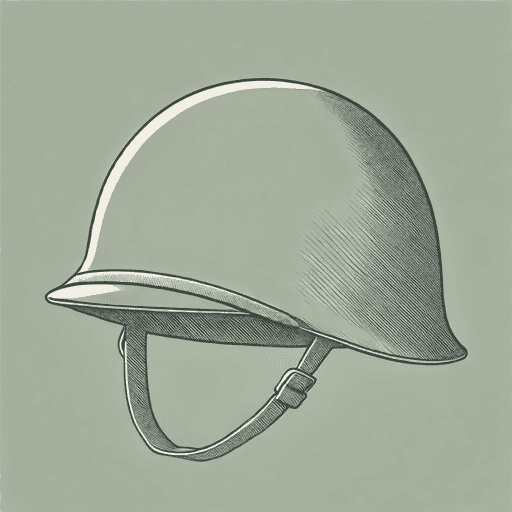
Generals Die In Bed
42 pages • 1-hour read
Charles Yale HarrisonGenerals Die In Bed
A modern alternative to SparkNotes and CliffsNotes, SuperSummary offers high-quality Study Guides with detailed chapter summaries and analysis of major themes, characters, and more.
Introduction-Chapter 3Chapter Summaries & Analyses
Introduction Summary
In the Annick Press 2007 edition of Generals Die in Bed, military historian Robert Nielson provides a brief overview of WWI and the reception of Harrison’s novel. Contrasting the myth of combat valor and heroism with the reality of war, Neilson notes that bravery was not worth much in the face of radically improved technology. Neilson also provides factual accounting: Some 10 million people died in the war between 1914 and 1919. He offers a critical overview, noting that initially, newspapers and literary reviews found Generals Die in Bed to be a riveting account of combat. However, as Neilson also notes, Harrison’s book horrified Canadian military and political leaders.
Chapter 1 Summary: “Recruits”
The novel opens in Montreal, narrated by an unnamed 18-year-old recruit. The newly enlisted soldiers have just been paid; it is now midnight and the soldiers have been enjoying the company of sex workers in Montreal’s red-light district. The narrator describes the bunkhouse and introduces Anderson, the oldest of the recruits, who reads his Bible. Anderson is a middle-aged, religious man from Ontario. The other men begin a conversation about the night’s escapades replete with drunken singing, obscenities, and laughter. One of the recruits, barely 17 years old, is so drunk he vomits into a wastebasket.
The next morning, officers rouse the many still-drunken men and line them up to parade to the train station, where they will depart for the war. The civilians of Montreal line the street and celebrate the boys’ departure with band music and fireworks. Some people throw flowers and packs of cigarettes at them.
Women infiltrate the ranks and hug and kiss the boys. One young woman attaches herself to the narrator, who enjoys her perfume and company. However, he soon feels lonely and afraid. He thinks, “She is the last link between what I am leaving and the war” (5). Suddenly, the pomp and heroics that led to his enlistment mean nothing. He only wants to go home.
Chapter 2 Summary: “In the Trenches”
On the Western Front in Belgium, the narrator and other soldiers make their way through the communication trenches toward the front line. The trench is muddy and the footing treacherous. Barbed wire embedded in the trench walls tears at the men. One of the soldiers, Fry, falls into a muddy hole filled with water. Captain Clark, whom the narrator describes as an Englishman who “glories in his authority” (7), tells Fry to get moving. He accuses Fry of cowardice.
The group makes it to their position at about midnight. Fry climbs up the steps to the top of the trench to serve as a sentry. He has taken off his ill-fitting boots and his feet are bleeding. He stares out into No Man’s Land, the area of ground between the British and German front lines. The narrator soon takes Fry’s place as sentry. He is trying to imagine what it will be like once the bombardment starts. He only has the stories other veterans have told him to supply his imagination. As he imagines himself a hero, he is elated. However, the horrors of war soon invade his thoughts, and when he looks at his comrades sleeping at the bottom of the trench, they look dead to him. Suddenly, something moves. The narrator is startled and frightened. It turns out to be a rat.
Eventually, the Germans begin firing on the trenches by launching minenwerfer (explosive mines, designed to be thrown into the trenches). The explosions cause the walls of the trench and the wooden supports to splinter. The noise is deafening, and the narrator’s ears begin to bleed. The barrage finally stops, and the men begin to crawl out of the dirt. When the shelling stops, the narrator dissolves into tears.
A few days later, the men have rebuilt the trench, but now they contend with sniper fire. The narrator relates that they are supposed to be resting, but lice are causing intense itching. A sapper (a military engineer who builds and repairs defenses) tells the narrator that the lice come from the Germans.
When the narrator visits the latrine, he sees a boot. When he tries to dislodge it, he sees a decaying foot in the boot. Later, Brown returns from the latrine with a new pair of boots that he says fit him.
Chapter 3 Summary: “Out on Rest”
The narrator and his group have rotated to the rest location for their third time. The rest site is in a small, deserted village. The narrator points out that the officers are billeted in a chateau, whereas he and his group are bunking in a barn on vermin-infested old straw. The narrator notes that what the army means as “rest” is quite different from the usual meaning of the term. He relates that they have marched a long way from the trenches to this village. Once there, they perform “fatigues”—manual labor required of soldiers.
In addition, the narrator says that Captain Clark makes life even more difficult for them. He is smartly dressed and lectures the men on cleanliness, requiring that they shave daily. The soldiers have no hot water, and this places an unfair burden on them in ice-cold weather. In addition, Clark harshly criticizes Brown for his shoddy appearance. Brown is furious and wishes that Clark were dead.
Brown is married and farms on Prince Edward Island. He has described his honeymoon to the men countless times, something the men listen to with pleasure. The group next rhapsodizes over the memories of great meals. They are all hungry but only receive bread dunked in grease and tea for their evening meal. The narrator and his friend “have learned who [their] enemies are—the lice, some of [their] officers and Death” (23.) The narrator thinks it is strange that they do not consider the Germans the enemy.
A sergeant appears to take Brown to receive his punishment from Captain Clark. He returns and says that he has been sentenced to two hours of pack drills. This means that he must perform military drills, including running and marching while wearing full uniform, carrying full equipment, and loaded with 120 rounds of ammunition in his pockets.
The other men cannot stand to watch. Instead, they go to the estaminet, the French word for a small café or pub, where they drink red wine. It helps them forget their situation. Fry expresses what they all feel: The officers and the leadership take everything from the soldiers, including their lives and their rest.
Introduction-Chapter 3 Analysis
The first chapters introduce the narrator, the protagonist of the book. He is a young recruit who remains nameless throughout the novel. Harrison’s choice to not name him allows him to stand in for all soldiers, serving as a case study of The Dehumanization of Common Soldiers that occurs during the war. Harrison’s point is that one recruit is the same as any other recruit; they lose their individual identities, and many of them lose their lives.
Harrison chooses to use a first-person limited point of view so that everything is filtered through one narrator, allowing readers to experience what the narrator experiences as it happens. Harrison often changes the point of view from the singular first-person “I” to the first-person plural pronoun (“we”). This further emphasizes that all of the men suffer and experience the same things—they cannot be differentiated from one another. With the simple shift to “we,” Harrison signals that the narrator speaks for all foot soldiers in WWI. Harrison also uses the present tense to create a sense of immediacy. The outcome of the novel is unclear since readers can only know what is happening in the present moment. The first-person narration, coupled with present tense verbs, mimics the experience of the soldiers: They do not know what lies in store for them.
In Chapter 1, Harrison also uses imagery as foreshadowing. As the soldiers leave Montreal on the train, “[T]he boys lie like sacks of potatoes in the red plush-covered seats” (6). Many of these boys will die in the war and will be placed in body bags, like so many sacks of potatoes. The red plush seats foreshadow the bloody, violent nature of their deaths. Likewise, the narrator reports that the toilets on the train are “slimy and wet” (6). On the front lines, the narrator will find that the trenches, like the toilets, are also slimy and wet with rain and blood.
A Modernist novel, Generals Die in Bed stylistically shares much with the writing of Ernest Hemingway. Like Hemingway in A Farewell to Arms, Harrison uses short, choppy sentences and brief paragraphs. His diction is direct: He uses simple language, devoid of adornment or elaboration, with limited exposition. He also includes brief snippets of unattributed dialogue. For example, the young recruits respond as a group to Anderson’s caution about sinning, with multiple soldiers speaking at once:
A salvo of oaths greets him.
“Shut up.”
“Go to hell.”
“Take a jump in the lake” (3).
Since the lines are not attributed to any given character, the suggestion is that most of the boys reply in a similar manner. Generals Die in Bed does not glorify battle or elevate the soldiers as heroes. Rather, these abrupt lines reflect the harsh and difficult lives the men lead.
Generals Die in Bed is shot through with irony to illustrate the soldiers’ growing Disillusionment and Distrust of Leadership. Part of the irony lies in how the realities of war are very different from the idealized ideas the young recruits initially have about combat. They have joined up, thinking they will have the opportunity to fight with glory, but discover instead that they are often no more than cannon fodder. Harrison also employs irony through the songs the recruits sing as they march off to war, with the boys singing with “mock pathos” (2) and pretending to be sad and frightened when they sing, “I don’t want to die” (2). In the trenches, these words cease to be ironic when the men come face-to-face with the actual possibility of dying. A final irony occurs when the narrator reports that the men “never refer to the Germans as [their] enemy” (23). Although they enlisted to fight a war against Germany, they hate the lice, the officers, and the threat of death more than they hate the Germans.
The contrast between the first chapter’s parades and celebrations stands in stark contrast to the close of the third chapter, where Captain Clark demonstrates his harshness and snobbery by treating the soldiers with a lack of respect. Captain Clark’s mistreatment of Brown suggests that the officers have little regard for the soldiers under their command, even though the loyalty and efforts of these men will be essential to winning the war. Indeed, Clark sadistically targets the least able of the soldiers to illustrate his power. As a result, the men in the unit come to hate Clark. They do not trust the officers to protect them or to treat them like human beings.
Fry most clearly articulates the disillusionment and distrust in the closing lines of Chapter 3, as Fry and the narrator share a bottle of wine at a local café. Fry says, “They take everything from us: our lives, our blood, our hearts; they even take the few lousy hours of rest, they take those too. Our job is to give, and theirs is to take” (26). When Fry uses the word “they,” he includes the officers, the politicians, and the civilians at home. He clearly differentiates between “them” and “us.” Whereas in the opening chapter, the soldiers feel they are about to enter a heroic fight for their country, by the end of Chapter 3, they understand that the men running the war are greedy—they take everything the soldier has and still require more.

Unlock all 42 pages of this Study Guide
Get in-depth, chapter-by-chapter summaries and analysis from our literary experts.
- Grasp challenging concepts with clear, comprehensive explanations
- Revisit key plot points and ideas without rereading the book
- Share impressive insights in classes and book clubs