George's Secret Key to the Universe
61 pages • 2-hour read
Lucy Hawking, Stephen HawkingGeorge's Secret Key to the Universe
A modern alternative to SparkNotes and CliffsNotes, SuperSummary offers high-quality Study Guides with detailed chapter summaries and analysis of major themes, characters, and more.
Chapters 1-5Chapter Summaries & Analyses
Chapter 1 Summary
George discovers that his pet pig, Freddy, is missing and realizes that he must have left the gate open. He is worried about his parents finding out because they don’t approve of Freddy, who was a Christmas gift from George’s grandmother. George’s parents avoid most modern technology; they believe in living “a purer, simpler life” (3), and they hope to protect George from modern dangers.
Freddy has grown large and restless, often escaping and damaging the garden. This time, George has escaped through the fence to the neighboring house—Next Door. George longs to play in Next Door, where the yard is wild and overgrown, unlike his family’s neat garden, which he has to be careful not to disturb. Although he has his own patch of garden to tend, he ignores it, preferring “looking up at the sky to looking down at the earth” (7).
George is not allowed to go Next Door, since his parents told them that, after the old man who lived there mysteriously disappeared, squatters moved in and had to be arrested. Feeling he has no choice but to find Freddy, he goes through the fence and pushes through the overgrown yard. He reaches the house, seeing Freddy has forced his way inside. He notices a light on in the house.
Along with illustrations, the chapter also contains a short informational section about the night sky. It explains that the Sun is a star that looks large because it is close to Earth, and that the Moon and planets shine by reflecting the Sun’s light rather than producing their own.
Chapter 2 Summary
Although nervous, George moves closer to the house and peers through a window. He spots Freddy in the kitchen, drinking a purple liquid from a bowl. Fearing it might be poison, he rushes inside and finds a girl in a flowing dress. George introduces himself and accuses her of stealing his pig. She denies it and claims she is an orphaned ballerina, though George doubts her story. She says she gave Freddy grape soda. George is embarrassed for not recognizing it, since his parents do not allow soda.
A man calls for “Annie” from another room. When she calls back that she is giving a pig soda, he doesn’t believe her until he comes in and sees for himself. He introduces himself to George as Eric. Their family just moved in. Eric offers George a glass of water, and George is jealous that Freddy got the last of the grape soda. When Eric offers to call George’s parents because it is getting dark, George explains that his family doesn’t have a phone, because “‘They think that technology is taking over the world’” (21).
Eric’s phone rings, and Annie answers, as it is her mother calling. She takes the phone into another room and talks loudly about George, leaving both George and Eric feeling awkward. To distract him, Eric uses a ruler and static electricity to bend a stream of water from the faucet. George is amazed, and Eric explains, “‘That’s science’” (25). He tells George that science is a way to understand how the world works and that there are difference branches—like Eric’s specialty of physics—that study different kinds of phenomena. George wants to hear more, but their conversation is cut short when Freddy runs into another room, forcing them both to chase after him.
Chapter 3 Summary
Freddy runs into another room filled with books, papers, and scientific equipment, scattering things as he moves through it. Eric jumps onto Freddy’s back to stop him, riding the pig out of the room and leaving George to look around in awe. The space is crowded with interesting objects, such as a chalkboard covered in symbols, a grandfather clock, and a telescope. When Eric returns, he is pleased that Freddy’s chaos helped him locate a missing book. His “thank you” surprises George.
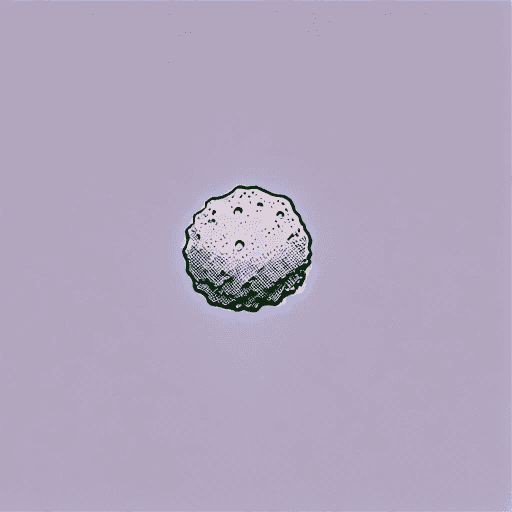
Eric invites George to ask questions about the room, and George begins with the telescope. Eric explains that it once belonged to Galileo, the astronomer who discovered that the Earth orbits the Sun rather than the other way around. They discuss the “scars” on the Moon’s surface, caused by meteorite impacts, and how stars eventually die. Eric offers to show George more about how stars form and change over time.
Two education sections accompany this chapter. The first focuses on the Moon, describing it as a natural satellite and explaining details about its size, orbit, and the way both the Moon and Sun affect Earth’s tides. The second discusses light and how it travels through space. It explains that light from distant stars take years to reach Earth—for example, the light from Proxima Centauri, the second-closest star to Earth, takes 4.22 years to arrive (34).
Chapter 4 Summary
Eric calls Annie for them to join them to watch The Birth and Death of a Star. Annie says she has already seen it and asks for potato chips. Eric agrees, as long as she shares with George. Eric tells George that Annie “doesn’t mean any harm” (35), and he turns to his computer, which George notices for the first time. At school, George has access to an old, unreliable computer, but he has always wanted his own.
To George’s surprise, Eric’s computer speaks. Eric explains the computer’s name is Cosmos. Cosmos insists on being introduced as the most advanced computer in the world. Eric apologizes, explaining that computers can be “touchy,” and Cosmos immediately boasts about being smarter than Eric. When Eric asks Cosmos to show George how stars are born, Cosmos initially refuses. It agrees only after George takes an oath to use science responsibly, vowing to never “use scientific knowledge for my own personal gain or give it to those who seek to destroy the wonderful planet on which we live. If I break this oath, may the beauty and wonder of the Universe forever remain hidden from me” (40).
Annie returns with the chips. Cosmos accepts George as a new participant, and Eric tells George he may now use the “secret key.” He encourages George to approach the computer and push the secret button. George correctly guesses and presses the Enter key, prompting Cosmos to begin the presentation.
Chapter 5 Summary
The room darkens as a beam of light from Cosmos creates a “window” to the Universe in the air before them. Cosmos begins the presentation, explaining that there are billions of stars in the Universe. Annie leaves to get more chips. The window zooms in on a large cloud of gas and dust in space, where small particles begin to gather, forming a star that starts to glow and radiate heat. Eric hands George safety glasses to protect his eyes as the new star flares to life. He explains the process is called “nuclear fusion”—the reaction that powers stars.
As they watch, George sees jets of gas bursting from the star’s surface. Eric describes how stars eventually run out of fuel. Through nuclear fusion, heavier elements are created, and when a star dies, those elements are released into space. These particles form the building blocks for new celestial objects, including life itself—“‘So you could say that we are all the children of stars!’” (51). The star in the presentation expands, then explodes, leaving behind a cloud of particles. Eric speeds up the display, and the window is hit by a small comet. Cosmos warns Eric to be careful, and the presentation ends.
Annie brings George a glass of water, explaining she also felt sick the first time she saw into the Universe. She suggests George return home. Before George leaves, he is told that he must keep Cosmos’s existence a secret. He agrees, then walks home with Eric and Freddy.
Two educational sections accompany this chapter. The first explains the makeup of matter, describing elementary particles such as protons, neutrons, and electrons, as well as the smaller particles—quarks and gluons—and the strong force that binds them together. The second discusses how atoms form the elements, from the smallest (hydrogen) to the largest naturally occurring (uranium). It also explains how atoms can combine into molecules, with hydrogen molecules being the most common in the Universe.
Chapters 1-5 Analysis
The novel opens with the disappearance of Freddy: “Pigs don’t just vanish, thought George as he stood staring into the depths of the very obviously empty pigsty” (1). This playful beginning sets the tone for the story’s blend of humor and curiosity. The missing pig creates an approachable mystery for young readers while introducing George’s inquisitive nature, which conflicts with the restrictions of his world. From the start, George is characterized as an independent problem-solver—“he was working on it, and the last thing he needed was for one of his parents to appear before he had all the answers” (1)—a trait that drives both the plot and emotional arc. The balance of light suspense and character-revealing action invites middle-grade readers into a story about discovery, family, and scientific wonder.
George’s parents are drawn as ideological opposites to their son, introducing the theme of The Ethical Use of Knowledge and Technology. They pursue “a purer, simpler life” (3), rejecting technology and modern conveniences to protect both their family and their planet. Their worldview is depicted with exaggeration—they grind their own flour and frequently participate in protests—so that even young readers can immediately recognize the clash between parental ideals and a child’s curiosity. George’s longing for a computer represents more than a desire for entertainment; it symbolizes his yearning for autonomy and access to knowledge. The contrast between generations introduces the moral and emotional framework that guides the novel, positioning science not as something to fear but as a tool that must be understood and responsibly applied.
Setting and personification strengthen the emotional texture of these early chapters. Freddy the pig—described as “a very indignant pink piglet” (2)—adds warmth and humor while grounding the narrative in an ordinary world. The neighboring property called “Next Door,” is capitalized like a name, transforming a physical place into a living mystery that represents both danger and possibility. Even the environment seems to speak: “[T]he wind in the trees above him made a singing, sighing noise, as though the leaves were saying, Be careful, Georgie” (12). These touches of anthropomorphism allow young readers to experience tension through familiar, imaginative cues rather than abstract danger. The setting thus functions on two levels, establishing atmosphere and reflecting George’s feelings of isolation and curiosity.
Structurally, the first chapters follow a traditional adventure pattern suited to younger audiences. The inciting incident—the disappearance of Freddy—propels George beyond the safety of home and into the unknown. This linear, goal-driven structure keeps pacing brisk and clear, supporting reader comprehension while reinforcing George’s growth from passivity toward agency. Each step of his search for the pig mirrors his broader search for understanding, linking small domestic events to the story’s larger scientific and moral questions.
When George meets Eric and Annie, the book begins to merge fiction with nonfiction. Eric’s explanation—“Science is a big word. It means explaining the world around us using our senses, our intelligence, and our powers of observation” (25)—illustrates the author’s pedagogical strategy to define complex ideas in conversational, accessible language. This expository clarity reflects the novel’s dual purpose as both narrative and educational text. The inclusion of illustrations and factual inserts reinforces this approach, providing visual anchors for abstract ideas and supporting different learning styles. These techniques reflect the Hawkings’ goal of nurturing scientific literacy by pairing story with explanation.
The book’s ideological foundation emerges gradually through these scenes. George’s parents’ suspicion of technology contrasts with Eric’s rational enthusiasm, creating a dialogue between fear and understanding. This tension aligns with The Importance of Science and Stewardship of the Earth and the idea that knowledge and preservation are complementary rather than opposing values. The novel argues that environmental responsibility is not achieved through rejection of progress but through informed participation in it. George’s growing fascination with science—and his parents’ evolving recognition of his capability—lay the groundwork for the synthesis the story will reach by its end.

Unlock all 61 pages of this Study Guide
Get in-depth, chapter-by-chapter summaries and analysis from our literary experts.
- Grasp challenging concepts with clear, comprehensive explanations
- Revisit key plot points and ideas without rereading the book
- Share impressive insights in classes and book clubs