Ghosts: A Graphic Novel
Ghosts: A Graphic Novel
A modern alternative to SparkNotes and CliffsNotes, SuperSummary offers high-quality Study Guides with detailed chapter summaries and analysis of major themes, characters, and more.
Summaries & Analyses
Quizzes
NEWReading Tools
Part 1Chapter Summaries & Analyses
Part 1: “August”
Part 1, Pages 1-35 Summary
Catrina, who goes by Cat, narrates the story of her family’s move from Southern California to the Northern California coastal town Bahía de la Luna (Bay of the Moon). Cat’s younger sister, Maya, has CF, a lung disease that causes excessive mucus buildup and digestive issues. Maya’s family is moving to the coast in the hopes that the cool, salty air will help Maya’s symptoms. Cat wants “Maya to be as healthy as possible. Duh!” (7), but on the drive to their new home, she mourns her friends and her old home. The new home is modest, and Maya is excited to be so close to the ocean. Cat finds the new place dark and cold. Her dad thinks it is perfect, and her mother just hopes to help her daughter feel better.
Maya begins to cough excessively. Her mother takes her for her CF treatment, a vest that massages her lungs to loosen the mucus. Maya is an optimistic, happy-go-lucky girl, always smiling, singing, and screaming for joy. While wearing her vest, she sings loudly, enjoying the vibrations. Suddenly, the power goes out; Maya’s vest blew the fuse.
Cat’s mom suggests that she and Maya take a short tour of their new town. Maya finds what she calls a “secret pathway” (18) and runs down into a leafy stairway. She comes across a black cat, but Cat warns her not to touch it due to bad luck. The two girls walk on as a loud “wooooooshhhh” (20) frames the pages. The trees look more foreboding, and Cat is more nervous than Maya. Soon the girls reach the edge of a cliff overlooking the ocean. Even Cat is overwhelmed by the sight of it. They run down to the beach and take photos of each other. Then they spot an abandoned boardwalk arcade nearby. Maya continues running ahead, overtaken by her curiosity, and Cat finds her inside a building with a glass ceiling. An older boy is inside, and he warns them of ghosts who live in the town. Cat is skeptical since she thinks ghosts are not real.
Part 1, Pages 36-66 Summary
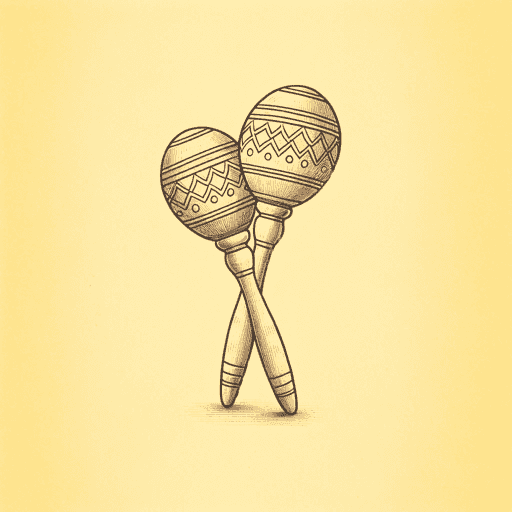
The family goes to a neighbor’s house for dinner, and it happens to be the family of Carlos, the boy that Cat and Maya saw earlier. Carlos’s family serves tamales and plays maraca music, and Carlos mentions Día de los Muertos (Day of the Dead), a Mexican celebration that takes place on November 1 each year “to welcome back the spirits of the loved ones we’ve lost” (44). When Cat insists it is all pretend, the family stares at her awkwardly, as if she offended them. Carlos foreshadows the opening of the spirit world at the mission at the top of the town’s hill. He explains that the town is a great place for ghosts because it is so foggy, and his dad, Javier, excites Maya by talking about the grand party that is held each year. Despite being skeptical, Cat finds herself spooked by the wind and fog on the walk home.
At home, Maya takes her nutrition supplements through an IV—another treatment she requires due to her CF. Cat laments living in the new town, where she feels as if she cannot relate to anyone. She looks out her window and sees the same black cat she saw earlier staring in at her. The next morning, Cat finds her mother and her sister discussing their heritage. Her mother confesses that she and her own mother had a rough relationship, and that strain led her to reject Mexican culture. Maya, curious about her heritage, wants to know more about where she is from. Maya likes Carlos and texts him to come over and see the ofrenda—“altar for a deceased relative” (60)—they are building for their grandmother. Cat reluctantly agrees to take a “ghost tour” that Carlos offers.
Part 1, Pages 67-107 Summary
Carlos shows Cat and Maya the haunted pier, taking them to the lighthouse, the dock where ghost ships tether, and the old cinema. Cat remains skeptical, but Maya desperately wants to see a ghost. She admits she wants to ask the ghost about death, and it is clear that this is something she thinks about often due to having CF. Carlos takes the girls up to the mission, noting that it is “where the ghosts’ world and ours most closely overlap” (73). They walk up a huge hill and through a dark forest before arriving at the clearing where the mission sits. Cat loses sight of Maya and Carlos. She wanders around and spots what appears to be a long, blueish ghost floating through the air. When she turns the corner, she finds dozens of them surrounding Carlos and Maya. Carlos is smiling, and Maya’s eyes are wide with awe.
Cat stays for the sake of her sister, and Carlos introduces the ghosts to the girls in Spanish. He gives Maya a bottle of orange soda to hold to attract the ghosts closer to her, and one wraps itself around her in a hug. The ghosts take the form of skeletons as they become comfortable with the new visitors, playing with Maya’s hair and making her laugh. Maya drops the soda and breaks it, and the ghosts start to swarm around her. She begins to cough and wheeze, and Cat panics, screaming at the ghosts not to steal Maya’s breath. Carlos calls 911, and Cat is blamed at the hospital for taking Maya out without her medication. Cat becomes irate with Carlos, screaming at him to leave Maya alone.
Part 1 Analysis
The exposition of Ghosts introduces its main characters and their conflicts, as well as the bonds that hold them together and influence their decisions. Cat is the story’s protagonist, and she faces two major conflicts: her resistance to adjusting to her new life in Bahía de la Luna and her fear of losing her sister. Cat’s actions showcase the constant state of fear and panic that she experiences, as she is always on edge, grumpy, or otherwise worried and preoccupied. The two conflicts she struggles with regularly oppose one another, pulling Cat in two different directions. She seems aware of this fact, stating on the drive to their new home, “I’m trying not to be selfish. But it’s hard” (3). Cat is learning the challenges of Accepting and Adjusting to Change. She is also still young and sometimes naïve, and this shows when she takes her sister up the hill to the mission, causing Maya to be hospitalized and nearly die. Cat struggles with guilt over her occasional failures to keep her sister from harm: “I’m her sister. I’m supposed to protect her!” (107). Maya is the opposite of Cat; she is brave, bold, and always optimistic. It is not until Maya encourages Cat to embrace her new life in Bahía de la Luna that Cat finally begins to do so, as if she were waiting for Maya’s permission. The bond between Cat and Maya illustrates the story’s theme The Unbreakable Bond of Sisterhood.
Foreshadowing comes in the form of a black cat in the story’s exposition. When Cat and Maya come across a cat in their first exploration of the town, Cat sees it as a bad omen and calls it bad luck, but Maya gets a friendly feeling from it. Cat sees the cat again later when she stares out her window one night. The cat appears again at the story’s conclusion as the family finds a Mexican feast awaiting them at their table, suggesting that the cat may be Abuela returning to visit and watch over her loved ones. Cat’s name also links to these occurrences, implying that her heritage and the people who came before her are an essential part of who she is—even though she does not know that yet. When Cat begins to open up, she listens to her mother and spends time with Carlos and her friends, which helps her understand that her Mexican heritage is rich, beautiful, and immensely comforting. She finds herself especially enjoying Mexican food, wanting another taste of her heritage with each passing day. Her character arc helps illuminate the theme Discovering One’s Own Heritage. Cat’s new connection with her heritage is interwoven with the sisters’ first encounter with ghosts. This interaction causes Cat to spiral further into fear of her sister’s death. On the other hand, Maya, whose health is fragile, responds with curiosity and hope and is eager to meet the spirits again, including her grandmother. Carlos helps her build an ofrenda, and this acts as the catalyst for the family’s steps toward reclaiming its Mexican heritage.
Telgemeier employs a unique drawing style that remains in the tradition of comic book art. She uses traditional emanation techniques like sweat beads and motion or sound lines to shed light on characters’ emotional states and actions. Telgemeier also uses onomatopoeia to showcase the sounds of things like the crunch of food or the whooshing of the wind. These fine details give the graphic novel a more childlike and accessible feel. The author often exaggerates her characters as well, widening their eyes to show fear or giving them large mouths to show excitement. Telgemeier’s illustrations also aid in developing the setting of the story. The town is shown as foggy, gloomy, and dark even during the daytime. By illuminating the story’s mood and tone without stating it directly, the author can add layers to the setting that would not be present in a traditional novel. Weather becomes an important motif; it foreshadows the appearance of spirits when it is windy or foggy and maintains the haunted atmosphere of the town. Additionally, because the story takes place just after Cat’s family moves to a new place, the characters discover the town’s heritage and secrets alongside the story’s readers.
Enjoying this free sample?
Get in-depth, chapter-by-chapter summaries and analysis from our literary experts.
- Grasp challenging concepts with clear, comprehensive explanations
- Revisit key plot points and ideas without rereading the book
- Share impressive insights in classes and book clubs