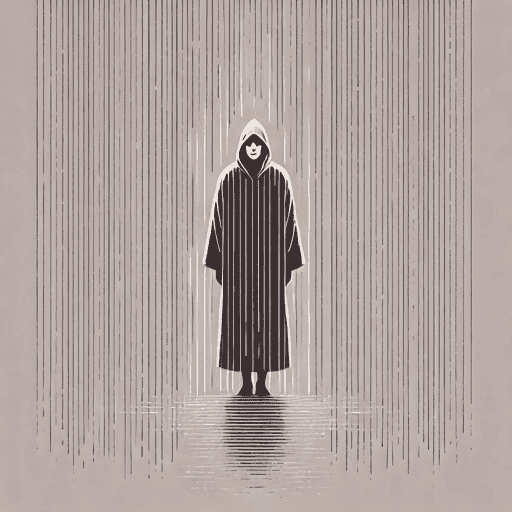
Glass Houses
62 pages • 2-hour read
Louise PennyGlass Houses
A modern alternative to SparkNotes and CliffsNotes, SuperSummary offers high-quality Study Guides with detailed chapter summaries and analysis of major themes, characters, and more.
Chapters 1-7Chapter Summaries & Analyses
Content Warning: This section of the guide includes discussion of death, substance use, and addiction.
Chapter 1 Summary
Armand Gamache, chief superintendent of the Sûreté du Québec, testifies in a murder trial on a sweltering July morning. He was both the arresting officer and head of the force, an unusual combination. The chief crown prosecutor, Barry Zalmanowitz, questions him in an openly adversarial tone, surprising Judge Maureen Corriveau, who is presiding over her first homicide case.
Gamache testifies that the defendant came willingly to his home in November and confessed, though not to murder. The defense objects, but Judge Corriveau allows the testimony. In a private exchange, Gamache tells the judge the case began in a higher court, which leaves her uneasy. She recalls a past encounter when she saw kindness in his eyes and heard him quote Sister Prejean to the effect that no man is as bad as the worst thing he has done. Now, she sees worry instead.
Gamache’s second-in-command, Jean-Guy Beauvoir, and Chief Inspector Isabelle Lacoste attend as future witnesses. Under questioning, Gamache explains his suspicions began when a figure in black robes appeared at the annual Halloween party in the bistro on November 1. The guest wore heavy robes, a hood, and a mask, standing silently apart from the other revelers. Among those present were university friends Matheo Bissonette, Lea Roux, Katie Evans, and Patrick Evans, who reunite annually in Three Pines through their connection to Myrna Landers, Lea’s childhood babysitter.
When asked what he thought the figure represented, Gamache testifies that it represented death.
Chapter 2 Summary
The narrative flashes back to the morning after the Halloween party, when Armand and his wife, Reine-Marie Gamache, are alarmed to see the robed figure still standing on the village green. Gamache confronts the silent, masked figure, identifying himself as head of the Sûreté and inviting it for coffee, but he receives no response. He whispers a warning to be careful before returning home. From the bistro, Myrna Landers, Gabri Dubeau, and Anton, a dishwasher who aspires to be a chef, watch the encounter.
The figure remains throughout the day. Villagers give it a wide berth; even Gamache’s dog, Henri, growls and keeps his distance. At Clara Morrow’s home, where Reine-Marie helps sort historical society archives, the group discusses the figure. Gamache explains he has no legal grounds to intervene, as wearing a mask is not illegal in Québec. Under pressure, he admits he thought the figure represented death. Ruth Zardo claims Archangel Michael—whom she equates with death—visits her nightly.
At the bakery, Lea Roux, a politician who sat on the committee that confirmed Gamache’s appointment, and Katie Evans buy pastries. In Myrna’s bookstore, they discuss Katie’s glass house project on the Magdalen Islands. Jacqueline, the baker’s apprentice, urges Anton to tell Gamache about the figure. Anton refuses and makes her promise to stay silent.
That night, Gamache watches from his darkened study as the figure seems to shift and watch him back. When he takes his dogs out, the figure is gone. By morning, it has returned.
Chapter 3 Summary
During the lunch break, Judge Corriveau worries about the antagonism between the Crown and Gamache. Gamache and Beauvoir walk to Sûreté headquarters for a meeting with their team, including Isabelle Lacoste and Superintendent Madeleine Toussaint.
Nearly a year earlier, Gamache told his senior officers the Sûreté was losing the war on drugs and launched a secret operation in response. Recently, the premier ministre confronted Gamache about a television program revealing the Sûreté was only making minor arrests while major drug crimes continued. The premier demanded action or a significant arrest. Gamache asked him to trust and help him across the finish line. The team discusses a report expected from an informant on the Magdalen Islands.
Court resumes. When Zalmanowitz mocks the Sûreté’s track record, Judge Corriveau forces him to apologize. Gamache testifies that on the second morning he again approached the figure, telling it to be careful—not of him, but of whomever it had targeted. He explains he believed the figure was a warning directed at someone in the village.
The Crown introduces a photograph Gamache took as Exhibit A. When the image of the black-robed figure on the village green appears on screen, the courtroom falls silent.
Chapter 4 Summary
At the bed-and-breakfast, Matheo Bissonette tells Lea and Patrick that Gamache has photographed the figure and they must speak to him. Matheo and Lea go to the bistro and ask to speak privately in Myrna’s bookstore.
Matheo presents newspaper articles about the cobrador del frac, a Spanish tradition in which a masked figure silently follows and publicly shames wrongdoers. He explains the practice is a last resort when the legal system fails. Gamache is wary of the idea.
Matheo and Lea theorize that the figure on the green is a cobrador. When Gamache notes the costume differs, Matheo explains he heard rumors of an older, original cobrador that collects moral debts rather than financial ones. He produces a blurry photocopy of a photograph from the Spanish Civil War showing a robed, masked figure identical to the one in Three Pines.
In present-day court, the Crown introduces the Spanish photograph as Exhibit B. Gamache confirms the figure in the old photograph matches the one that appeared on the village green.
Chapter 5 Summary
In the bakery, Jacqueline again fails to make proper baguettes, fearing termination will cost both her job and Anton. Sarah, the owner, comforts her affectionately, and Jacqueline calls her Tante Sarah (“Aunt Sarah”).
At home, Gamache scans the cobrador photograph and emails it to Jean-Guy Beauvoir, who replies curtly. When Gamache calls, Jean-Guy’s daughter Annie answers before passing him to Jean-Guy, who promises to investigate. Gamache reflects on their deep bond, recalling a conversation where Myrna suggested certain souls meet across many lifetimes in different relationships. He reflects on his bond with Reine-Marie and Jean-Guy and on how long resentment can last.
In the bistro kitchen, Anton is distracted while washing dishes, watching the figure on the green. After Olivier reprimands him, Anton returns to work. He notices the robed figure turn toward the bistro. From their study window, Armand and Reine-Marie also observe the movement.
In present-day court, the Crown asks if Gamache knew who the figure was watching. Gamache testifies that he did not.
Chapter 6 Summary
At the bed-and-breakfast, Gamache asks Matheo to keep the cobrador theory quiet until it can be verified. During afternoon tea, Clara notes birds perching on the figure like a statue. Gamache briefly wonders if it came to help rather than harm, but Matheo insists it signals danger. Gabri overhears Matheo say “cobrador,” and Gamache suspects the slip was deliberate. A car arrives—it is Jean-Guy, bringing his research.
At the Gamache home, Jean-Guy presents historical photographs. A daguerreotype from 1841 shows a robed cobrador standing immobile in a Spanish village. A 1945 photograph shows one following a Nazi collaborator who was subsequently hanged by a mob. Jean-Guy explains that cobradors date to the 1300s and are tied to a legend of an isolated island community whose survivors returned wearing masks and robes to publicly mark wrongdoers. After the island’s inhabitants were massacred by soldiers, cobradors became legend. Jean-Guy explains that, in this tradition, the cobrador functions as a “conscience.”
In present-day court, as the day ends, the Crown asks Gamache’s conclusion from this research. Gamache testifies that he concluded someone in the village had committed an act so terrible that a conscience had been summoned to hold them accountable.
Chapter 7 Summary
After court, Gamache calls Reine-Marie and lies about working alone. He is actually leading a strategy meeting at Sûreté headquarters. The team reviews a map showing drug trafficking routes converging on the US border near Three Pines. Superintendent Toussaint reports an informant confirmed 80 kilograms of fentanyl arrived on the Magdalen Islands—an unusually large shipment.
For nearly a year, Gamache has run a secret operation to identify the cartel’s leader. The cobrador’s appearance was a turning point. Toussaint draws the new shipment’s route ending at the border. On the wall, a chart shows the cartel’s power structure with a faceless silhouette at the top.
Gamache then takes the marker and draws the final line across the border into the United States, shocking his officers. They plead to stop it. Gamache refuses, insisting they must protect their operational secrecy for a final strike. The team grudgingly agrees to monitor without interfering.
In private, Jean-Guy, who formerly had an addiction, argues passionately about the human cost. He describes the immeasurable misery and death the drugs will cause, calling Gamache’s choice a huge mistake. Gamache compares his decision to Churchill’s choice to allow Coventry’s bombing to protect the secret that the Allies had broken German codes. They discuss the terrible calculus: Sacrifice lives now to save more later. Jean-Guy confirms the shipment will cross the border the following night.
As Gamache prepares to leave, he wonders if a cobrador will come to collect the moral debt he is incurring.
Chapters 1-7 Analysis
The novel’s narrative structure, which alternates between a present-day murder trial and flashbacks to the preceding November, creates tension that foregrounds the theme of Unresolved Guilt and Self-Justified Justice. This dual timeline juxtaposes the formal, public performance of legal proceedings with the growing unease that grips the village of Three Pines. The sweltering July courtroom, governed by rules of evidence and procedure, is an effort to impose order on chaos. However, the antagonism between the crown prosecutor and Gamache disrupts this order from the outset, suggesting the trial does not capture the full story. Gamache’s cryptic assertion to the judge that “[t]his case began in a higher court, and it’s going to end there” frames the legal drama as secondary to a moral reckoning (4). In other words, the trial’s facts matter, but the novel’s tension hinges on motive, responsibility, and what justice can’t fully name. The novel’s structure therefore facilitates exploration of the legal system’s inadequacies, suggesting that the public quest for a verdict is an imperfect proxy for a private search for truth and atonement.
The black-robed figure, eventually identified as a cobrador, is a symbol of conscience that sits outside the legal system. Initially perceived by Gamache as a representation of death, the figure is revealed to be a collector of moral debts, a tradition born from historical injustice. Its power lies not in action but in silent, immobile witness, which transforms it into a screen for the community’s fear and guilt. Its stillness prompts a confrontation that words or violence could not achieve while implicitly signifying a moral failure serious enough that conventional systems of justice are insufficient (thus hinting at The Moral Failures of the Law). Its presence confirms Gamache’s conclusion from his historical research: “Someone in the village had done something so horrific that a conscience had been called” (73). As an ambiguous arbiter, the figure functions as a catalyst, transforming an individual’s hidden torment into a public spectacle and compelling the entire community to confront what it prefers not to name.
The recurring imagery of black robes connects the extralegal judgment of the cobrador to the formal authority of the justice system, reinforcing the theme of The Deceptive Nature of Appearances. This shared uniform complicates the line between sanctioned and vigilante justice. While the robes of the court are meant to signify impartiality, the Crown’s hostility toward Gamache hints at motives beyond the official record. The symbol suggests that the law’s appearance of objectivity can be a facade, a costume that conceals personal motives and moral compromises just as the cobrador’s mask conceals a human face. This critique questions where true justice resides—in the codified rituals of the state or in the uncodified demands of conscience.
Armand Gamache is the central figure in this exploration of conscience, shaped by the conflict between his professional duty and his personal moral code. His secret, year-long operation to dismantle a powerful drug cartel embodies this tension. His decision to allow a massive shipment of fentanyl to cross the border is an act of moral calculus that sacrifices lives in the present for the potential of saving more in the future. In his argument with Jean-Guy, who understands the human cost firsthand, Gamache’s torment comes into focus. This choice creates an uneasy parallel with the cobrador: Both gesture toward forms of judgment that extend beyond ordinary procedure. In proceeding with his plan, Gamache knowingly incurs a heavy debt to his own conscience in pursuit of what he believes is a greater justice.
The novel’s settings reinforce the novel’s themes and characterization. Three Pines is established as a place of refuge from the world’s cruelties, but the arrival of the cobrador undermines this sense of safety, turning the familiar village green into a source of unease. The gray, oppressive November sky feels like “[t]he cold damp breath between dying and death” (15), echoing the community’s fear. Meanwhile, the physically oppressive and stifling heat of the Montréal courtroom serves as a physical reminder of the public scrutiny and immense pressure on Gamache. This juxtaposition of the cold, psychic dread in the village with the sweltering heat of the courtroom contrasts a hidden moral crisis in a place of sanctuary with a public, legalistic battle in a place of judgment but also suggests parallels between the two. The violation of the idyllic setting speaks to a broader anxiety about the intrusion of evil into safe spaces, questioning whether any community can insulate itself from the consequences of wrongdoing.

Unlock all 62 pages of this Study Guide
Get in-depth, chapter-by-chapter summaries and analysis from our literary experts.
- Grasp challenging concepts with clear, comprehensive explanations
- Revisit key plot points and ideas without rereading the book
- Share impressive insights in classes and book clubs