Glass Houses
62 pages • 2-hour read
Louise PennyGlass Houses
A modern alternative to SparkNotes and CliffsNotes, SuperSummary offers high-quality Study Guides with detailed chapter summaries and analysis of major themes, characters, and more.
Summary and Study Guide
Overview
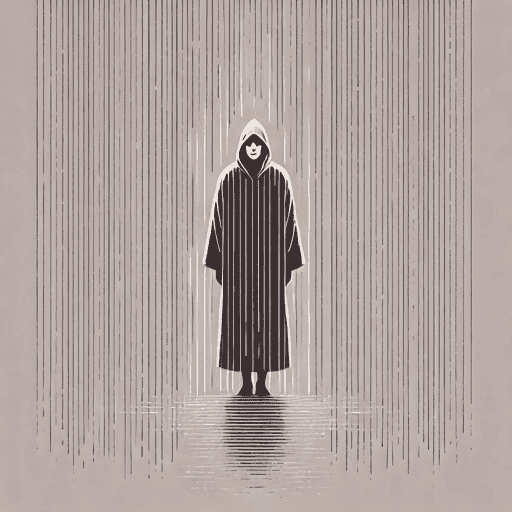
Published in 2017, Glass Houses is a crime novel by Canadian author Louise Penny. It is the 13th installment in the long-running Chief Inspector Armand Gamache series. The story opens with the murder trial of a Three Pines resident, with Chief Superintendent Gamache testifying about the events that led to the crime. The narrative flashes back to the previous autumn, when a mysterious, black-robed figure appears in the quiet village, standing silently for days on the green. When the figure disappears and a body is found, Gamache must unravel a conspiracy rooted in long-held secrets and a competing claims of justice. The novel explores themes such as The Moral Failures of the Law, The Deceptive Nature of Appearances, and Unresolved Guilt and Self-Justified Justice.
Penny is an acclaimed author whose work is closely associated with Québec, where she lives in a small village that inspired the fictional setting of Three Pines. The Armand Gamache series has been widely read internationally, and Penny has received numerous honors, including multiple Agatha Awards and the Order of Canada. Glass Houses was a #1 New York Times bestseller and was well received by critics. The novel places its protagonist in a new role as head of the Sûreté du Québec, a position he attained after a long-running battle against institutional corruption that is detailed in previous books. This context helps explain Gamache’s motivations and his decision to run a high-stakes, secret operation that reflects the real-world fight against the global opioid crisis and powerful drug cartels.
This guide refers to the 2017 Minotaur Books edition.
Content Warning: The source text and this guide feature depictions of graphic violence, substance use, addiction, cursing, death, illness, pregnancy termination, child abuse, and death by suicide.
Plot Summary
Chief Superintendent Armand Gamache testifies in a Montréal courtroom during a sweltering July murder trial. Presided over by Judge Maureen Corriveau, the case involves a victim found in Gamache’s home village of Three Pines. The chief crown prosecutor, Barry Zalmanowitz, questions Gamache, who explains that the events leading to the murder began with the appearance of a mysterious, black-robed figure on the village green.
The narrative then shifts back to the previous November 1 in Three Pines. Among those present are Gamache and his wife, Reine-Marie, artist Clara Morrow, poet Ruth Zardo, and bookstore owner Myrna Landers, all attending a post-Halloween party at the bistro run by Olivier Brulé. Also present is a group of university friends holding their annual reunion: politician Lea Roux and her husband, Matheo Bissonette, and architect Katie Evans with her husband, Patrick Evans. A guest in a black robe, mask, and hood stands silently at the party, deeply unsettling the guests. Gamache privately believes the figure represents death.
The next morning, the robed figure is still on the village green, staring toward the bistro. Gamache confronts the figure, but it remains silent and motionless. Its continued presence unnerves the villagers, including the bistro’s new dishwasher, Anton Lebrun, and the bakery’s new assistant, Jacqueline Marcoux. Anton warns Jacqueline not to speak to Gamache about the figure. That night, Gamache watches from his study as the figure disappears, only to find it has returned to the same spot the following morning.
Matheo, Lea, and Patrick approach Gamache with a theory. In Myrna’s bookstore, Matheo explains that the figure resembles a “cobrador,” a figure from Spanish tradition who acts as a “conscience” by silently following and shaming a person who has committed a great moral wrong. He shows them an old photograph of such a figure, which matches the one on the green. Back in the July courtroom, Gamache testifies that this led him to believe that a conscience had been called to the village for a horrific deed.
In the November flashback, Gamache’s second-in-command, Inspector Jean-Guy Beauvoir, confirms the history of the cobrador. That evening, a mob led by a local worker, Paul Marchand, confronts the cobrador. Lea, Gamache, Anton, and others intervene to protect it. Gamache disarms Marchand, finds fentanyl pills on him, and has him arrested. Gamache tells the cobrador to leave, but it remains, its gaze now fixed on the bakery where Jacqueline is working. The next morning, the figure is gone, and the village is relieved.
Gamache returns to his Sûreté headquarters in Montréal, where a conversation with Superintendent Madeleine Toussaint about the unwinnable drug war sparks an idea for a radical new strategy. His work is interrupted by a frantic call from Reine-Marie, who has found the cobrador’s body in the church’s root cellar. Gamache and Beauvoir race to Three Pines, and Chief Inspector Isabelle Lacoste, head of homicide, is dispatched with her team. In the cellar, they remove the mask from the body and discover that the victim is Katie Evans. A bloody baseball bat is found leaning against a shelf.
Lacoste sets up an incident room in the church basement. Patrick is informed of his wife’s death and collapses after Lea gives him an Ativan. Beauvoir goes to Montréal to interview Katie’s sister and obtains a university-era photo of the friends with a fifth person, Edouard Valcourt. Later, Reine-Marie tells Gamache she did not see the bat when she found the body. Prompted by Ruth’s mention of Prohibition-era rumrunners using the church, Gamache and Beauvoir discover a hidden door in the root cellar, which explains how the bat was removed and later returned. They decide to keep this discovery secret to mislead the killer.
That evening, Anton confesses to Beauvoir that he knew the friends from university and was the dealer who sold drugs to Edouard Valcourt, who died by suicide. He believed the cobrador was sent by the friends for revenge. A lab report shows DNA from Katie, Anton, and a trace of Jacqueline on the bat. Soon after, Jacqueline, Edouard’s sister, confesses to Gamache that she orchestrated the cobrador plot with the four friends. They took turns wearing the costume, and Katie was the cobrador on the night she was killed. Gamache arrests Jacqueline for murder, privately telling her that her arrest is part of a plan to trap Anton.
The narrative returns to the July trial of Jacqueline Marcoux. Gamache commits perjury, testifying that the bat was present when the body was found, thereby concealing the hidden door. A distressed Beauvoir leaves the courtroom. He learns from Toussaint that a massive fentanyl shipment they were ordered to let pass has crossed into the US, and a new drug, krokodil, is now waiting at Mirabel airport. They realize the cartel is testing the Sûreté’s apparent weakness. Judge Corriveau summons Gamache and Zalmanowitz to her chambers, where Gamache reveals his secret year-long operation: to feign incompetence and gut most Sûreté resources to lure the head of the dominant Québec drug cartel, Anton, into the open. Risking her career, the judge gives them until the next morning before she acts.
That evening in Three Pines, both the American and Québec cartel heads converge in the bistro for a meeting. Gamache and Beauvoir race to the village. The meeting escalates into a hostile takeover attempt, and a gunfight erupts, during which Olivier is wounded and Lacoste is critically shot. Anton and the American cartel leaders escape into the woods, pursued by Gamache and Beauvoir. In the forest, Beauvoir captures Anton alive. Gamache pursues the American leader across the US border and kills him in a shootout.
A week later, Gamache explains everything to the premier ministre. Jacqueline, seeking revenge for her brother’s death, killed Katie. She then used her knowledge of the hidden door, which she discovered by spying on Anton, to plant his DNA on the bat and frame him. The premier suspends Gamache and Beauvoir pending an investigation. The village slowly returns to a sense of normalcy. The novel closes with Gamache at the hospital, reading Pinocchio to the comatose Isabelle Lacoste.

Unlock all 62 pages of this Study Guide
Get in-depth, chapter-by-chapter summaries and analysis from our literary experts.
- Grasp challenging concepts with clear, comprehensive explanations
- Revisit key plot points and ideas without rereading the book
- Share impressive insights in classes and book clubs