Glass Houses
62 pages • 2-hour read
Louise PennyGlass Houses
A modern alternative to SparkNotes and CliffsNotes, SuperSummary offers high-quality Study Guides with detailed chapter summaries and analysis of major themes, characters, and more.
Symbols & Motifs
Content Warning: This section of the guide includes discussion of illness, death, and substance use.
The Cobrador
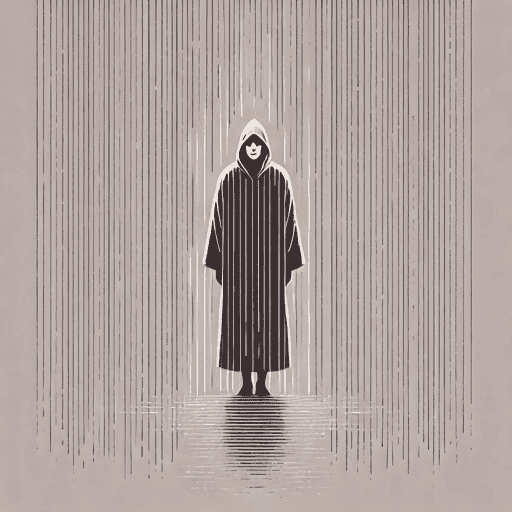
The cobrador is the novel’s central symbol, a physical manifestation of conscience called to collect a moral debt that the legal system cannot address. Its origin, which Gamache and Jean-Guy research, is tied to plague survivors who returned from exile to silently confront those who had wronged them. The cobrador thus represents an archaic, nonviolent form of justice that supersedes institutional law, embodying the theme of The Moral Failures of the Law. When it appears in Three Pines, it functions as an externalization of an unbearable internal guilt, a silent accuser whose purpose is not to punish but to force a reckoning. As Matheo explains, the original cobrador collects on a “moral” debt, not a financial one. This frames the conflict and moves the crime beyond legal transgression. Further, its terrifying appearance highlights The Deceptive Nature of Appearances; though it looks like an agent of violence, like “death” itself, its power is passive, drawing menace from the guilty secrets of those it observes.
Glass Houses
As the novel’s title, “glass houses” symbolize transparency, vulnerability, and the deceptive nature of appearances. The symbol operates on multiple levels, applying to Three Pines, the characters’ inner lives, and the victim’s profession. The idyllic village itself is a glass house, a haven of seeming tranquility and openness whose fragile peace is shattered by the intrusion of a brutal drug war. The hidden door in the church cellar, which facilitates both the cobrador’s secrecy and the cartel’s smuggling route, is a literal representation of the corruption concealed beneath the village’s pristine surface. The symbol also extends to the characters, who find their long-held secrets and unresolved guilts exposed to scrutiny by the cobrador’s presence.
The title is also an allusion to the well-known proverb, “Those who live in glass houses shouldn’t throw stones.” Ruth invokes this warning against moral hypocrisy directly when she confronts Lea, muttering, “Glass houses.” This moment underscores how the characters’ attempts to pass judgment on others are fraught with hypocrisy, as their own fragile secrets make them vulnerable. This contextualizes and complicates Gamache’s moral conflict, hinting that he risks descending to the level of the cartels in attempting to outmaneuver them. Ultimately, the novel suggests that no person or place is without hidden flaws, and that the illusion of perfect transparency will break.
Burning Ships
The motif of “burning ships” represents the irreversible commitment Gamache makes to defeat the drug cartels, a point of no return. The phrase originates in a conversation with Superintendent Toussaint, who declares they must reinvent their strategy and fully commit. “‘We need to commit totally,’ she said. ‘Burn our ships. No going back’” (118). Gamache seizes this idea, building his entire operation around it. This motif helps explain his seemingly incompetent and unethical actions, including allowing massive drug shipments to cross the border and perjuring himself in court. By “burning his ships,” Gamache abandons conventional, lawful methods because he believes they have already failed. He embraces a strategy that will inevitably destroy his career and reputation but offers the only chance at a decisive victory. This choice is the ultimate expression of Unresolved Guilt and Self-Justified Justice, showing a man willing to sacrifice his professional honor and legal standing to serve what he perceives as a higher, more urgent form of justice, no matter the personal cost.

Unlock the meaning behind every key symbol & motif
See how recurring imagery, objects, and ideas shape the narrative.
- Explore how the author builds meaning through symbolism
- Understand what symbols & motifs represent in the text
- Connect recurring ideas to themes, characters, and events