Glass Houses
62 pages • 2-hour read
Louise PennyGlass Houses
A modern alternative to SparkNotes and CliffsNotes, SuperSummary offers high-quality Study Guides with detailed chapter summaries and analysis of major themes, characters, and more.
Themes
Content Warning: This section of the guide includes discussion of death by suicide, substance use, addiction, and graphic violence.
The Moral Failures of the Law
In Glass Houses, Penny suggests that institutional frameworks often fail to address profound wrongs. The novel suggests that while the law provides order, it does not always provide justice. This pushes several individuals into morally gray choices, guided by what one character calls a “higher court.”
The novel’s critique centers heavily on the cumbersome nature of the law, which derives from the very thing that gives it legitimacy: its norms and rules. The courtroom narrative highlights the conventions and procedures of a criminal trial, while plot points like the climactic gunfight, which spills over into US territory, draw attention to issues of jurisdiction. The many laws governing the application of the law itself serve as a safeguard, but they also mean that the legal system defaults to inaction—a point the novel underscores through its exploration of the opioid crisis. The cartels driving the crisis are flexible in a way the legal system is not. Unbound by bureaucratic norms, they can adapt quickly to changing circumstances while the police and courts are struggling to catch up. This places the law in the position of addressing the crisis on a case-by-case basis while the broader infrastructure of the drug trade remains untouched; the structure of the novel, which juxtaposes the trial with the real-time events of the murder, reinforces that the law is basically reactive in nature. Edouard Valcourt’s death by suicide while under the influence of drugs reveals the moral consequences of this, which both the cobrador and Gamache seek to redress through extra- or illegal means.
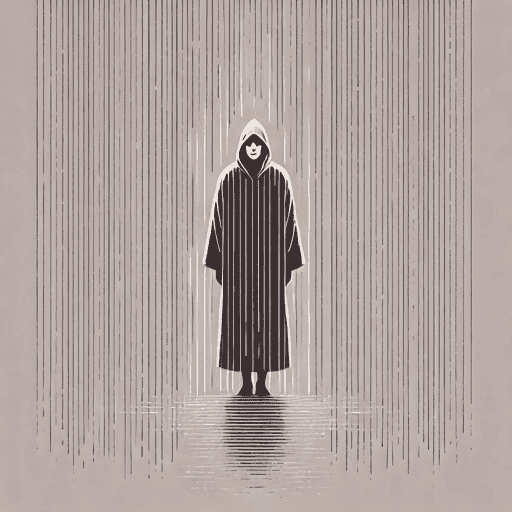
The cobrador is the novel’s primary symbol of conscience operating outside the law. This silent, robed figure appears in Three Pines to force a moral reckoning that the legal system cannot. It is a physical manifestation of a “conscience […] called” to address a wrong, and it does so by appealing to personal morality: Its unnerving presence compels the villagers to examine their own pasts, triggering a cascade of confessions about long-held secrets and guilts. Through this collective introspection, Penny establishes that the court of conscience is internal and perpetually in session, unlike the court of law. Similarly, Gamache admits that while he believes in the justice system, what he truly must answer to is his conscience, which he calls a “pretty harsh judge” (1). Gamache ultimately acts on this belief by committing perjury during the trial. As the head of the Sûreté, his decision to lie under oath represents a betrayal of the legal system he is sworn to uphold. Yet, he does so to protect a secret operation designed to dismantle a vast criminal network, sacrificing his career and reputation to pursue a result he believes the law cannot reach on its own and thus underscoring the gap between legal procedure and moral judgment.
Nevertheless, it is significant that Gamache justifies his actions with recourse to legalistic language. The novel is ultimately unwilling to suggest the law has no moral authority, as evidenced by the fact that Gamache is under investigation as the story concludes. The message is instead that while securing justice may sometimes necessitate acting outside the law, such actions must themselves be subject to legal scrutiny so as to avoid a situation in which everyone determines their own “law.”
The Deceptive Nature of Appearances
Glass Houses demonstrates that appearances can be profoundly misleading, camouflaging both immense evil and heroism beneath ordinary facades. By revealing hidden realities behind characters, places, and even institutions, Penny suggests that true character and danger are rarely visible on the surface. This theme challenges the reader to look beyond the obvious and question the nature of what is seen.
The most dramatic example of deceptive appearances is Anton Boucher, the central antagonist. To the villagers of Three Pines, Anton is a humble dishwasher and aspiring chef with an interest in foraging and local cuisine. This unassuming exterior conceals his true identity as the ruthless head of a powerful drug cartel. Similarly, the tranquil village of Three Pines, described as a “haven,” becomes a nexus for an international drug war and the scene of a brutal murder. Its picturesque tranquility masks the dark forces converging upon it. Penny uses these juxtapositions to show that evil can exist quietly within ordinary, even idyllic settings..
Conversely, the novel shows that heroism and purpose can also be disguised. Gamache deliberately cultivates a public persona of an ineffectual leader, earning him the reputation as “the worst Chief Superintendent of the Sûreté in a very long time” (42). However, this apparent incompetence is a strategic ruse designed to make the cartel underestimate him while he orchestrates its downfall. Likewise, the cobrador’s frightening appearance, which makes villagers think of “death,” belies its function as an agent of conscience. Its power lies not in physical intimidation but in the moral judgment it represents. The fact that multiple ordinary people share the role of the cobrador underscores that its terrifying form is a costume and that its true essence is an idea rather than a person. Through these inversions, Penny suggests that truth is often found by looking past the surface, and that both danger and virtue may wear convincing camouflage.
Unresolved Guilt and Self-Justified Justice
Glass Houses explores how unresolved guilt and trauma can shape (and distort) the pursuit of justice, sometimes in destructive and disproportionate ways. Through characters whose pasts haunt their present actions, the novel illustrates that when personal pain is not processed, it can curdle into a dangerous obsession, blurring the lines between moral righteousness and personal revenge.
The central manifestation of this theme is Jacqueline’s murder of Katie. Her act is a violent expression of long-festering grief and misplaced blame over her brother Edouard’s death by suicide 15 years prior. Believing Katie and Anton are responsible, Jacqueline orchestrates the arrival of the cobrador, turning private grief into a campaign of judgment and punishment. While the novel has some sympathy for her targeting of Anton, it suggests that she crosses a line when she resorts to violence—particularly because that violence most directly targets Katie, who was at most peripherally involved in Edouard’s death and herself feels guilt and grief over it.
Gamache’s illegal actions offer a more complex exploration of the same theme, as they are motivated by reasoned moral conviction rather than simply personal outrage. His ability to quote Gandhi’s belief that the court of conscience “supersedes all other courts” highlights the more thoughtful nature of his rule-breaking (217). At the same time, Gamache’s character is also consistently defined by his guilt over the death of a young agent in a past case. This unresolved trauma, rendered physical in the scar left by the same incident, informs his personal and often unorthodox approach to his work. His secret operation to bring down the cartel at best exceeds and at worst conflicts with professional duty; it is a moral crusade that requires him to sacrifice his reputation and break the law. This mission, aimed at achieving sweeping public justice, is complicated by Gamache’s private burdens, which sharpen his empathy and raise the personal stakes of every compromise. In this light, Gamache’s pursuit of justice is shaped by personal emotion, suggesting that even principled individuals do not act from pure abstraction: Private guilt can influence the choices they justify in public.

Unlock every key theme and why it matters
Get in-depth breakdowns of the book’s main ideas and how they connect and evolve.
- Explore how themes develop throughout the text
- Connect themes to characters, events, and symbols
- Support essays and discussions with thematic evidence