Glorious Exploits
A modern alternative to SparkNotes and CliffsNotes, SuperSummary offers high-quality Study Guides with detailed chapter summaries and analysis of major themes, characters, and more.
Summaries & Analyses
Reading Tools
Summary and Study Guide
Overview
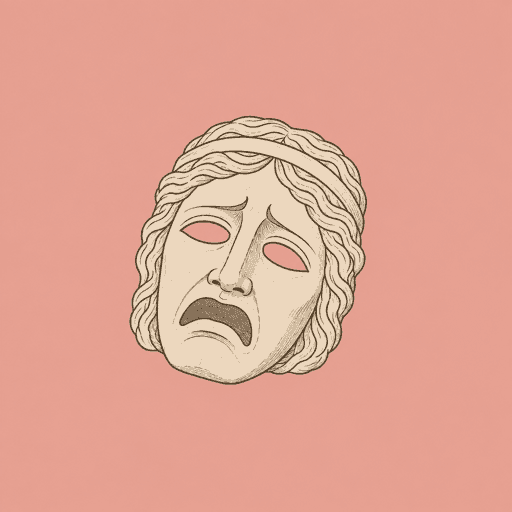
Ferdia Lennon’s debut novel, Glorious Exploits (2024), is a work of historical fiction that blends dark comedy with tragedy. The story is set in Syracuse, Sicily, in 412 BC, in the aftermath of the city’s victory over an invading Athenian army during the Peloponnesian War. Two unemployed potters, the cynical narrator Lampo and his grief-stricken friend Gelon, decide to offer food and water to the thousands of starving Athenian prisoners held in a stone quarry, but only if they can recite lines written by their favorite playwright, Euripides. This simple transaction quickly escalates into a madly ambitious plan: to stage a full-scale production of Euripides’s tragedies using the prisoners themselves as the cast. The novel explores themes such as Art as a Catalyst for Human Connection, The Brutal Cost of Vengeance, and Storytelling as a Form of Survival for Silenced Peoples.
The premise of Glorious Exploits is drawn from a historical anecdote recorded by the ancient historian Plutarch. Lennon retells this classical story through a distinctly modern, working-class Irish vernacular, a stylistic choice that places the novel within the Irish tragicomedy tradition of authors like Roddy Doyle and Kevin Barry. Upon its release, the novel received widespread critical acclaim. It was a Sunday Times bestseller and was selected as a BBC2 Between the Covers book club pick. Glorious Exploits won the 2024 Waterstones Debut Fiction Prize and the Bollinger Everyman Wodehouse Prize for Comic Fiction, among other honors. The novel has been adapted as an audio drama for BBC Radio 4.
This guide refers to the 2025 Henry Holt and Company paperback edition.
Content Warning: The source text and this guide feature depictions of graphic violence, bullying, racism, gender discrimination, physical and emotional abuse, ableism, disordered eating, cursing, child abuse, child death, self-harm, death by suicide, animal death, and death.
Plot Summary
In Syracuse in 412 BC, two unemployed potters, Lampo and his best friend Gelon, navigate life in the wake of their city’s victory over an invading Athenian army. Gelon in particular is grieving the loss of his family, following the death of his son, Helios, and the disappearance of his wife, Desma. In a stone quarry known as Laurium, thousands of Athenian prisoners are being starved to death. Gelon, an obsessive admirer of the Athenian playwright Euripides, convinces Lampo to accompany him to the quarry, where they offer food and water to any prisoner who can recite lines from Euripides’s plays. During one such visit, Lampo saves an Athenian prisoner named Paches from the vengeful Syracusan Biton, whose son was killed in the war. After discovering another prisoner, Numa, is a talented actor, Gelon conceives a bold and outlandish plan: to stage a full production of Euripides’s Medea in the quarry, using the prisoners themselves as the cast.
To fund their production, Gelon and Lampo recover a cache of abandoned Athenian armor with the help of a group of local children. Unable to sell it to a local blacksmith, they are directed to a mysterious and wealthy foreign collector, Tuireann, who agrees to buy the armor and later becomes their producer. They also secure the help of Alekto, the city’s sole theatre props-maker, who is moved by Gelon’s passion and agrees to provide masks and costumes on credit. Gelon reveals an even grander ambition: to stage Medea along with Euripides’s newest play, The Trojan Women, which no one in Sicily has seen thus far. With Tuireann’s funding and Alekto’s craft, the production begins in earnest. The local children become production assistants, delivering food and supplies to the slowly reviving cast, which includes Paches as Jason and Numa as a brilliant Medea. The rehearsals are threatened when Biton discovers them, but the intervention of the children’s leader, a young boy named Dares, prevents any immediate violence from occurring. Meanwhile, Lampo falls for Lyra, an enslaved Lydian girl at a local tavern. He begins working manual labor jobs to save the 300 drachmae needed to buy her freedom.
As the two plays are woven together, a young, gifted Athenian named Linar is cast as Cassandra, while Lampo insists that Paches also play Helen. Gelon devises a radical and dangerous innovation: to cast the youngest of the children, a tiny boy named Strabo, as the child Astyanax in The Trojan Women, planning to stage his death by having him pushed from a boulder onto a hidden pile of grain. After a chaotic promotional campaign, which includes Alekto driving a chariot through the city, a massive and tense crowd of Syracusans gathers at the quarry for the performance.
After a rocky start, Numa’s powerful portrayal of Medea silences the crowd, and the play builds to a destructive climax. The performance of The Trojan Women is even more raw and harrowing than Medea, with the actors’ real-life suffering lending an unbearable authenticity to the tragedy. The moment Strabo is pushed from the rock, the audience gasps in collective horror, believing they have witnessed the real death of a child. Just as the play reaches its final, grief-stricken moments, Biton and a mob of his followers storm the stage. Biton brutally murders Numa, smashing his head with a club, while his men attack the rest of the cast. Gelon and Lampo rush to intervene; Lampo’s nose is broken by a young aristocrat, and Gelon is beaten unconscious by Biton. The Syracusan audience is frozen in shock until Biton strikes one of the children, which finally spurs them to step in and halt the massacre. Several actors, including the talented Linar and their musician Alcar, are killed in the chaos.
Lampo awakens in a cave, tended to by Paches, one of the few surviving actors. In the aftermath, the Syracuse assembly decrees that all rations to the remaining Athenians be cut, dooming them to a swifter death. A guilty Gelon initially refuses to help Lampo rescue the survivors, leading to a bitter falling out. Desperate, Lampo appeals to their producer, Tuireann, who is hesitant to risk a rescue from Syracuse harbor but agrees to wait for two days at the remote, ruined town of Hyccara. With the help of Alekto, who provides a wagon and driver, and a repentant Gelon who rejoins him at the last minute, Lampo orchestrates a daring nighttime escape. They pull a stake from the quarry fence and, after a tense wait, manage to pull a collapsed Paches and a handful of other survivors through the gap and flee.
After a grueling two-day journey across Sicily, the group reach the ruins of Hyccara just in time to meet Tuireann’s ship. Paches and the other survivors are taken aboard. Before departing, Tuireann offers Lampo a job as one of his crewmen; Lampo refuses to leave Syracuse, prompting Tuireann to give Lampo the 300 drachmae he needs to buy Lyra’s freedom. Lampo and Gelon make the long walk back to Syracuse, only for Lampo to discover that Dismas, the tavern owner, has already sold Lyra to Tuireann for a much higher price. Heartbroken, Lampo goes to the now-empty quarry and throws all the gold coins into the pit.
Years later, an old Lampo recounts the story to a grown-up Strabo, who is writing it down for posterity. Syracuse is now under siege by Carthage, and Gelon has long since passed away after starting a school for children. In a final scene set in Athens, a wealthy Paches visits Euripides on the eve of his exile. Paches gives the playwright a rare manuscript and tells him the story of the performance in the quarry, explaining how, for the starving prisoners, “these lines were life to them” (284).

Get in-depth, chapter-by-chapter summaries and analysis from our literary experts.
- Grasp challenging concepts with clear, comprehensive explanations
- Revisit key plot points and ideas without rereading the book
- Share impressive insights in classes and book clubs