Goblin Market
A modern alternative to SparkNotes and CliffsNotes, SuperSummary offers high-quality Study Guides with detailed chapter summaries and analysis of major themes, characters, and more. For select classroom titles, we also provide Teaching Guides with discussion and quiz questions to prompt student engagement.
Poem Analysis
Analysis: “Goblin Market”
Christina Rossetti wrote “Goblin Market” as a narrative poem. The poem features a plot with protagonists, antagonists, and an omniscient third-person narrator. An omniscient third-person narrator does not directly participate in the plot yet knows the inner thoughts of all the characters. A third-person narrator seldom uses first-person pronouns.
The omniscient narrator adds a foreboding and eerie air to “Goblin Market,” helping to mimic the cautionary aspects of folktales. It feels like a story passed down over generations rather than a salacious confessional. While she takes inspiration from earlier stories, Rossetti created an original fantastical fairy tale rather than transcribing an older oral story.
While the Grimm Brothers’ fairy tales focused on relationships in general, Rossetti placed sisterhood at the center of her story. Rossetti’s decision was radical at the time. The Victorian worldview painted women as dependent on their fathers and husbands. Women possessed moral superiority but could easily be tempted and corrupted by the outside world. The world became divided between the public sphere and the domestic sphere. Men entered the morally grey public sphere of business and politics. Society expected women to stay behind at home, teach children moral behavior, and provide men with perspective.
Additionally, many medical professionals believed that women lacked sexual desire. They only procreated to have children. Ostensibly, duty and utility defined women’s relationships (Hughes).
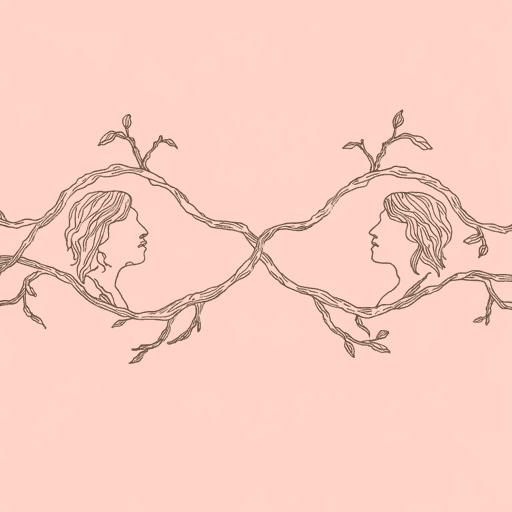
Rossetti’s “Goblin Market” challenges many of these assumptions. The poem’s most crucial relationship remains between the sisters, Lizzie and Laura. Even after having children, the story emphasizes the power of sisterly love. Laura fulfills her responsibility to educate the next generation, but her story does not uphold gender roles. At the poem’s end, she tells them,
“For there is no friend like a sister
In calm or stormy weather;
To cheer one on the tedious way,
To fetch one if one goes astray,
To lift one if one totters down,
To strengthen whilst one stands” (Lines 562-67).
Laura’s lesson highlights love for love’s sake and women’s emotional independence. Lizzie’s bravery does enable Laura to become a mother and wife later. However, their love alone cannot make them mothers or wives. The sister’s love is not for fulfilling society’s goals for them. It does not falter after Laura’s decision, still sleeping in the same bed as her. Lizzie never passes judgment on her sister during her illness too. She frets over her sister’s waning health, debating if it is wise to bring fruit back from the goblins.
Lizzie does not link her earlier warnings with Laura’s viability as a mother and wife. Instead, Laura is a complete person. In the second, third, seventh, and twelfth stanzas, Lizzie’s advisories are that the goblins will harm them. In the seventh stanza, Jeanie’s tragedy is her death. Lizzie does not mention a woman’s traditional roles in her concerns until the 17th stanza. Lizzie brings them up only when thinking about herself. Lizzie thinks about Jeanie, “who should have been a bride,” when thinking about the potential consequences of getting Goblin fruit for Laura (Line 313). She does not project the same desires onto her sister.
Even then, Rossetti de-contextualizes wifehood from men. The girls’ father never appears. When they eventually become wives, the reader learns nothing about their husbands or marriage ceremonies. The term “husband” never appears in the poem. Jeanie’s lost bridehood shows the unfairness of her early death. Lizzie finally decides to visit the goblins when she sees Laura is about to die. In case her mission fails, her final action is kissing Laura goodbye.
Laura also cares for Lizzie as a person rather than as a future wife and mother. When Laura returns home from the goblins, she wants to share with Lizzie her extraordinary experience and promises to bring her fruit the next day. Later, she cries at the prospect of Lizzie sharing her fate. “Must your light like mine be hidden, / Your young life like mine be wasted,” she gasps as she sees the juice on Lizzie’s face (Lines 480-81). The image of a hidden light evokes Lizzie’s vitality and personality, radiating from within her. “Your young life…wasted” (Line 481) does not narrow Lizzie’s future options to just mother and wife. It is open-ended, allowing for choice, flexibility, and multiplicity.
Laura and Lizzie do not need a father or husband to rescue them as long they have each other. Both sisters’ love enables their full personhood and spiritual interiority, rather than limiting them to set duties.
While Lizzie possesses the expected feminine morality, she lacks the expected frailty and susceptibility. She never gives in to the goblin men’s goading. When she runs home, she never thinks about eating the fruit herself. If Laura is both Adam and Eve, then Lizzie fulfills the role of Jesus Christ.
According to Christian theology, Jesus Christ acted as humanity’s savior by dying to absorb and absolve everyone’s sins. “His body was pierced, receiving what we deserved so that we could be healed from our sin,” explained Rev. David Yarborough. “There will never again need to be a sacrifice for our sin, once for all. Jesus Christ died as an act of love” (Yarborough, David. “Understanding Christ’s Sacrifice Is Critical.” The Brunswick News, 17 Aug. 2019).
Rossetti’s definition of love also depends on her contrasting it with exploitation. The goblins’ curse works through physical violence, coercion, deception, and sadism. The goblins’ whole scheme centers on delivering maidens a pleasurable experience, only to taint the joy with slow suffering. The arrangement only benefits the goblins. They make money at the expense of their victims.
While love allows for growth, “Goblin Market” argues that exploitation is circular. Repetition is a crucial feature of the goblins. Rossetti begins the poem with the fact that they sell their produce every morning and evening. Each time they show up, the goblins are called wombats, rats, cats, snails, ratels, and birds during both their appearances. The first fruit the goblins list on the day of Laura’s encounter is an apple. Then when Lizzie visits them, their first words to her are, “Look at our apples” (Line 352). It signals that the goblins have a fixed script for their seductions. Both Laura and Jeanie eat the fruit in the goblins’ presence. When Lizzie does not respond as their victims usually respond, they become increasingly angry until they attack her. Eventually, they let her go and crawl back to their holes. Lizzie’s victory seems to make no difference to them in the long run. Laura’s ending story to her children hints that their games may continue.
Goblins are always near liminal spaces as well. The brooks and rivers are enduring symbols of the supernatural and transience. Their operations occur at dawn and dusk: the transition between night and day, light and dark. While Laura eats the food, time melts, and she realizes she has no clue how long she spent there.
Rossetti proposes that love requires specificity and creates order. Exploitation will use anyone and distorts order. As previously stated, Lizzie helps her sister even though Lizzie disapproves of Laura’s actions. In contrast, the goblins attack Lizzie when she behaves against their wishes.
A devout Christian, Christina Rossetti links love with her spiritual values. Love means sacrifice and mutual concern. It allows people to grow. Lizzie becomes braver to win back Laura’s health, which allows Laura to realize her mistake and pass her wisdom to her children. “Goblin Market,” at its core, is about love. Challenging the gender norms of her day allows Rossetti to explore the nature of love and its value more profoundly and neutrally when it succeeds.

Get in-depth, chapter-by-chapter summaries and analysis from our literary experts.
- Grasp challenging concepts with clear, comprehensive explanations
- Revisit key plot points and ideas without rereading the book
- Share impressive insights in classes and book clubs
Featured Collections
Allegories of Modern Life
View Collection
Appearance Versus Reality
View Collection
Beauty
View Collection
Brothers & Sisters
View Collection
Challenging Authority
View Collection
Community
View Collection
Earth Day
View Collection
Education
View Collection
Good & Evil
View Collection
Nature Versus Nurture
View Collection
Power
View Collection
Safety & Danger
View Collection
Short Poems
View Collection
Trust & Doubt
View Collection
Truth & Lies
View Collection