Great and Precious Things
58 pages • 1-hour read
Rebecca YarrosGreat and Precious Things
A modern alternative to SparkNotes and CliffsNotes, SuperSummary offers high-quality Study Guides with detailed chapter summaries and analysis of major themes, characters, and more.
Chapters 7-13Chapter Summaries & Analyses
Chapter 7 Summary: “Camden”
Content Warning: This section of the guide includes discussion of illness and death.
Over the next few days, Dorothy calls Cam in the morning to tell him that his father is lucid. Cam then goes to his father’s house, where his father yells at him from the porch as Cam tries to talk to him. Cam spends the rest of the days just off his father’s property, sitting in a chair and reading East of Eden by John Steinback.
Finally, his father comes out and asks Cam what he meant when he said that he had “proof” that he was there to help him. Cam offers to show him, and Arthur invites him in for lunch. As they eat, Cam plays the voicemail for him about the DNR. Arthur admits that he doesn’t remember leaving the voicemail. However, he confirms that he does want a DNR and that Xander won’t give it to him.
Cam tells his father that he’ll fight Xander for the legality of his power of attorney and the DNR. Arthur points out that this would mean going in front of Judge Bradley—Willow’s father—to fight against the mayor (Xander) in court. Cam realizes that it will make the town hate him even more but decides that he must do it for his father.
Cam tells his father that he’ll help on two conditions. First, they must declare a “truce” in which Arthur stops kicking him out of the house—at least when he’s lucid. Second, Arthur must promise to listen to Cam’s story from the day Sullivan died. Even if his father still blames Cam, he at least wants him to know the entire story. Arthur agrees.
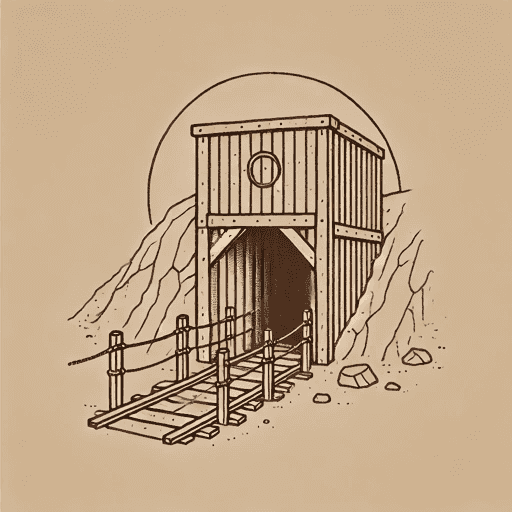
Cam asks Dorothy and Arthur where to start in his battle with the town. Dorothy suggests the Historical Society. That, too, will be difficult since their family only has one vote—and Xander is currently using it. However, Arthur points out that Cam owns the thing that the society wants most: the old Rose Rowan Mine. He suggests that Cam sell it to the town. Cam is hesitant, thinking about how old and dangerous it is since it hasn’t been open in decades; however, he decides that it’s his best chance.
Chapter 8 Summary: “Willow”
Willow watches as town members discuss their concerns with the Alba Historical Society Council. It’s composed of nine members—the five eldest members of the town’s founding families (of which her father and Xander are a part) and four others who are elected each year.
Cam comes in and sits next to Willow. They watch as several townspeople bring forth complaints or requests for the upcoming season. Before they close the session to public comment, Dorothy steps up to the microphone and tells the council that Cam would like to propose a “summer plan.”
Dorothy’s request immediately starts an uproar among the council. Judge Bradley immediately objects, insisting that Cam owns no historical property that would qualify him to be a member of the Historical Society, so he can’t propose a plan. However, Dorothy produces Cal’s will, showing that Cam owns the mine building on main street. The council calls forward their lawyer, Milton Sanders, to check over the will. Milton agrees that Cal owns the property.
The council’s next objection is that Cam hasn’t lived in Alba for two years. However, Milton points out that he’s allowed to claim exemption since he’s returning from the military. Willow is shocked when Xander objects, stating that the building is uninhabitable; however, according to the bylaws, Cam has two years to renovate it if he has a society-approved renovator.
The entire Historical Society responds in agreement, and Willow can see that they’re all against Cam joining them. A few make comments about the bunkhouse—a property that they believe Cam burned to the ground when he was younger—and how Cam likely wants to “destroy” the town. Angered, Willow steps forward, telling the society that she’ll help him renovate. Her father immediately argues, but she points out that she has a dual degree, having majored in both graphic design and art restoration and conservation.
With no other objections, the town relents, allowing Cam to join the Historical Society. However, they refuse to hear his plan since a member of the council would have to sponsor it. After a long pause, Julie Hall—Gid’s wife—announces that she’ll sponsor it.
Dorothy then explains Cam’s plan. He wants to open the mine for tours. The townspeople are shocked, but Willow can see that they’re excited about the idea. To her annoyance, Xander objects again, insisting that it will be unsafe for tourists—especially this year. Cam tells the council that he’s an engineer, having gotten his degree and worked on much more difficult structures during his time in the military. Satisfied, the town becomes excited about reopening the mine.
Chapter 9 Summary: “Camden”
The next day, Cam goes to the Rose Rowan building to see about renovating it, and Xander accompanies him. Xander confronts Cam, asking why he didn’t tell him about his plan to renovate the mine before going to the council. Cam admits that it was a mistake and apologizes but also insists that he didn’t think Xander would agree with him. Xander acknowledges that he probably would have tried to talk Cam out of it because he still thinks it could lead to serious injuries; however, he promises to publicly support Cam moving forward.
Cam partially lies to Xander, hiding the fact that he plans to challenge Xander’s legal claims to their father’s health. Instead, he tells him that he hopes to use the money from the reopening of the mine to pay for their father’s in-home care. He knows that Arthur has enough money to pay for it, but Xander opposes draining their father’s accounts since he could live for decades needing care. The idea of using the money from the mine pacifies Xander.
Willow comes and looks over the house with Cam. He’s glad to see a “fire” within her as she gets excited about the remodeling. He repeatedly forces down his attraction to her, insisting to himself that he won’t betray Sullivan.
Chapter 10 Summary: “Willow”
A few days later, Willow goes to her parents’ house for dinner with Charity and Rose. The dinner is tense, and her father confronts her about her decision to support Cam at the meeting. Willow insists that Cam is a good person despite the trouble he got into as a kid. Her father angrily points out that Cam once broke her nose and got her trapped in the bunkhouse after he set it on fire. However, Willow is adamant that the injury and the fire at the bunkhouse were both accidents; in fact, Cam saved her from the fire.
Willow then explains that Cam went into the military, had a good career, and got a good education. Her father argues that he chose a “violent” life to match his violent nature. When Willow points out that her father was proud of Sullivan’s choice to join the military, Charity defends her point, causing their father to angrily leave the dinner table.
After dinner, Willow thanks Charity for her support and apologizes for never having said anything to defend her when she got pregnant with Rose and moved out. Charity is adamant that Willow’s choice to stay silent was respectable, especially since it kept the door open for Charity and Rose to be part of their father’s life years later.
Willow drives home, but it’s snowing heavily. She swerves to avoid a group of deer and ends up in a ditch. She calls Cam for help.
Chapter 11 Summary: “Camden”
Cam goes and finds Willow in the storm. They briefly argue about where they should go to get out of the storm. Since the power is out, they settle on Cam’s house since Cal always used solar panels.
Once they’re out of the storm, Willow showers and changes, and then they sit in the living room and talk. Willow thanks Cam for saving her, pointing out that he has already done so many times in their lives, like at the bunkhouse. Cam tries to say that the bunkhouse fire was his fault, but Willow is adamant that the torch falling over was an accident. If not for Cam, she would have died in the fire.
Their conversation leads to Sullivan’s death. Cam is surprised that Willow has “forgiven” him for what happened, but she insists that there’s nothing to forgive since she doesn’t blame him for Sullivan’s death. Cam tries to argue that he gave the order, but Willow tells him that he didn’t know Sullivan was in the group he was sending out to fight. She says that she knows Cam, and he would have given anything to save Sullivan if he could have—even his own life. In the tension that follows, Willow asks Cam if he still reads out loud. He gets East of Eden and begins reading the first page.
Chapter 12 Summary: “Willow”
The next morning, Willow makes breakfast in the kitchen. Tension hangs between them, and Cam ends up standing next to Willow at the stove. He looks at her, and she can feel him contemplating. He tells her that he wants her to say “no,” but instead, she says “yes,” drawing Cam to her as he kisses her. They kiss for several minutes, but Cam’s phone starts to ring. He stops and pulls away.
Frustrated, Cam tells Willow that he shouldn’t have kissed her. She argues, saying that she wanted him to. However, Cam tells her that he doesn’t deserve to after causing Sullivan’s death. He tells her the story, but Willow responds by insisting that Cam isn’t responsible for what happened to Sullivan. She tells him that he “deserves” to live—despite what Cam, the town, and even Arthur may think. He tries to argue that she deserves someone better than him, which shocks her.
Before she can argue back, his phone rings again. He answers it, telling the person on the other line that he’ll be right there. When he hangs up, he tells Willow that his father had an accident.
Chapter 13 Summary: “Camden”
When Cam gets to his father’s house, he finds Xander in the garage performing CPR. Arthur tried to take the car out but couldn’t get the garage door open. As a result, the car continued to run, filling the garage with carbon monoxide. Arthur has a pulse but isn’t breathing. Cam instructs Xander to stop doing compressions, as it could damage his pulse, and to instead focus on rescue breaths.
When a medivac helicopter arrives, Cam meets the paramedics and briefs them on the situation. As they load Arthur onto the helicopter, Cam realizes that this is exactly what his father didn’t want—to be resuscitated. He has always been adamant that he wants to die in his home.
Cam tries to tell Xander that they’re defying their father’s wishes, but Xander argues. He insists that he isn’t ready to let his father die. The paramedics instruct them that only one person can come in the helicopter, so Xander leaves Cam at the house alone. As the helicopter flies away, Cam has a “bitter” feeling that he helped resuscitate his father.
A few hours later, Cam gets to the hospital. He’s immediately angry that Arthur has been put on a ventilator. He confronts Xander, but the doctor interrupts their argument to update them on their father. He can’t breathe on his own. They’re hoping that hyperbaric oxygen therapy will help.
Later that night, Walt comes to the hospital to visit Arthur. He, too, is bothered by the fact that Arthur is on life support. Cam tries to take partial blame, explaining that he told Xander how to save his father in the garage, but Walt insists that he isn’t responsible for what’s happening now.
Their conversation is interrupted when Xander yells for help in Arthur’s room. Arthur is conscious and is trying to rip out the tube in his throat. Cam helps restrain him and then sees the accusatory look that his father gives him. Arthur looks terrified. The medical team comes in and gives his father a sedative.
When Cam and Xander are alone, Xander tries to apologize. However, Cam insists that he won’t stay to see Xander ignore their father’s wishes. He refuses to see him wake up in terror again.
Chapters 7-13 Analysis
This section introduces Judge Bradley as one of the novel’s antagonists. He stands in opposition to both Cam and Willow as a representation of the entire town of Alba in his stubbornness and refusal to accept change. At the Historical Society meeting, Judge Bradley leads the council in its opposition to Cam’s membership and his plan for the summer. Fixated on the person Cam used to be, Judge Bradley represents old-fashioned ideals and stagnation, which Cam encapsulates in his assessment: “Survival here depends on our ability not to change, to preserve the past. Change and progress are the two things that will kill this town” (82). Similarly, Judge Bradley’s stubbornness is apparent at dinner with his family. After he disowned Charity after her pregnancy nine years earlier, their relationship was nonexistent. Now, as Judge Bradley sees Willow defending Cam and possibly pursuing her feelings for him, he threatens to disown her, too.
At the dinner, when Willow stands up to her father’s ignorance, it marks a significant moment in her character development. For the first time since Sullivan’s death, she insists to her family that Cam isn’t responsible. Willow acknowledges and calls out her father’s hypocrisy, noting his differing opinions on Sullivan’s and Cam’s decisions to join the Army. After Judge Bradley calls Cam’s time in the Army a “career where he could continue [his] violence,” she tells him, “That’s not what you said when Sullivan enlisted. You told him how proud you were, how he was a man to admire for serving his country just like his father and brothers had. Why is Cam’s choice any less honorable?” (131). This irony emphasizes the bias in Judge Bradley’s character. He inherently dislikes Cam, refusing to acknowledge the possibility that he has changed or was never a bad person to begin with. When Willow confronts her father and speaks these words out loud, she begins her change as she finally defends Cam against the ignorance and prejudicial attitudes of her father and the other townspeople.
Through this dinner conversation, the novel draws a parallel between Cam’s and Willow’s characters with relation to their fathers. For years, Willow refused to challenge her father, instead keeping the peace simply because of who he is. Like Cam, she has felt a duty to remain loyal to her father, despite his ignorance and mistreatment of her and her sister. In this way, both Willow’s and Cam’s character arcs thematically emphasize The Rewards of Navigating Societal and Familial Obligations. They both have troubling relationships with their fathers and grapple with their feelings of obligation—despite the detrimental impact that this has on them.
This section foreshadows Xander’s role as an antagonist. Although the novel doesn’t reveal the extent of his anger and resentment toward Cam until later, it hints at his dishonest nature. At the Historical Society meeting, Xander is one of the council members who lead the opposition against Cam’s membership and his summer plan. This moment shocks Cam, as he had envisioned support from his brother. Then, at the hospital, Cam is shaken by his father’s distress and “fear” at being on a ventilator. Xander’s refusal to acknowledge his father’s feelings—and to support Cam—begin to reveal the extent to which Xander opposes Cam throughout the novel. This external conflict between Cam and Xander, centering on their father’s desire for a DNR order, introduces The Importance of Free Will and Choice as a theme. Xander refuses to acknowledge his father’s right to make decisions about his own body or even understand Arthur’s position, denying his free will.
Additionally, the text further explores Cam’s internal conflict over the guilt he feels for Sullivan’s death. The forbidden love that Cam and Willow share, a common trope in romance literature, is exacerbated by Cam’s inability to forgive himself for his choice that led to Sullivan’s death. After giving in and finally kissing Willow, he immediately withdraws, running through the list of things he could have done to save Sullivan. He tells Willow, “I should have saved him. I should have sent the other squad to hold the perimeter. Should have taken his place myself. Realized what combat outpost we’d been called in for. I should have held his wound tighter. Had them transfuse me immediately” (167). These words emphasize the guilt that Cam continues to harbor when he considers Sullivan’s death and the options he had—or perceives that he had—as he has done many times over the last six years. His internal conflict further develops the theme of free will and choice since the choices he made that day continue to haunt him.

Unlock all 58 pages of this Study Guide
Get in-depth, chapter-by-chapter summaries and analysis from our literary experts.
- Grasp challenging concepts with clear, comprehensive explanations
- Revisit key plot points and ideas without rereading the book
- Share impressive insights in classes and book clubs