Great and Precious Things
58 pages • 1-hour read
Rebecca YarrosGreat and Precious Things
A modern alternative to SparkNotes and CliffsNotes, SuperSummary offers high-quality Study Guides with detailed chapter summaries and analysis of major themes, characters, and more.
Important Quotes
Content Warning: This section of the guide includes discussion of illness, death, and cursing.
“Nothing about the town had changed since I’d left, which was pretty much the point of the whole town. Just past the paved roads, Alba was the best-preserved ghost town in Colorado.”
(
The first few lines introduce the setting as an important component of the novel. In Cam’s eyes, the town isn’t only stagnant but makes a living off its refusal to change. This establishes the primary conflict for Cam, who is a far different person than the one who left Alba six years earlier.
“Of course [Xander] forgave me. Of course he welcomed me with open arms. Of course there was no malice in his eyes, just open, raw love. He didn’t need to blast me with all my flaws. He’d always lived as an example, showing me every single way I’d never measure up by simply being him.”
(
The repetition of the words “of course” emphasizes the internal conflict that Cam faces regarding his brother Xander. He views himself—just as others do—in relation to Xander, believing that his own mistakes are worse simply because everyone sees Xander as so much better than him. The emphasis on the goodness of Xander’s character throughout the first part of the novel creates expectations for the reader that the novel later subverts in its twist ending. Xander isn’t the hero that everyone, including Cam, believes he is.
“There was something familiar in the way he held himself, the way his posture advertised submission but his energy felt 100 percent aggressive. I had the utterly illogical impression that this guy was more dangerous than the loaded gun pointed at him.”
(
Willow’s first thoughts when she sees Cam, not knowing who he is, convey her belief that he’s “aggressive” and “dangerous.” This introduction to Cam’s appearance emphasizes the duality within his character. His size, tattoos, and demeanor give off the impression that he’s a bad person—even Willow thinks so at first glance.
“Time moved slower in small towns, I supposed. I’d healed my heart in the years I’d spent at college, but everyone here acted like we’d buried [Sullivan] last week.”
(
Willow’s thoughts establish the town’s role in the internal conflict that she faces, which is central to her character development: She loves Cam but realizes the perception that she’ll give if she starts dating him after having dated Sullivan. These words emphasize the judgmental nature of the town while conveying just how much Willow cares about their opinion.
“Maybe I wasn’t popular. Maybe I was the unlikable son. The bad penny. The black sheep. Every fucking cliché there was when compared to Xander’s annoying perfection. I’d stopped caring about that twenty years ago and simply decided to embrace it. There was power in not giving a fuck.”
(
A primary component of Cam’s character is his disregard for what others think of him. These words starkly contrast Willow’s point-of-view chapter before this one, in which she admits to caring deeply about how the town views her decision to move on from Sullivan’s death. Ultimately, Cam and Willow’s love and relationship play an important role in developing both characters as they learn to find balance in both their actions and how others perceive them.
“We stood there in silence, shoulder to shoulder, like the unwilling sentinels we’d become, guarding the man who’d never done the same for us.”
(
Moments like this, when Cam and Xander care for their father, develop the theme of The Rewards of Navigating Societal and Familial Obligations. The simile comparing the brothers to “sentinels” as they care for their father emphasizes the fact that they’re doing something they feel obliged to do—rather than something they want to do. Additionally, the reference to Arthur having “never done the same”—i.e., cared—for his children conveys his role as an antagonist; nevertheless, they still feel a duty to care for him because he’s family.
“My mind drifted to his mint-and-pine scent. His arm locked around my waist. The way he’d ordered me to go, both before his father shot him…and after. Glad to know he was still a walking contradiction. I signed, letting my head rest against the high back of my chair. One thing I’d learned about Camden was that he might absolutely abhor my presence, but he’d never stand by and watch me get hurt.”
(
Willow’s thoughts shortly after seeing Cam for the first time highlight the role that point of view plays in the novel. The author uses dramatic irony, letting readers know what characters don’t: Cam doesn’t “abhor” Willow. The exact opposite is true, but Cam doesn’t admit his feelings to Willow, leading her to hide her feelings, too—from everyone but the readers.
“Willow, who’d never broken a damned rule in her life unless I’d been the one pushing her, had rescued my childhood from destruction. A little spark of…whatever lit in my chest with that thought, and I quickly shut it down and shoved it as far away from me as possible. Willow was so untouchable that she didn’t even go on the untouchable list. She went on the unthinkable one.”
(
Like Willow, Cam’s thoughts reveal his feelings of love to the readers—yet he hides them from Willow and everyone else. Additionally, these words provide insight into how Cam feels about his actions as a child. Although he saved Willow’s life twice, he still feels as though she “rescued” him. He may have done many things wrong but credits Willow from stopping his complete “destruction,” emphasizing the role that love plays in his life.
“My fingers rubbed together, as if they still rolled that little onyx rook I’d left on Willow’s windowsill that night so she wouldn’t miss it. Not that she’d needed me when she had Sullivan. She’d been far better off.”
(
Throughout the novel, chess pieces symbolize the unspoken love between Willow and Cam. In difficult moments like this one, when Cam recalls his fight with Oscar and tries to push away his anger, thinking of the chess pieces gives him emotional support.
“‘You let the town dictate once, and I know you loved him, and he loved you, but can you honestly say you’ll let Alba choose for you again? Do you love your comfortable boundaries that much?’
My posture softened, and he let go of my arm. He was right, which only pissed me off even more. Loving Sullivan had been easy because we’d fit. We’d been supported and encouraged—enabled—by everyone around us.”
(
For the first time, Willow admits that her relationship with Sullivan was the easy and expected decision—which she made because the town expected her to. However, this moment is also the beginning of her change in the novel. Central to that change is Cam, who makes her acknowledge that she cares too much about what others think. Once she acknowledges this difficult truth, she starts to act without regard for others’ perception of her.
“I would be classified as a bigger villain than I already was, the bad seed who came home from war just to kill his dad, against the perfect blond mayor of Alba who was fighting to keep his father alive. I’d never have peace here. Maybe that was my penance, living a long, battle-filled life to pay for the one I’d failed to protect.”
(
As Cam considers publicly opposing Xander in a hearing about their father’s medical care, he knows how futile the battle will be yet feels obligated to do it, which thematically emphasizes the rewards of navigating societal and familial obligations. Additionally, his thoughts reveal another layer of complexity in his feelings about his public perception: Because of the extreme guilt he harbors regarding Sullivan’s death, he sees his negative image in the town as a form of punishment.
“I sucked in a deep breath and headed for the aisle, walking down the ominous path to where Cam waited. […] I didn’t bother to mask my determination as I stared up at him. Who cared what the town thought or how angry my dad was going to be?”
(
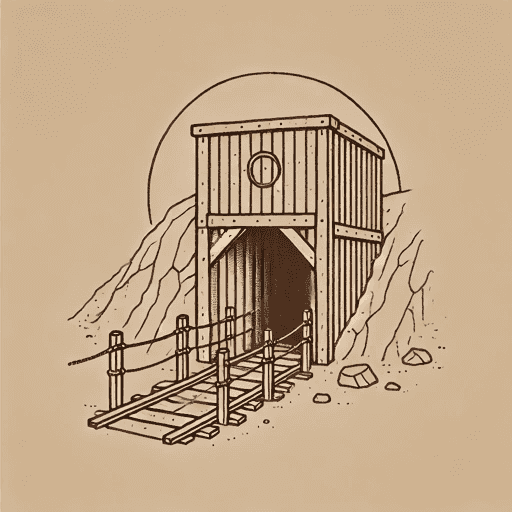
When the Historical Society denies Cam entry due to the state of the mine building, Willow hesitates but then joins him at the front of the town hall. Her thoughts in this moment, particularly the word “ominous,” convey just how difficult this step is for her while also marking a key change in her character. For the first time, she dismisses the opinion of others in the town, including her father’s, and chooses to support Cam.
“I swallowed the instinctive retort that [Xander] was only pissed because the optics hadn’t gone his way. But it had to be deeper, didn’t it? Sure, he cared about his image way more than I did mine, but it couldn’t be all about his reputation.”
(
Moments like this foreshadow the revelation that Xander isn’t as good of a person as Cam believes. Cam briefly considers calling attention to how Xander cares only about “the optics” but then stops himself because he wants to see the good in Xander. Because of how much Cam cares about him, he ignores the signs of Xander’s dishonesty for much of the novel.
“‘It means that the boy who was prone to violence went and found himself a career where he could continue that violence, and they decorated him as a hero for it. People change in very small ways, Willow. We change our decision-making and even our actions, but we don’t change who we are here.’ [Judge Bradley] tapped his chest.”
(
These words from Judge Bradley emphasize his role as an antagonist. First, he shows his hypocrisy while trying to justify his dislike for Cam. While he praises Sullivan for fighting in the military, he holds it against Cam as a negative. Additionally, his words are antithetical to The Value of Recognizing the Human Capacity to Change as a theme. The fact that Judge Bradley believes that people “don’t change” emphasizes his ignorance and antagonistic role since Willow, Cam, and Judge Bradley himself change throughout the novel.
“I hadn’t gone after her because it was the right thing to do. I’d gone after her because I couldn’t bear the thought of her not existing. I didn’t deserve an ounce of her hero worship, not when my motive was pure terror. I wasn’t anyone’s hero.”
(
Cam’s thoughts make a key point about being a hero, establishing his character as a foil to Xander. While Xander constantly acts in ways that make him look heroic, he does so by committing bad deeds like trapping Willow in the mine, setting the bunkhouse on fire, and defying his father’s wishes. Conversely, Cam actually is heroic, doing things for reasons that are good beyond just perception and not to gain public favor.
“Calling Milkshake was never to be taken advantage of. It was only for the moments your sister, and only your sister, would do. I talked. I started at Cam’s arrival, pausing only when Tillie brought us our food. Then I continued. Charity didn’t say a single word, simply sat across from me, eating her burger and fries and sipping on a chocolate shake. There was no judgment in her eyes.”
(
Milkshakes symbolizes the bond between Willow and Charity in the novel. As sisters, they meet to confess their thoughts and discuss their problems with “no judgment,” giving each other the support they need.
“[Cam] expected me to retreat; that’s what that little glare meant. ‘Saved you a seat right next to me.’ I held out my hand, palm up, and waited. The ball was in his court. I refused to look at anyone else or even think of the possible humiliation I’d just opened myself up to. […] I kept my eyes locked on his and didn’t move my hand. Something told me the minute I lost eye contact, he’d blow.”
(
In an important moment for Willow, she stands up in front of everyone in the diner and goes to Cam, unaffected by what the other people or her father think of her. These words reveal her internal conflict as well as the importance of her love for Cam. She fears that he may reject her or that her love won’t help him yet chooses to step forward anyway, believing that their relationship has the power to change him for the better, too.
“If [Willow] decided she couldn’t handle the scorn of the town she loved—and she shouldn’t have to. I could do everything right for the rest of my life, and it wouldn’t balance out my past in Alba’s eyes. One day, Willow would realize that, too, and she’d be forced to choose. Really choose. Not just get carried away in the hot springs by a decade of longing. She’d have to choose between me and her reputation—the flying gossip and the palpable scorn.”
(
Cam’s thoughts emphasize The Importance of Free Will and Choice as a theme. He acknowledges how crucial the town’s opinion is to Willow—and recognizes how he would be detrimental to her reputation. His thoughts outline the idea of choice and the consequences that Willow might face. The words “she shouldn’t have to” reveal his insecurities and guilt. He thinks that the town is treating Willow unfairly, and he feels guilty because he loves her but believes that his actions will make her life more difficult.
“Good. Evil. Right. Wrong. Karma. It’s as old as the first brothers in the Bible. Whatever you want to call it, the universe keeps us in balance.”
(
Arthur’s words to Willow on tourism opening day, as they discuss Arthur’s mistreatment of Cam over the years, allude to the story of Cain and Abel. In the Bible, they are the first two sons of Adam and Eve. Both make sacrifices to God from their fields; Abel’s are accepted, while Cain’s are rejected. Out of jealousy, Cain kills Abel. This allusion emphasizes Arthur’s negative view of Cam. In his eyes, Cam is comparable to Cain, the allegedly bad son who lives in the shadow of Able’s (Xander’s) good deeds and serves to “balance” the good in Xander.
“‘Timshel—thou mayest.’
I closed the book and held it to my chest. He’d thought that part was important enough to remember—the concept that maybe he, too, could choose to be what he wanted and not what he’d been told to be. […] Maybe it was a different kind of choice—to shove everyone away—but it was also my choice to let him. Or, rather, not to let him.”
(
This quote alludes to East of Eden by John Steinbeck. In that novel, timshel—or the concept of free will—plays a significant role, just as it does in Great and Precious Things. Willow’s consideration of this quote emphasizes the importance of free will and choice. She realizes for the first time that she has a choice, just as Cam does: She can support him and stay with him despite how difficult their relationship may be.
“[W]hen I ask her to be my wife, you won’t know. I won’t ask your permission because she’s not a piece of property, and I won’t respect your tradition because you don’t respect that it’s really her choice. And if she says yes, you’ll know only if she tells you. You’ll only know if we get married if she chooses to invite you. You’ll only know if we have a child if she deems you worthy to know, worthy of being in her life.”
(
Cam’s words put an end to the conflict between him and Judge Bradley, thematically reinforcing the importance of free will and choice as well as the value of recognizing the human capacity to change. Judge Bradley represents the idea of stagnation, and one of his primary objections to Cam is that he didn’t ask for Judge Bradley’s “blessing.” This concept, that a man must ask for a woman’s father’s permission before proposing, is often seen as an old-fashioned concept. Cam refuses to acknowledge it, instead recognizing Willow’s agency. As a result of this conversation, Judge Bradley realizes the error in his ways and begins to respect that Willow has the right to make her own choices.
“Logic told me otherwise, but the rending in my chest overpowered it. I’d lost every member of my family. Sullivan and Mom to death. Dad to Alzheimer’s. Alexander to his own warped sense of good and evil. The judge called for order as I felt hands on my shoulders. I turned and found Willow leaning over the railing. ‘I love you,’ she promised.”
(
During the trial, Cam has this important moment of recognition when he realizes that Xander isn’t the person he thought he was. For the first time, he sees Xander in an antagonistic light when Xander directly tries to tarnish both Cam and Arthur during the trial. Additionally, this moment emphasizes the important role that Willow’s love plays in Cam’s character arc. Just as he feels that he has “lost” everyone in his family, he finds Willow standing behind him and supporting him.
“This was it: the moment [Arthur had] wanted. The decision was his. Another section of the ledge collapsed, ending right before my arm started, but I still didn’t look away from those eyes. Sullivan’s eyes. His lips pursed, and his brow furrowed. Then he roared and swung up with his left hand.”
(
In the novel’s climax, Arthur hangs from the edge of the cliff, and Cam gives him a choice: grab Gid’s hand or let go. This moment thematically emphasizes the importance of free will and choice as Arthur finally has agency over his own body. The fact that he chooses to save himself—which may be surprising given his desire to have a DNR in place—reinforces an important component of that theme. It isn’t necessarily about the choice one makes but rather about one’s right to make a choice and have agency over one’s life.
“‘It was all so easy for you to be larger than life! And I did everything I could to be good. That’s what I was supposed to be, but it was never enough. I was never good enough. And you come home a decade later, covered in your army medals, and think you can rescue her again, rescue Dad, now rescue Rose? Hell, rescue this whole damned town!’ The realization that began that day at the courthouse came full circle. It was all about perception for him. He had been so consumed with trying to look like a hero that he forgot to be one.”
(
These words reveal, for the first time, the emotions and feelings behind Xander’s role as an antagonist in the novel. Just as Cam has repeatedly viewed himself in relation to Xander—feeling as though he was never good enough—Xander did the same. Ironically, despite having the better reputation and being seen as a much better person than Cam, Xander committed the most egregious acts.
“‘I don’t give a shit what people say or how I look to the world. I know who I am. I’ve made peace with my choices.’ I thrust the envelope at his chest, and he slowly took it. ‘Make peace with yours, Xander.’ His body tensed as I nodded, then turned around and headed back to my Jeep.
‘You’re not going to tell me as some kind of punishment?’ he called after me.
‘It’s not my job to punish you, Xander. Not in anger. Not in jealousy. Not…ever. Read it. Don’t read it. That’s your choice, not mine.’”
(
The final confrontation between Xander and Cam reveals that Cam has finally begun to understand the role that consequence plays in free will and has “made peace” with what he has done, showing his growth in the novel. In addition, Xander’s last line—asking Cam why he won’t tell him the results of the genetic testing as “punishment”—reveals his lack of growth. Instead of redeeming himself, he continues to be bitter and angry; he still doesn’t understand that Cam never hated him or wished him ill will, despite what Xander did. Ultimately, the two characters stand in direct opposition, and Xander’s status as the static villain is revealed.

Unlock every key quote and its meaning
Get 25 quotes with page numbers and clear analysis to help you reference, write, and discuss with confidence.
- Cite quotes accurately with exact page numbers
- Understand what each quote really means
- Strengthen your analysis in essays or discussions