32 pages • 1-hour read
Grief is the Thing with Feathers
A modern alternative to SparkNotes and CliffsNotes, SuperSummary offers high-quality Study Guides with detailed chapter summaries and analysis of major themes, characters, and more.
Summary and Study Guide
Overview
Grief Is the Thing with Feathers is a 2015 novella by Max Porter. In 2019, the book was adapted into a play of the same name, directed by Enda Walsh and starring Cillian Murphy, and in 2025, it was adapted into a film titled The Thing with Feathers, directed by Dylan Southern and starring Benedict Cumberbatch. The novella is Porter’s literary debut, and it earned several awards, including the Dylan Thomas Prize and the Sunday Times Young Writer of the Year Award. The book follows a grieving husband and two sons after the unexpected death of their wife and mother. It features an experimental blend of poetry, dialogue, and prose, and borrows one of its central characters, Crow, from Ted Hughes’s 1970 book, Crow: From the Life and Songs of the Crow.
This guide references the 2016 Kindle edition of the text, published by Graywolf Press.
Content Warning: The source material and guide feature depictions of graphic violence, cursing, sexual content, addiction, animal cruelty, animal death, death, substance use, addiction, and death by suicide.
Plot Summary
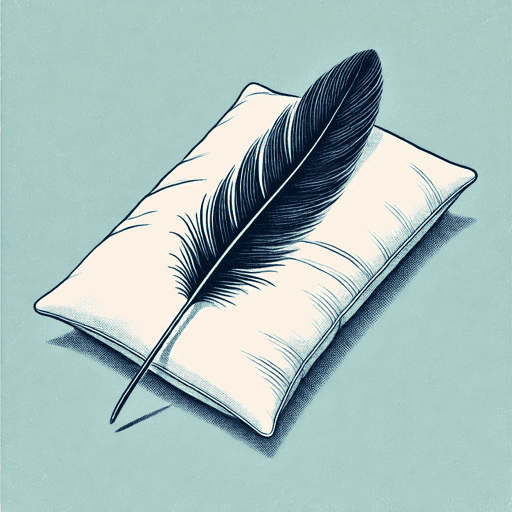
A woman dies unexpectedly, leaving her husband and two sons (referred to exclusively as Dad and the boys) to grieve. In the days following her death, the boys notice black feathers on their pillow at night. Dad answers the door one day, expecting a well-wishing neighbor or loved one, to find a giant crow waiting on the other side. Crow tells him, “I won’t leave until you don’t need me anymore” (6), and becomes a constant presence in the family’s life. The bird serves as babysitter, therapist, and whatever other form of caretaker Dad and the boys need.
Prior to Mum’s death, Dad received a publishing deal to write a book about Ted Hughes. He throws himself into this work as a distraction but can never seem to write as much as he wants because Crow is always there. The boys, struggling to make sense of their mother’s absence, become increasingly violent, killing a guppy they find at the beach one day. Crow tells them stories, colors with them, and even promises to resurrect their mother at one point. When Crow doesn’t keep his promise, the boys cook him in an oven, but it doesn’t kill him.
The family slips deeper and deeper into grief, a descent made worse by the death of the boys’ grandmother. Haunted by his memories of Mum, Dad distracts himself with alcohol and literature. The boys continue to devise violent games for themselves, especially after their grandmother dies. Crow dedicates himself to babysitting the boys as best as he can, even though he also sometimes resorts to violence. One time, a grief demon arrives at the house, disguising itself as Mum, and Crow gleefully rips it to shreds. Dad draws a picture of Crow and Ted Hughes sitting across from one another, each with a hand puppet of the other in one hand. The boys live in fear that their Dad will disappear just like Mum.
One day, the family goes to a live show with birds of prey. While the bird handler demonstrates the amazing flying abilities of an eagle, the show is disrupted by a wild crow attacking the raptor in defense of its nest. The boys and Dad begin cheering for the crow, and the handler joins in with them. Dad is the happiest he has been since Mum died. Recalling another moment when Dad was happy, the boys tell the story of when he went to see Ted Hughes speak at Oxford before they were born. Dad asked Hughes a question that the panel moderator mocked, but Hughes made a point of approaching him afterward to answer the question with a simple “yes,” and this made Dad’s day.
Dad’s book about Hughes is finally published, but it receives lukewarm reviews. In a meeting with his publisher, Dad tries to pitch his idea for a new book: a compilation of Hughes’ works, annotated in the voice of Crow. The publisher is dismissive of this idea, telling Dad that he needs to move on. At this point, Dad decides that it is time for Crow to leave the house, and when he gets back home, the bird is already gone. He tells himself he is going to stop focusing on Ted Hughes and start focusing on teaching. He finally takes the boys to scatter Mum’s ashes in a place that she loved, and as he tosses the ashes into the wind, he hears the boys’ voices as a continuation of their mother’s.
The boys grow up, and even though Crow has left the house, they still grapple with the impact he had on their lives. One brother tells his wife and children stories about Crow, and his son imitates Crow’s call every time he sees a crow in the wild. One brother attempts to shoot wild crows with an air rifle and fails. Crow tells Dad that his therapeutic regimen was a success, thanks to the boys and the book deadline.

Unlock all 32 pages of this Study Guide
Get in-depth, chapter-by-chapter summaries and analysis from our literary experts.
- Grasp challenging concepts with clear, comprehensive explanations
- Revisit key plot points and ideas without rereading the book
- Share impressive insights in classes and book clubs