32 pages • 1-hour read
Grief is the Thing with Feathers
A modern alternative to SparkNotes and CliffsNotes, SuperSummary offers high-quality Study Guides with detailed chapter summaries and analysis of major themes, characters, and more.
Symbols & Motifs
Content Warning: This section of the guide includes discussion of graphic violence, animal cruelty, animal death, and death.
Violence
Grief is rife with violent imagery and language, a thematic motif that pushes the novel beyond the realm of exploring grief as a form of sadness and into a darker realm of exploring how grief manifests as rage. The most openly violent characters in Grief are the boys, who kill a guppy, attempt to kill Crow and one another, and play games that put their own lives at risk. The traumatic loss of their mother has corrupted their youthful innocence, and their unresolved grief expresses itself in violent behavior, reflecting The Emotional Turmoil of Grief. The juxtaposition between innocence and brutality is at the crux of Porter’s use of this motif, as he seeks to convey the extent of emotional damage that has been done to the family.
Crow also exhibits some violent tendencies, although, unlike the boys, Crow only resorts to violence as a defensive technique. At times, he shifts between violent and calm countenances very quickly, such as in the scene where he defends the boys from the grief demon. In one moment, he is soothing the boys lovingly, but in the next, he is brutally murdering the demon. This scene replicates the defensive behavior of crows in the wild, framing Crow as a devoted parent and evoking notions of maternal protectiveness. The detailed, gleeful descriptions of Crow’s violence, however, verge on the realm of horror writing. Porter toes this line carefully throughout the novel, utilizing elements of gore and body horror to convey the pain of grief.
Fairytales
Throughout Grief, Crow and other characters use the traditional narrative format of fairytales to tell stories to the reader and to each other. This literary motif, which in modern times is associated with the wonder and innocence of childhood, is subverted by Porter to convey some of the book’s most grotesque content. For example, in Part 2, Crow tells the story of two princes who fight with each other in a number of gory ways: “[T]hey found a poison book and took turns to make each other sick. Then they hanged each other. Then they flayed each other. Then they crucified each other. Then they drove rusty nails into each other’s skulls” (76). Crow’s story acts as a lesson for the boys, who sometimes enact the violence of their grief on each other. With this representation of fairy tales, the narrative hews closer to early versions of fairytales, like the original tellings of Snow White and Cinderella.
By using the traditional language of fairytales, with Crow beginning each story with “once upon a time,” Porter blurs the lines further between reality and fantasy in the narrative, further supporting the surreal appearance of Crow. Sometimes, this tension is explored very blatantly, with Porter ending episodes with metafictional statements like, “This is only partially true” (37). At each of these points, the narrative raises questions about truth and reality, and introducing fairy tales into the narrative furthers this tension.
Feathers
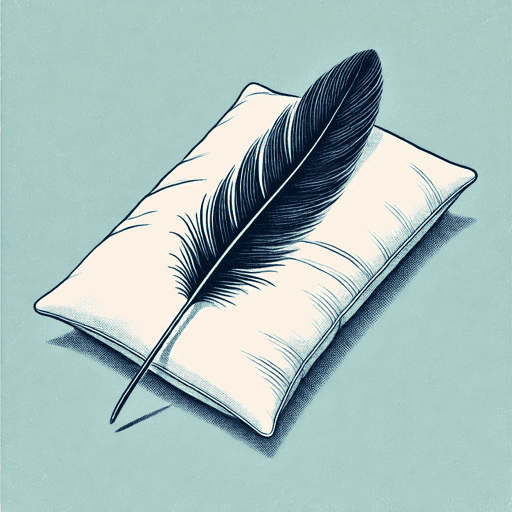
In Part 1 of Grief, Crow’s black feathers serve as a foreshadowing device that anticipates the bird’s arrival at the family’s door and symbolize the manifestation of grief in their lives. The boys’ instinctual fear of the feathers upon finding them on their pillows signals to the readers that something eerie is at play. Mum is already dead when the feathers appear, although it is unclear how much time has passed, and the appearance of the feathers indicates that they represent the first inklings of grief, before the boys have been completely consumed by the realization of their mother’s death, such that only traces of Crow can materialize in the house.
Fethers are traditionally seen as symbols of freedom and transformation, and Crow’s arrival does offer Dad and the boys an eventual freedom from their grief and transformation into a new family. However, the narrative also offers the appearance of the feathers and Crow himself as a negative experience for both Dad and the boys. Dad describes the suffocating experience of being covered in feathers upon first meeting Crow: “Feathers between my fingers, in my eyes, in my mouth, beneath me a feathery hammock lifting me up a foot above the tiled floor” (6). The feathers’ ability to get themselves into every possible nook and crevice serves as a metaphor for how difficult it is to get rid of grief once one has been exposed to it.

Unlock the meaning behind every key symbol & motif
See how recurring imagery, objects, and ideas shape the narrative.
- Explore how the author builds meaning through symbolism
- Understand what symbols & motifs represent in the text
- Connect recurring ideas to themes, characters, and events