65 pages • 2-hour read
Happy Land
A modern alternative to SparkNotes and CliffsNotes, SuperSummary offers high-quality Study Guides with detailed chapter summaries and analysis of major themes, characters, and more.
Part 1, Chapters 1-8Chapter Summaries & Analyses
Content Warning: This section of the guide includes discussion of racism, racist violence, domestic violence, and death.
Part 1, Chapter 1 Summary: “Nikki”
Veronica “Nikki” Lovejoy-Berry visits her grandmother, Mother Rita, in the mountains of Zirconia, North Carolina. It is the first time she has visited her grandmother’s home, where her mother also grew up. Mother Rita called Nikki and told her that she needed her help, which Nikki found unusual. Nikki is feeling adrift in life: She has not sold a house in months and is no longer enjoying being a real estate agent.
Mother Rita’s home is old and in need of external repairs, but the inside is immaculately clean and decorated. Mother Rita cooks Nikki beans, then goes out into the yard to work to allow Nikki to get comfortable.
Nikki gets settled in her room, which used to be her mother’s when she was little. She thinks of how her mother has not spoken to Mother Rita in years, but Nikki has no idea why. She is determined to find out on her visit.
Part 1, Chapter 2 Summary: “Nikki”
That afternoon, Mother Rita asks Nikki questions about Mama, Nikki’s mother. Nikki can tell that Mother Rita misses her but is too stubborn to call her after what happened between them.
Mother Rita asks Nikki if she ever reads. Embarrassed, Nikki admits that she can’t remember the last book she read. Mother Rita gives her a library card, insisting that she use it while she’s there. She then gives her a history book for Henderson County. When she starts talking about the Kingdom of the Happy Land, she is annoyed when Nikki doesn’t know what she is talking about. She explains that her own great-grandmother and great-grandfather were the king and queen.
Mother Rita then tells Nikki that she needs to show her something in the yard. She goes to the nearest neighbor to get her a pair of boots. While she’s gone, Nikki looks up the Kingdom of the Happy Land. She finds few results online, thinking that it all seems like a “fairy-tale.”
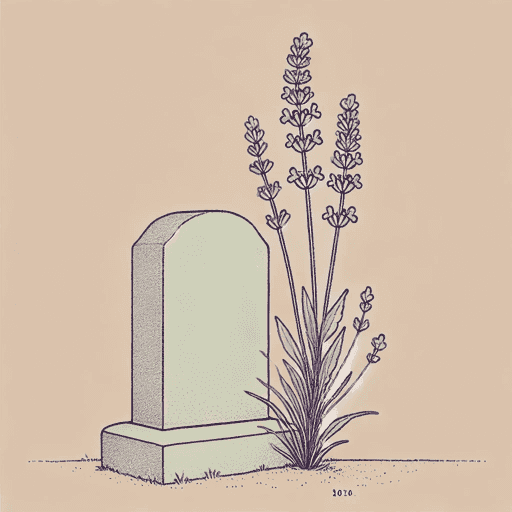
After Mother Rita returns, she takes Nikki to the yard. They walk far from the house and stop at two piles of rocks, which look deliberately placed. Mother Rita explains that they are the graves of her parents. All their ancestors are buried here, and she wants Nikki to bury her here, too.
Part 1, Chapter 3 Summary: “Luella”
In 1870, 20-year-old Luella lives with her father, Papa, in Cross Anchor, South Carolina. They live among a group of formerly enslaved people, who, at the end of the Civil War, built homes and farms on land near their old plantations. Papa built a church, where he is the minister, and now serves as a leader within their community. Each week, they hold meetings at the church to discuss Black people voting, plans to run for office, and the dangers of the Ku Klux Klan.
Over the next few years, federal soldiers come to South Carolina to try to gain control over the KKK. Luella and the others listen to the arrests and follow the trials, yet they have little hope of the government gaining control. One man in particular, William Montgomery, talks of the need for their community to move north.
In 1873, Papa is taken by the KKK and publicly whipped. Shortly thereafter, rumors begin about his church, with white newspapers insisting that it is an evil cult. A few weeks later, Papa tells Luella he is going to listen to William’s advice. There is a place nearby in the hills where they will be able to find work.
Papa, Luella, and around 50 others sell off their things, pack their belongings, and leave their homes. They walk 60 miles north into North Carolina, led by William. Finally, they come to an inn named “Oakland,” where a white woman speaks with William. He tells their group that Missus Davis, a widow, has agreed to let them work in her field and inn while staying in the old enslaved persons’ quarters.
Part 1, Chapter 4 Summary: “Luella”
Throughout the fall and winter, Luella and the others work hard to fix Davis’s inn. Since her husband died, she has struggled to get tenants or find help. Now, Luella’s community gives her hope that she can rent rooms in the summer and raise her prices for the first time since the war.
Since Davis has an excess of land, the group uses it to build new homes. They also modify the old enslaved persons’ quarters, erecting walls for the first time. They make plans for planting farmland in the spring.
One evening, William calls a meeting with all the members of the community. He proposes to the group that they stay in the area and create a kingdom. He is adamant that they should not return to society, instead creating a council to rule them, a treasury to hold their money, and a system of their own laws to follow. When he suggests that they stop voting, it makes Luella uncomfortable to give up the right they fought for; however, several people agree, insisting that voting only got people killed and changed nothing.
Papa agrees with William, followed by several others. Within a few weeks, the council gathers for the first time.
Part 1, Chapter 5 Summary: “Nikki”
On the way back to the house, Nikki and Mother Rita stop at her garden. Nikki is shocked by its size and variety, but Mother Rita explains that it is how she has made her living. She sells flowers in town, especially for special events. She also credits having lived so long with being able to tend to it.
Nikki cooks in the kitchen while thinking about her ancestral graveyard. She thinks of how sad it is that there are no grave markers or a fence to protect it. She looks online for pricing, deciding that she will suggest to Mother Rita that they mark the graveyard properly.
During dinner, Mother Rita brings up Mama, noting how upset she is that Mama has not allowed Nikki to get to know her family and ancestral land properly. Nikki asks what happened between them, but Mother Rita only answers that Mama is a “Judas” and refuses to tell Nikki anything more. Nikki assumes that it has something to do with Mama moving to Washington, DC, and she angrily tells Mother Rita that she needs to “get over it” (41). They eat the rest of their dinner in silence.
Near the end of dinner, Rita brings up the Kingdom of the Happy Land. Mother Rita tells her that Nikki’s great-great-great grandmother, Luella Bobo—named after her former enslaver—was the queen. She also mentions several families, including the Montgomerys, that moved together from Cross Anchor. However, she gives Nikki no further information, insisting that she needs to learn more about it on her own, as their entire family’s story—including what happened between Mama and Mother Rita—is tied to it. She tells Nikki that, if she tries to wait until the fall and visit again, it will be “too late.”
Part 1, Chapter 6 Summary: “Nikki”
Nikki thinks back to her father’s death. He became very sick, and it caused Mama to unravel. Nikki was 28 at the time. She always thought of her mother as a “perfectionist,” yet when her husband died, she started struggling to even get ready for work each day. Then, one day shortly after her father’s funeral, Mama came to Nikki’s house and told her that Mother Rita was no longer part of their lives, but would give no further information. Nikki was shocked, especially since Mother Rita had just been to DC for the funeral. Now, Nikki regrets not having called Mother Rita immediately to check on her.
The next day, Nikki takes Mother Rita into town. They go to the pharmacy, where Nikki is shocked to see her grandmother picking up an opioid prescription. They then go to the library. At both places, everyone seems to know Mother Rita. A man named Bryan greets her, then takes her to look at new fiction books. It makes Nikki feel better about the fact that Mother Rita has been alone for so long, while also making her feel somewhat jealous.
Part 1, Chapter 7 Summary: “Luella”
Throughout the winter, William courts Luella. They go on a few walks, and Luella becomes interested in him romantically.
At one meeting of the community, William tells them that they need to name their new kingdom. When he suggests Happy Land, the crowd cheers in agreement. They start chanting “King William” as they celebrate together. When Luella starts to leave, William stops her and asks her to be his wife. He admits that it is fast, but he has already asked her father for permission; Luella agrees.
In March, Luella and William get married. During the celebration, the members of the kingdom make her a crown. She feels strange wearing it, but does so out of respect for William.
Over the next few weeks, Luella and William begin to rule the kingdom. He repeatedly talks about how they are a kingdom like what is found in Africa and how they need to be respected by the community. He moves Luella into the biggest house, while insisting that she minimizes her socializing with others.
One night at home, Luella asks if she always has to wear her crown as she takes it off her head. In response, William slaps her across the face. She is shocked, as she has never been hit before, not even while she was enslaved. William tells her that she will wear the crown to show their “strength” to the others. Devastated, Luella thinks of how she agrees with him but doesn’t understand why he needed to hit her to make his point.
Part 1, Chapter 8 Summary: “Luella”
Over the next two years, William never harms Luella again. He is always nice to her, buying her flowers and ensuring their new home is perfect. However, they are unable to have a child, something that begins to wear on Luella. Instead, they both work hard in the community.
One day, Luella decides that she would like to have a school for the growing population of Happy Land. She walks several miles to a nearby white-only school at the edge of town. After waiting all day for class to end, the teacher comes out and introduces herself. Luella explains that she is looking for old books or supplies. The teacher initially turns her away, but then calls Luella back. She gives her one spelling textbook.
For weeks, Luella holds school outside. Some adults in the community decide they would like to learn, so she also starts holding school for them on Sunday afternoons. Eventually, she begins searching for a teacher. She finds two women, sisters named Johnson, who agree to join the community and teach everyone. They bring their own supplies with them.
One night, Luella broaches the subject of building a schoolhouse with William. He dismisses her, insisting it would cost too much money and labor. Later, in bed, she tries again, explaining that she and the other women could build the school. In response, he angrily yells at her, telling her that she can’t bear a child because she is “so busy trying to be a man” (70). Luella is devastated, promising herself that she will leave and go back to Papa if she is ever spoken to like that again.
A week later, William wakes Luella up early in the morning, which is something he never does. He tells her that he is going to go work in the mines for more money. Luella tries to tell him it’s too dangerous, but he ignores her, instead asking Luella to walk him to the door. It occurs to Luella how strangely William is acting, but she doesn’t say anything. She doesn’t see him again for several weeks.
Part 1, Chapters 1-8 Analysis
The novel is told through a shifting first-person point of view, following the stories of both Nikki and Luella in two different timelines. This shifting perspective lends insight into events that will become increasingly interconnected throughout the course of the novel. For example, after exploring the early days of Luella’s life in the kingdom through her perspective, the novel then shifts to the present, where Mother Rita tells Nikki about Luella, her husband, and their status as royalty. The two timelines play off each other, creating a larger and more intricate picture of both women’s lives while emphasizing the interconnectedness of their narratives. While Nikki questions the veracity of Mother Rita’s story, the reader knows they are true thanks to Luella’s perspective.
The novel’s dual timeline perspective introduces the theme of The Battle Against Historical Erasure for the Black community Nikki is descended from. Perkins-Valdez invents much of the events of the past, but they are rooted in the factual events of the Kingdom of the Happy Land, a community created by newly freed Black people to assert their freedom in response to the widespread racism of white Southern society. Both the novel itself and Mother Rita’s encouragement of Nikki to uncover the story emphasize the importance of remembering history—even when much of it is lost through a lack of records.
Since the narrative is told from a first-person point of view, the reader’s perspective is limited by what Nikki knows and what Mother Rita reveals to her. As a result, the events of what happened between Mother Rita and Mama are shrouded in mystery at this point in the novel, just as the details about Happy Land are also largely vague when Nikki first learns about it. Using the limited perspective, Perkins-Valdez builds suspense and tension within the Lovejoy family, foreshadowing the rift within Nikki’s family but keeping it largely a secret throughout the first part of the text.
Nikki is ignorant of her family history and struggling with her lack of purpose, which introduces the theme of The Importance of Collective History to the Self. The novel will explore her journey of growth and development as she learns about her history and begins to appreciate it. The inciting incident—Mother Rita’s plea for help to Nikki—tears Nikki away from her ordinary life and gives her a chance to learn more about who she is while in North Carolina. The small community in rural North Carolina is vastly different from Nikki’s life in Washington, DC. This difference is reflected in Nikki’s lack of preparedness for outdoor activities, as Mother Rita is forced to find her shoes to explore the land, as well as Nikki’s surprise at the close sense of community within the town. As Nikki learns to appreciate the land, the community, and her history, she will also grow and mature throughout the novel, with her familial history helping her to feel more comfortable with who she is as an individual.
Two important symbols are introduced in the first section of the text, which highlight Nikki’s initial lack of belonging in North Carolina. The first is the flowers, which are a key part of Mother Rita’s life and symbolize her connection to nature and the past. Nikki is bothered both by the fact that she knows little about flowers, and that she never knew the value they hold in her grandmother’s life. In this way, they highlight Nikki’s disconnect from her grandmother’s life and, by extension, her own roots. Similarly, the first time that Nikki sees her family’s graves, she is shocked that she knew nothing about the graveyard. The graveyard symbolizes Nikki’s past, which is buried in her ancestral land and largely unmarked in the traditional sense. Initially, Nikki fixates on trying to find markers for the grave, failing to truly understand their value and only interacting with them in a superficial sense. These two symbols highlight her internal conflict as she grapples with each new discovery of her past.
Just as Nikki searches for a sense of belonging within Mother Rita’s life, her ancestors also seek belonging as they explore their newfound freedom over 150 years before. Central to Luella’s narrative is the setting, as her story takes place among the racism and exclusion of the post–Civil War South. Despite being legally free, Luella and the other formerly enslaved families grapple with creating a home and place to belong as they continue to be largely excluded from—and terrorized by—white society. Their conflict highlights the resilience of the kingdom, as they are determined to set up a society for themselves to achieve true independence as a community.

Unlock all 65 pages of this Study Guide
Get in-depth, chapter-by-chapter summaries and analysis from our literary experts.
- Grasp challenging concepts with clear, comprehensive explanations
- Revisit key plot points and ideas without rereading the book
- Share impressive insights in classes and book clubs