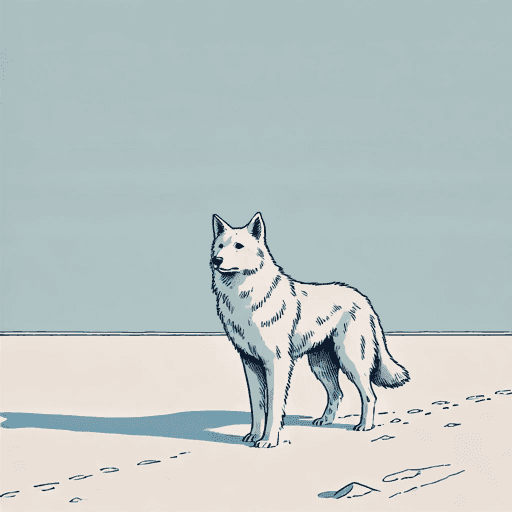
Heart of a Dog
44 pages • 1-hour read
Mikhail BulgakovHeart of a Dog
A modern alternative to SparkNotes and CliffsNotes, SuperSummary offers high-quality Study Guides with detailed chapter summaries and analysis of major themes, characters, and more.
Background
Authorial Context: Mikhail Bulgakov
Mikhail Bulgakov (1891-1940) was a famous Russian writer and playwright whose works were variously popular and banned in the Soviet Union. Bulgakov was born into an educated, creative family in Russian Kiev, which is now Ukraine. As a young person, Bulgakov enjoyed the theater, especially Faust by Charles Gounod; the Faustian theme figures prominently in The Heart of a Dog. During World War I, Bulgakov worked as a doctor in a field hospital run by his mother. He would later fictionalize his experiences as a doctor in his collection of short stories, A Young Doctor’s Notebook. His interest in medicine and its possibilities also shapes the plot of The Heart of a Dog.
In 1920, Bulgakov left medicine to pursue a career as a writer. In 1921, he moved to Moscow to further his writing career. He earned a living writing feuilletons, popular serialized fictions, and as a freelance journalist. In 1925, Bulgakov began to achieve commercial creative success when his unfinished and highly autobiographical serial work The White Guard was adapted into a play at the Moscow Art Theatre. The play was a favorite of Stalin. However, Bulgakov often ran afoul of Soviet censorship panels. For instance, his play Flight (1928) was banned for glorifying White Army (anti-Bolshevik) generals. Nevertheless, Bulgakov earned renown as a playwright in the Soviet Union.
His fiction, including The Heart of a Dog, was frequently banned in the Soviet Union. The Heart of a Dog was scheduled to be published in 1925, but it was rejected, in part because it satirized Communist regulations. However, unofficial copies of it circulated. In 1968, an English translation of The Heart of a Dog was published by British translator Michael Glenny. Bulgakov’s masterwork, The Master and Margarita, was published posthumously in 1966. Like The Heart of a Dog, it is a satirical work that criticizes Soviet policies.
Bulgakov died in 1940 of a hereditary kidney disease.
Historical Context: The Russian Revolution, the Soviet Union, and the Soviet New Man
During World War I, Russian society experienced turbulence due to massive casualties and food shortages sustained while fighting the Axis powers, particularly Germany. In the midst of this turbulence was a growing movement to unseat the authoritarian monarchy of Tsar Nicholas II. In February 1917, workers struck for better working conditions and civil rights. When the Tsar directed the troops to suppress the demonstrations, many revolted. Following the February Revolution, government bodies called Soviets were established based on the model of workers’ councils, fueling an ongoing conflict between the various factions of Russian society.
In October of 1917, the Russian Civil War broke out in earnest. The liberals and monarchists organized into the White Army, while the Communist Bolsheviks, the reformist Mensheviks, and their supporters organized into the Red Army. They fought for control of the country. In July 1918, the Tsar and his family were killed, effectively ending the monarchy in Russia. The Russian Revolution ended in 1922 with the victory of the Red Army and the establishment of the Communist Soviet Union. In 1924, Soviet leader Vladimir Lenin died, and the more authoritarian Joseph Stalin replaced him.
The newly established Soviet Union government emphasized the empowerment of the working class and the reappropriation and redistribution of capital from the bourgeoisie to the proletariat, although it did not always accomplish these egalitarian aims. The Heart of a Dog satirizes these policies and their imperfect, sometimes absurdist, application, as seen in its ongoing discussion of the practice of subdividing apartments to accommodate more tenants. Of particular concern for the Soviet government was the creation of the New Soviet Man, or the creation of a citizen who would embody the desired qualities of the Soviet state. This New Man was to be selfless, hardworking, respectful, intellectual, and disciplined. In The Heart of a Dog, a scientist endeavors to create this New Man through surgical intervention, only to be thwarted when his resulting creation is selfish, lazy, insolent, ignorant, and impulsive.

Unlock all 44 pages of this Study Guide
Get in-depth, chapter-by-chapter summaries and analysis from our literary experts.
- Grasp challenging concepts with clear, comprehensive explanations
- Revisit key plot points and ideas without rereading the book
- Share impressive insights in classes and book clubs