Heart of a Dog
44 pages • 1-hour read
Mikhail BulgakovHeart of a Dog
A modern alternative to SparkNotes and CliffsNotes, SuperSummary offers high-quality Study Guides with detailed chapter summaries and analysis of major themes, characters, and more.
Themes
Content Warning: This section of the guide includes discussion of animal cruelty and death, racism, and child sexual abuse.
Class Conflict in Domestic Spaces
Bulgakov, a renowned playwright in the Soviet Union, applies a theatrical structure to his novella, The Heart of a Dog, with a small “cast” of characters and a setting limited almost entirely to the interior of Professor Philipovich’s apartment. Bulgakov uses this setting to explore in miniature the class conflicts that were roiling Soviet society at large in the 1920s.
Using his characters and setting as a microcosm of class conflict, Philipovich represents the petty bourgeoisie. In Marxist analysis, the petty bourgeoisie is the class of people who own their own means of production but who work alongside their wage laborers in small businesses, such as shop owners, artisans, and, in Philipovich’s case, medical practices. His assistant, Doctor Bormenthal, is an aspiring member of the bourgeois class and is therefore Philipovich’s most loyal supporter. The household staff, consisting of the cook, Darya, and the housemaid, Zina, is representative of the Lumpenproletariat, or members of the working class who lack class consciousness. The House Committee, in general, and Shvonder specifically, represent the Bolshevik proletariat who have newly invested with political power. When Sharik(ov) transforms from a contented lapdog of the bourgeois to a self-identified worker with access to political power, it throws the entire dynamic of the household into chaos and threatens Philipovich’s authority and control.
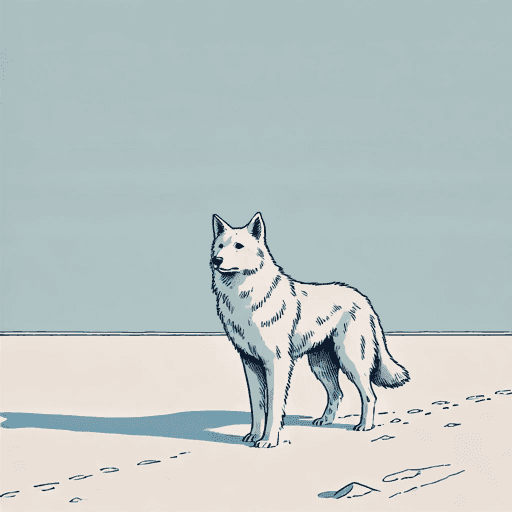
At the opening of the novel, the dog Sharik hates the proletariat and admires and venerates the bourgeoisie. He has often been ill-treated by the working class, who beat and injure him while he scavenges for food. He immediately takes to Philipovich as a “gentleman” who shows him kindness and feeds him sausage. When Philipovich puts a collar on Sharik, a symbol of their master-servant relationship, Sharik is proud of the newfound respect it garners him from authority figures like the police and the doorman, even as the other dogs call him “a ‘master’s pet’ and a ‘lackey’” (50).
After Sharik is transformed into the human Sharikov, he grows increasingly rebellious and challenges Philipovich’s authority, representative of a Bolshevik challenging the bourgeoisie. He tells Philipovich that he “must be” a worker, because he is “not a capitalist” (87) and begins spending more time with Shvonder. He eventually gets a working-class job in animal control, killing cats. On this basis, he asserts his entitlement to “thirty-seven square feet” (114) of Philipovich’s apartment, representative of the Bolshevik policies of appropriating and reapportioning goods in the pursuit of an egalitarian ideal. This working-class identity puts him in conflict with Bormenthal, who finds Sharikov’s behavior absurd and who despairs of the negative impact it has on Philipovich’s health. As Sharikov grows more insistent and rebellious, the conflict escalates to violence symbolically equivalent to a political uprising. Bormenthal beats Sharikov and goes so far as to suggest Philipovich kill Sharikov. When Sharikov pulls a gun on Bormenthal, Philipovich reasserts his authority and transforms him back into a loyal dog, representative of the bourgeoisie's attempt to reassert its power and “tame” a rebellion.
Transforming Bodies to Transform Society
The plot of The Heart of a Dog centers an exploration of medical interventions to transform society by transforming the bodies and/or gene pool of its citizens. Thematically, Bulgakov’s novella enters into a debate that was globally common at the time about eugenics, a pseudo-scientific, often racist belief that it is possible to transform a population through selective breeding, as well as advancements in medical science in the fields of organ transplant, immunology, and endocrinology. The novella grapples with these ideas within the particular context of the early years of the Soviet Union and its national project of creating a Soviet New Man, or a citizen who adheres to and represents the values of the newly formed Soviet Republic. Central to these debates was the question of whether it is possible to transform society through medical transformation of the body and what the unintended consequences of these transformations could be. Bulgakov illustrates this debate through Philipovich’s transformation of the dog Sharik into the man Sharikov and its unexpected results.
Even before Philipovich operates on Sharik, Bulgakov provides early indications that the “rejuvenation” surgeries have unintended, negative consequences on society. In Chapter 2, Sharik witnesses a parade of Philipovich’s patients who have had or are considering rejuvenation treatment. The author presents the patients as driven nearly “mad” by their newfound virility and sexual desire, underscoring his satirical tone. Philipovich begs one patient, an elderly man, to “be careful,” but “the creature” does not seem to heed his warning. A middle-aged woman confesses that her surgery has led her to have an affair with a much younger man. In a particularly dark turn, a male patient confesses to Philipovich that his rampant sexual desire, as a result of treatment, has led him to engage in sex with a 14-year-old girl. These examples position the bodily transformation of the individual through “rejuvenation” as negative for society as a whole rather than positive.
This dynamic carries through to the transformation of Sharik the dog into Sharikov the human. Although the achievement of “total humanization” of an animal through surgical intervention is a medical miracle, Philipovich soon sours on his creation as he comes to grips with the destruction wrought by Sharikov, which Bulgakov symbolizes in the moment when Sharikov turns on the water in the bathroom and is unable to turn it off again, causes “a tidal wave” (96) to gush into the apartment and down the hall. In this scene, water, traditionally a symbol of life, represents Sharikov’s life force overflowing, unable to be contained, and, ultimately, destructive. As Sharikov gains in human ability, Philipovich becomes increasingly frustrated with his behavior: Sharikov drinks to excess, steals, and sexually harasses women. Eventually, Philipovich gives up on this iteration of his experiment and decides to reverse the operation, blaming the lower-class nature of his donor material rather than his own hubris for this failure.
Bulgakov underscores this hubris in the final scene of the novella, which depicts Professor Philipovich in his study, “slicing, examining” a brain. Despite the catastrophic outcome of his experiments on Sharik(ov), Philipovich intends to continue his experiments into the transformation of society through the transformation of bodies.
The Destructive Consequences of Governmental Corruption
In The Heart of a Dog, Bulgakov’s satirical critique reflects his complex and contentious relationship with the new Soviet government of his time. While some of his plays were celebrated, including by Soviet leader Joseph Stalin, other of his works were censored and suppressed by the government. In his novella, Bulgakov skewers and satirizes the early Soviet government for its absurd, suppressive policies. Like Bulgakov himself, Professor Philipovich is both favored and targeted by the Soviet government.
The novel opens with a depiction of the poverty and food shortages that characterized the early years of the Soviet Republic after years of war. The point-of-view character in these passages, a starving stray dog, is obsessed with food. He notes that the food served by the Food Rationing Board includes “soup made out of salt beef that’s gone rotten” (5), which the starving, desperate citizens eat nevertheless. This starvation and deprivation contrast with the lavish meals and wealth that Professor Philipovich, a member of the bourgeoisie, enjoys. When Sharik sees the caviar, cheese, bread, fish, and other delicacies that the professor has access to, he associates the sight with the Hanging Gardens of Babylon, one of the seven wonders of the world. This inequitable access to food illustrates one of the failures of the Soviet state. Despite its aspirations to egalitarianism, the state falls short, leaving many impoverished and starving. In particular, Philipovich is allowed to earn large stacks of cash under the table due to the support of the government for his “rejuvenation” research.
This preferential treatment also allows Philipovich to keep all seven rooms of his apartment, even as others are forced to give up rooms to make space for additional tenants. When the House Committee attempts to expropriate his space, he calls his personal contact, a government minister, Pytor Alexandrovich, upon whom he had operated, and threatens to leave Russia if he doesn’t act on his behalf. The minister intervenes to ensure Philipovich gets more space than others. This kind of preferential treatment for wealthy or influential people highlights a common form of corruption in this turbulent time in Russian society.
At various points in the novella, the machinery of the Bolshevik government turns against Philipovich in the form of the House Committee and its leader, Shvonder, reinforcing Bulgakov’s satirical allegory. Shvonder resents Philipovich’s wealth and ability to circumvent his authority as House Committee leader. He responds by cultivating a relationship with Sharikov, “doing all he can to turn Sharikov against [Philipovich]” (125), publishing a blind item in the newspaper denouncing Philipovich for his “illegitimate” son and flaunting of regulations. Eventually, Shvonder and Sharikov collaborate to denounce Philipovich as “an obvious Menshevik” (136), leading to legal proceedings against him. Although Philipovich is not a Menshevik, these claims, along with the other gossip the pair have spread about him, are enough to put him in the crosshairs of the government, emphasizing the ways gossip and rumor were weaponized in the Soviet Republic to denounce and punish dissenters, occasionally prompted only by petty, interpersonal disputes. The absurdity Bulgakov presents in his novella acts as a darkly humorous depiction of the real-life corruption and suppression people faced in the early Soviet Republic.

Unlock every key theme and why it matters
Get in-depth breakdowns of the book’s main ideas and how they connect and evolve.
- Explore how themes develop throughout the text
- Connect themes to characters, events, and symbols
- Support essays and discussions with thematic evidence