60 pages • 2-hour read
Her Hidden Genius
A modern alternative to SparkNotes and CliffsNotes, SuperSummary offers high-quality Study Guides with detailed chapter summaries and analysis of major themes, characters, and more.
Symbols & Motifs
Content Warning: This section of the guide contains discussions of the source text’s depictions sexism and Anti-Semitism.
“Rosy” and “Miss Franklin”
Although Rosalind’s male colleagues refer to one another with respect, using the honorific “doctor” or a preferred name, Rosalind is frequently addressed as “miss” rather than “doctor” and called “Rosy,” a nickname that her fellow scientists know she dislikes. “Miss,” “Rosy,” and other diminutive forms of greeting or address come to symbolize the sexism of that characterizes the scientific community and help the author to explore The Isolation of Women in the Sciences. Rosalind is highly intelligent and an expert in her own right as she begins her career. She is treated with disrespect by her male counterparts while she is researching coal and finds the atmosphere at the labo so appealing because it lacks the sexism and prejudice of her workplaces in London. When she returns to London, however, she again encounters sexism and is once again subject to mistreatment. The male scientists at King’s both disrespect and exclude her, and Rosalind becomes defensive as a result. Although she does her best to ignore her colleagues’ behavior, she is willing to defend herself. She develops a reputation for being difficult in part because of this willingness, but also because her colleagues close ranks and isolate her.
Although “undoctoring” a female scientist by calling her “miss” or using an inappropriate nickname might be seen as microaggressions, they are part of larger and more consequential pattern of discrimination. Wilkins, Crick, and Watson routinely call Rosalind “miss” or “Rosy,” but they also take a proprietary view of her work. They feel entitled to her data because they are men in a male-dominated field and ultimately take responsibility for her work. Their casual moments of disrespect and their willingness to engage in subterfuge and intellectual property theft stem from the same prejudicial view that men are more intelligent and capable than women and, as such, deserve the credit for work that was completed in large part by a woman.
X-Ray Photographs
The X-ray photograph is the novel’s central symbol, representing objective truth and the elegant, hidden order of the universe. For Rosalind, these images are key pieces of a larger whole that reveal the secrets of the material world through painstaking, methodical work. Her process, which involves capturing hundreds of images to ensure she has definitive proof before making a claim, embodies the theme of scientific integrity over personal ambition. The photographs symbolize a truth that must be learned through rigor rather than speculation. This approach is particularly evident in her reaction to capturing a flawless image of DNA’s B-form: “The most spectacular image sits before me. The bold and striking shape of an X formed by clear black spots…This is breathtaking” (197-98). Her reverence for the image highlights her belief that scientific discovery is a profound and serious endeavor, one that must be approached slowly and methodologically.
The meaning of the photographs shifts, however, as they become objects of conflict and appropriation. Initially tools of pure discovery, they are transformed into weapons in the scientific race when Wilkins presents her preliminary data without her consent. This act demonstrates how objective truth can be manipulated by personal ambition. The conflict culminates with Photo 51, the clearest image of the DNA helix. This photograph represents the pinnacle of Rosalind’s achievement, the verifiable proof of the structure of life. Yet, its meaning becomes complicated when Wilkins shows it to Watson without her permission. The symbol of her scientific integrity becomes the instrument of her erasure, as Watson uses the visual proof she created to finalize his model and claim the discovery. The photograph, therefore, ultimately symbolizes the vulnerability of truth in a competitive, male-dominated world.
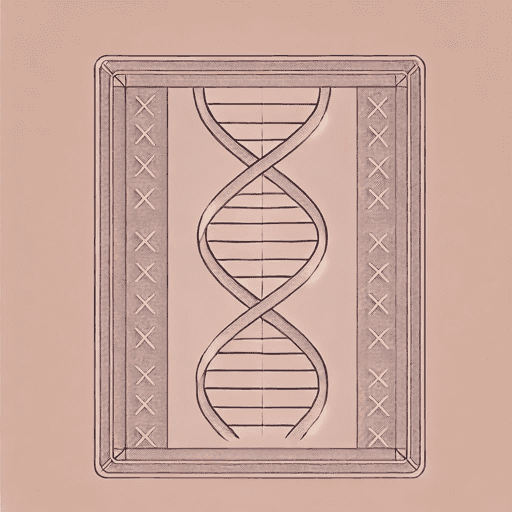
The Double Helix
The double helix functions as a powerful motif, representing the ultimate prize in the scientific quest: the “secret of life itself” (97). This quest for the helix is the central driver of the narrative, and each character’s approach to uncovering its structure illuminates the novel’s core themes. For Rosalind, the helix is a mystery that can only be revealed through the evidence provided by her X-ray photographs, reflecting her commitment to a truth grounded in empirical proof. In contrast, for Watson and Crick, the helix is a puzzle to be solved through clever shortcuts and competitive model-building, a mindset that prioritizes the glory of being first over the integrity of the scientific process.
The pursuit of the double helix thus becomes the primary stage for The Conflict Between Scientific Integrity and Personal Ambition. As the object of the scientific race, the helix represents both the potential for pure, world-altering discovery and the corrupting influence of the desire for fame. The very structure of the helix, with its two intertwined chains, comes to mirror the intertwined fates of the scientists who pursue it. Their legacies become permanently linked, not through the collegial collaboration that science ideally fosters, but through appropriation and conflict. In the end, the double helix motif encapsulates not only the elegant mechanics of life but also the complicated, often fraught, human dynamics behind one of history’s greatest discoveries.

Unlock the meaning behind every key symbol & motif
See how recurring imagery, objects, and ideas shape the narrative.
- Explore how the author builds meaning through symbolism
- Understand what symbols & motifs represent in the text
- Connect recurring ideas to themes, characters, and events