58 pages • 1-hour read
Here in the Real World
A modern alternative to SparkNotes and CliffsNotes, SuperSummary offers high-quality Study Guides with detailed chapter summaries and analysis of major themes, characters, and more.
Important Quotes
“That’s her grandson. Off in his own world.”
(Chapter 1, Page 6)
This quote by Mrs. Sauer, Big Deal's neighbor, immediately establishes Ware’s isolation and difference through the phrasing “off in his own world,” suggesting both a protective distance and a disconnection from others. The tone is external and observational, demonstrating how Ware is perceived by people around him. The simplicity of the statement demonstrates how Ware’s solitude is simplified and judged by those who don’t understand him. It is one of many instances of Ware being told that his desire for solitude is wrong.
“He gripped the limb above his head and swung himself up. Belly to the broad limb, he stretched his arms, his legs. Branching. He imagined sap rushing through his veins, fresh leaves unfurling from his fingers and toes.”
(Chapter 6, Page 31)
This quote uses vivid natural imagery and metaphor to connect Ware physically to the tree as though he is not just in nature but part of it. The metaphor suggests growth, renewal, and the idea of Ware wanting to transform himself, hinting toward the theme of Renewal and Rebirth. It also showcases Ware’s imaginative mind and how he uses fantasy to understand his reality.
“In her mirrored glasses, Ware saw himself reflected. Looking back was the most pathetic kid in the world.”
(Chapter 8, Page 40)
Throughout the story, Jolene's sunglasses reflect Ware's image back to him. In this moment, they symbolize his internalized shame and self-judgment. The adjective “pathetic” reveals Ware’s low self-esteem and brings about a harsh reality that others see him as not fulfilling his purpose. The style is direct, forcing Ware to confront the gap between who he is and who he wishes he could be, highlighting the theme of Finding One’s Purpose.
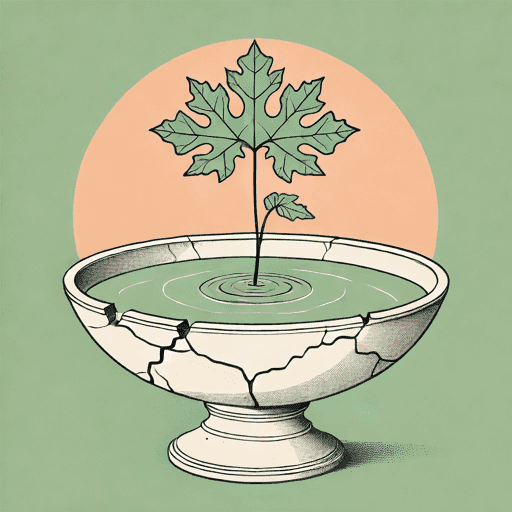
“Ware climbed the steps he’d found at the back of the baptistery and sat on the rim. He imagined the tub full of water, imagined falling into it and then stepping out a less disappointing son whose report cards said, Ware is extremely social! And also, very normal!”
(Chapter 11, Page 49)
Here the baptistery, which is traditionally a place of renewal and rebirth, is used metaphorically. Ware imagines emerging as someone more accepted and conventional, to make his parents happy. The contrast between being extremely social and who he actually is shows what Ware believes others expect of him, as well as what he fears he is not. The moment builds tension, as Ware’s imagination confronts him with ideals he wonders if he can ever attain.
“He hurried down the tower stairs, jumped off the back of the foundation. Chin up, chest out, he advanced into her territory.”
(Chapter 12, Page 58)
This quote shows a shift in Ware’s behavior as he begins to find his courage and become more assertive. He leaves a place of observation (the tower) and moves toward Jolene’s space, indicating a willingness to cross emotional boundaries. The posture he takes suggests Ware is trying to embody strength or confidence, even if it feels foreign to him. It also dramatizes Ware’s internal struggle to claim space for himself and be acknowledged rather than hidden.
“Are you leading a purpose-driven life?
What a question.”
(Chapter 14, Page 67)
The discovery of this question, which stems from the Christian idea of living for God's purpose, leads to Ware’s emerging existential awareness. The question itself wakes him up, and his reaction reveals both his uncertainty and the weight of the idea. It occurs to Ware that he can choose his purpose in life, and he wonders what it might be. This moment shifts the narrative focus outward from day‑to‑day events to larger questions of meaning, exemplifying the theme of finding one’s purpose.
“Birds symbolized freedom. Which he would never have.”
(Chapter 16, Page 75)
These short sentences create emotional impact and juxtapose Ware against what he wants for himself. Ware connects birds with freedom, then denies that possibility in his own life. Using a sentence fragment emphasizes the bluntness of the internal limitations Ware puts on himself. Ware believes birds symbolize freedom because of the movies he has seen and the books he has read, and he continues trying to apply those same fantastical ideas to his waking life.
“From the top, he got the whole picture all right. He saw things clearly. And his heart lifted. It actually lifted, just like in books, and hope flooded into the space created.”
(Chapter 22, Page 97)
Ware’s vantage point from the top gives literal and metaphorical clarity as he sees more than he ever has. The simile comparing his life to what happens in books acknowledges the influence of stories and imagination on his way of Seeing the World Clearly. The repeated use of “lifted” emphasizes the sense of upward movement, emotionally and physically, from shame toward possibility.
“His heart had lifted right out of his chest, as if it had been reborn as a bird, and was now soaring somewhere near the top of the watchtower. And the view from there was terrific.”
(Chapter 29, Page 117)
This quote uses extended metaphor to encapsulate Ware’s emotional transformation. The rebirth imagery suggests renewal and growth, while the watchtower places him where he can survey the landscape of his life. The contrast with early chapters, where Ware felt small and unseen, makes this soaring feeling even more powerful. The celebratory tone emphasizes Ware’s triumph in finding one’s purpose.
“Fruits and vegetables burst out of their bins, so bright they seemed to be lit from within. You see that? Wow! he would have said. Except as always, who could he show?”
(Chapter 32, Page 131)
The sensory imagery used in this quote suggests life, energy, and beauty. Ware’s internal voice reflects his imaginative excitement and childlike wonder about the world, but also reveals his loneliness and inability to share joy with others because they do not see things the same way. The juxtaposition of joy and isolation is an example of Ware’s character development as he sees the world and feels deeply but still struggles to connect.
“The lot is your art right now. You’re creating it.”
(Chapter 34, Page 141)
This affirmation by Uncle Cy functions as a turning point in Ware’s self‑perception. The metaphor of the lot as art frames Ware’s project as creative work, giving legitimacy and beauty to his efforts. By telling Ware he is creating something, Uncle Cy helps Ware move from passivity to agency, recognizing that meaning can come from action, not just wishing. Uncle Cy is thus instrumental in Ware's journey toward finding one's purpose.
“He had changed this summer. He was spending more time off in his own world. And it turned out, he didn’t feel ashamed about it. Turned out, he really liked it there.”
(Chapter 37, Page 156)
This quote showcases Ware’s internal growth as he comes to accept his desire for solitude and even celebrate it. The repetition of “turned out” emphasizes how unexpected and gradual this change is for Ware. He moves from shame toward pride in his internal life, showing growth in confidence.
“You spend a lot of time imagining things that aren’t going to happen.”
(Chapter 39, Page 161)
This quote functions as a critique from Jolene, which forces Ware to confront the tension between fantasy and realism that has defined his life. It is a moment that showcases a central conflict in Ware’s character between longing and reality. Jolene's words are blunt and slightly dismissive as usual, which makes Ware’s internal responses to it even more critical for his development. Jolene is one of the main catalysts for the theme of seeing the world clearly.
“Jolene placed a finger on the wrapper. She raised her head. Her sunglasses looked like discs of ice.”
(Chapter 41, Page 169)
The comparison of Jolene's sunglasses to ice cubes creates a sense of distance and protective armor, emphasizing Jolene’s guardedness. The wrapper becomes a focal point for Jolene’s reflection on renewal and rebirth. Ware’s perception of her sunglass’s lenses transforms over time, showing his growing closeness with Jolene.
“Ware, there is a considerable lot you don’t know about a person who came all the way here with you.”
(Chapter 44, Page 181)
This moment is pivotal in pushing Ware toward deeper knowledge and empathy. It reminds him that relationships are built on understanding. The phrase suggests that the hidden parts of a person’s story are not trivial but central to their identity, and Ware should care about them. Big Deal inspires Ware to consider Jolene’s complexity beyond their daily interactions.
“They’d done it. Instead of crane-killing pavement the church was actually encircled with harmless water. It gleamed like liquid sapphires in the camera lens.”
(Chapter 48, Page 196)
This quote juxtaposes destruction with renewal and rebirth, symbolizing Ware and Jolene’s attempt to create life from the ruins. The simile likening the water to “liquid sapphires” imbues it with beauty, preciousness, and magic when seen through Ware’s lens. The camera reference emphasizes Ware’s perspective as an artist, as he captures what is and what could be.
“Ware had something to ask, and Under the Table Jolene would answer. Under the Table she took off her sunglasses and he could see right into her soul.”
(Chapter 49, Page 198)
Jolene taking off her sunglasses is symbolic of lowering her defenses and showing vulnerability. Ware perceives a deeper connection in this moment. The physical setting is a hidden and protected space where emotional intimacy can develop between Ware and Jolene, moving beyond surface impressions to a deeper honesty and understanding.
“Sometimes he felt as if the answer was right there, in front of his eyes. Right at his fingertips. But the only thing in front of his eyes and at his fingertips was a secondhand, nothing-special movie camera.”
(Chapter 51, Page 208)
This quote captures the tension between Ware’s potential agency and his perceived inadequacy: He sees what he could be but feels constrained by who he is. This highlights the theme of seeing the world clearly. The camera itself becomes a symbol of his voice and vision; despite seeming like “nothing‑special,” it is the tool he eventually uses to create meaning.
“He was meant to make the story of the lot. Because it needed to be made, and he was the one to do it.”
(Chapter 55, Page 219)
This assertion shows a moment of self‑recognition and purpose. The language used suggests that Ware has found his purpose. He believes his voice matters and that this task has value beyond himself. The narrative sees a shift in Ware from passive witness to active narrator, giving him responsibility, agency, and ownership over his journey.
“I don’t want things to be magically what they’re not. I want them to be what they could be. And somebody has to want that, or nothing bad will ever get better.”
(Chapter 56, Page 223)
Here, Ware communicates a mature expression of hope. It is not fantasy or illusion, but instead possibility brought about through effort and intention. The opposition between “what they’re not” and “what they could be” frames change as a realistic ambition toward renewal and rebirth. This reveals Ware’s growth as someone who understands that improvement often requires will, care, and action—and provides an alternative to Jolene’s cynicism.
“A purpose-driven life. And the purpose driving it is unfairness.”
(Chapter 59, Page 233)
Ware refines his understanding of what motivates him as he acknowledges that ending unfairness is the motivation behind his efforts. The phrase turns a common inspirational trope (“purpose‑driven life”) into a concrete mission. This quote also positions Ware as someone who doesn’t seek comfort or approval, showing his growing ethical awareness.
“Open your eyes. Be a realist, Jolene had said. She always made it sound as if the real world was solid and reliable, the same for everyone. But for him, it seemed more like his feet underwater. The real world could distort itself. Mess around.”
(Chapter 63, Page 247)
The image of Ware’s feet underwater captures his feelings of disorientation in the “real world.” The contrast between Jolene’s confidence in her realism and Ware’s recognition of reality’s fluidity emphasizes their different experiences and outlooks, but it also highlights Ware’s awareness that life isn’t constant or predictable. The imagery of his feet in the water suggests that nothing is as it seems, and that perspective changes everything.
“Ware climbed the tower and looked down into the pale mirror of the moat. No matter how he turned, he saw himself reflected in the honest water: a kid who had tried to be a hero and failed.”
(Chapter 69, Page 273)
The imagery used here symbolically reflects Ware’s internal struggle, and progresses the theme of seeing the world clearly. The moat that was supposed to protect and transform him also reveals his vulnerabilities. The moment shows how Ware wrestles with expectations versus reality. Personifying the water as “honest” emphasizes the idea that growth often involves confronting failure.
“Bad stuff happens. But the real world is also all the things we do about the bad stuff. We’re the real world, too.”
(Chapter 72, Page 282)
This quote captures one of the novel’s main ideas that reality is hard but can be made better through vision and hard work. By beginning the sentence with “but,” the passage both acknowledges life’s hardships and shifts the focus toward action. The phrase “We’re the real world, too” affirms that Ware, Jolene, and others are as much a part of what makes the world meaningful as its challenges.
“Ware squeezed back. He trained the camera on the last of the cranes. He knew how those birds felt, those birds beating their way home just as they had for millions of years, to a place that always let them land softly. Ware knew exactly how they felt, because at that moment, he had wings.”
(Chapter 78, Page 308)
This extended image blends Ware’s personal transformation with the natural world. The migrating cranes become a metaphor for Ware’s longing for freedom and acceptance. Filming them with his camera emphasizes the artist's role he has adopted, and the camera becomes his vessel for connecting his inner and outer realities, bringing him fulfillment.

Unlock every key quote and its meaning
Get 25 quotes with page numbers and clear analysis to help you reference, write, and discuss with confidence.
- Cite quotes accurately with exact page numbers
- Understand what each quote really means
- Strengthen your analysis in essays or discussions