Here in the Real World
58 pages • 1-hour read
Sara PennypackerHere in the Real World
A modern alternative to SparkNotes and CliffsNotes, SuperSummary offers high-quality Study Guides with detailed chapter summaries and analysis of major themes, characters, and more.
Themes
Seeing the World Clearly
Throughout the story, the idea of seeing the world clearly is explored through Ware’s evolving understanding of himself, others, and the complicated realities around him. In the early chapters, Ware is dismissed by others for being “off in his own world” (6), a phrase that captures both his tendency to daydream and society’s discomfort with difference. His parents, especially his mother, struggle to accept his way of thinking. This is painfully apparent when Ware overhears her saying she wishes they had a “normal” kid, which is an admission that leads him to question not only how others see him, but how he sees himself. His growing frustration is shown when he confronts her later: “If I don’t start living in the real world, life’s going to crush me” (233). He demands to stop being overprotected and instead be equipped to face the world with clarity and independence. This is a significant step in Ware’s personal growth arc and a moment of maturity.
Another pivotal moment in Ware’s transformation occurs when Jolene admires a discarded candy wrapper, treating it as something meaningful. “Jolene placed a finger on the wrapper. She raised her head. Her sunglasses looked like discs of ice” (169). This ordinary moment inspires an extraordinary realization in Ware, that everything has a story and everything can change: “If everything was something else before, then everything will be something else afterward” (170). For the first time, Ware begins to understand that identity is not fixed, and that people can evolve.
This realization is central to Ware’s journey toward clarity and self-acceptance, as he learns to value his own way of seeing the world. In part, this is due to Uncle Cy's influence, who shows Ware that his way of seeing things is perfectly "clear," just different, and in a most valuable way. Similarly, Jolene's harsh statements about the "real world" and her difficult upbringing contrast with Ware's protected life, and knowing her leads Ware toward a new understanding, sense of empathy, and awareness of the world's problems. Ware also comes to accept who he is and to see that being different is a virtue: “He had changed this summer. He was spending more time off in his own world. And it turned out, he didn’t feel ashamed about it. Turned out, he really liked it there” (156). Rather than try to conform, Ware embraces his unique perspective, recognizing it as a strength. By the story's conclusion, Ware fully embraces his identity. When he holds Jolene’s hand and watches the cranes fly overhead, he feels free and as though he has wings. This final image of flight symbolizes Ware’s liberation from others’ expectations, and from the shame that once held him back. He now sees the world, and himself, clearly.
Finding One’s Purpose
One of the central ideas of the story is Ware’s gradual journey toward discovering his purpose, as communicated through a series of existential questions. This theme is introduced subtly when he stumbles across an old church bulletin asking, “Are you leading a purpose-driven life?” (67). At first, Ware is perplexed, unsure what purpose even means or how someone finds it. This question lingers in his mind as he begins to transform the abandoned lot into a castle and garden with Jolene and Ashley, unknowingly stepping into the kind of purpose that is built rather than found. Though he’s often dismissed for being absorbed in his own thoughts, Ware’s real world begins to take form when he partners with Jolene. Through learning about Jolene’s story and her focus on growing papayas to help pay rent, Ware begins to see that purpose can be both practical and personally meaningful.
As Ware becomes more invested in protecting the lot and Jolene’s garden, he also finds validation in his Uncle Cy. During a pivotal visit, Ware shows him the lot and the work he’s done. Uncle Cy responds, “The lot is your art right now” (141), and later explains that art is done “because you’re the one to do it” (218). This is a turning point for Ware. He begins to understand that purpose isn’t about achieving fame or pleasing others, it’s about doing something because it needs doing, and because he is uniquely positioned to do it.
Ware’s growing sense of artistic and interpersonal purpose is mirrored in his use of a camera, which is done both for the sake of art and for the sake of helping Jolene. He films small, quiet moments like the palm trees swaying, papayas growing, and birds gathering, eventually realizing that these are more than images; they are pieces of a story he is telling. His uncle notices the power of these shots, which elevates Ware’s film from a personal project to something with emotional and artistic depth. By the end, Ware has created a short film that captures not only the physical transformation of the lot but also the internal transformation he has undergone. He comes to realize that "he was meant to make the story of the lot. Because it needed to be made, and he was the one to do it” (219).
Renewal and Rebirth
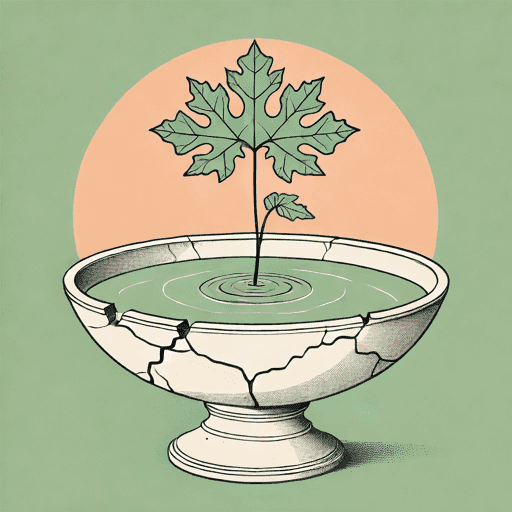
The theme of renewal and rebirth is woven throughout the story, particularly in Ware’s longing to start over and redefine himself. Early on, Ware imagines dunking himself into the old baptistery and emerging someone different: “He imagined the tub full of water, imagined falling into it and then stepping out a less disappointing son whose report cards said, Ware is extremely social! And also, very normal!” (49). This desire to be “reborn” as someone socially accepted is an example of the pressure Ware feels to conform to others' expectations. As the story progresses, his idea of rebirth transforms from one rooted in isolation to one grounded in acceptance and hope.
The idea of transformation is symbolized when Jolene talks about the process of trash disposal. Ware later internalizes this idea that all things transform and uses it in his film: “If everything was something else before, then everything will be something else afterward. Sometimes, if you look hard enough, you can see it—the whole story of a thing” (220). This realization that identity and form can change opens Ware’s mind to the idea that he, too, can change—not to become “normal” but to evolve into a fuller version of himself. This theme culminates when the moat around the church is finally filled. Ware, in a symbolic act, attempts to dunk himself in it to be reborn, but nothing happens. The moment is anticlimactic, showing that change doesn’t come instantly or from an external source. Jolene catches him in the act and gently tells him never to ask to be “normal” again. Rather than erase who he is, Ware begins to see himself more fully.
The concept of renewal is also reflected in the world around Ware. The abandoned lot, which was once just a pile of ruins, comes to life, first with Jolene’s garden, birds, Ware's castle, and even an endangered tortoise. Ware gives Jolene a new garden in his backyard and names it “The Real World” because, as he explains, “Bad stuff happens. But the real world is also all the things we do about the bad stuff. We’re the real world, too” (282). In the final chapter, as Ware holds Jolene’s hand, he is no longer waiting to be reborn; he now just wants to discover more of himself.

Unlock every key theme and why it matters
Get in-depth breakdowns of the book’s main ideas and how they connect and evolve.
- Explore how themes develop throughout the text
- Connect themes to characters, events, and symbols
- Support essays and discussions with thematic evidence