19 pages • 38-minute read
High to Low
A modern alternative to SparkNotes and CliffsNotes, SuperSummary offers high-quality Study Guides with detailed chapter summaries and analysis of major themes, characters, and more.
Literary Devices
Form and Meter
The form of the poem is one stanza of 25 lines. The absence of stanza breaks denies the poem space and room for the addressee or listener to breathe. The relentlessness of the lines mimics the speaker’s strident tone. The “high”-class Black person is exasperated with the “low”-class Black person, and their dramatic distress allows for no pauses. The form furthers the condescending attitude, turning the poem into a lecture. The lecturer expresses their ideas without interruption from the audience. The lecture dynamic mimics the relationship between the speaker and the addressee, with the speaker presenting themselves as the wise professor, educating the addressee—the student—about the errors of their ways. At the same time, the jagged line lengths suggest the volatility of the speaker, hinting that they’re an unreliable narrator.
The poem’s meter is free verse. As the label implies, Hughes is free to have as many beats as he wants in his lines. He doesn’t have to follow iambic pentameter or any other preestablished pattern of unstressed-stressed syllables. The free verse has less to do with the specific poem and more to do with Hughes’s general appreciation for jazz and the blues. The swerving lines and the recurring rhymes replicate the beat of blues and jazz. They make the poem melodious, giving the fraught message about class and race a pleasing sound.
Juxtaposition and Repetition
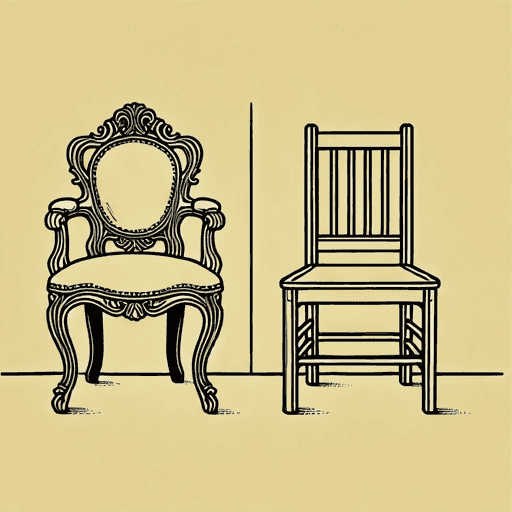
Juxtaposition and repetition work closely together in the poem. Juxtaposition presents two different people, ideas, or things, side by side so that the reader can closely examine their similarities and differences. Repetition, as the name suggests, is repeating words or phrases to reinforce key points. In “High to Low,” the repetition cements the differences between the speaker and the addressee. The speaker maximizes their separateness by repeating “you” 12 times. The speaker also repeats “we” twice (Lines 2, 24), but the addressee, as it turns out, isn’t a part of the “we.” The speaker states, “[W]e have our problems, / too, with you” (Lines 24-25).
The speaker and addressee are two distinct characters with incongruous traits and behaviors. The speaker scolds the addressee for yelling, cursing, idling, and attending less prestigious schools and churches. The implication is that the speaker doesn’t yell, curse, or idle—their kids attend “Ethical Culture” (Line 12), and they worship at “St. Phillips” (Line 14). Yet the list of opposing traits and the pronounced repetition of “you” can’t uphold the juxtaposition. The differences collapse when the speaker admits, “[Y]ou let me down” (Line 20). The speaker wants to uncouple themselves from the addressee, but skin color—“the race” (Line 21)—makes them inseparable.
Setting
The setting is a literary device where the poet places their work within a specific environment. The particular space adds to the poem’s themes and symbols. In “High to Low,” the setting is Harlem, or, more generally, New York City. “St. Phillips” (Line 14) and “409” (Line 17) allude to locations in Harlem: St. Phillips is an illustrious church and 409 Edgecombe Avenue is a ritzy residential address within Harlem. The “Ethical Culture” (Line 12) school isn’t in Harlem, but it’s in New York City, and the capacity for the speaker to presumably send their kids out of the neighborhood reinforces their resources and class mobility.
The setting expands upon the juxtaposition. The speaker compares the nobility of Harlem and New York City to the alleged commonness of the South. The speaker attacks the addressee for “the way [they] lounge on doorsteps / just as if [they] were down South” (Lines 15-16). As the addressee isn’t in the South, they must act differently and live up to their new setting. The juxtaposition between the South and North is tragically ironic, with the twist being that lethal racism wasn’t—and isn’t—absent in supposedly liberal society. While Hughes was alive, there were notable moments of unrest in New York City, including three Harlem riots in 1935, 1943, and 1964 due to racist violence and policing.

Unlock all 19 pages of this Study Guide
Get in-depth, chapter-by-chapter summaries and analysis from our literary experts.
- Grasp challenging concepts with clear, comprehensive explanations
- Revisit key plot points and ideas without rereading the book
- Share impressive insights in classes and book clubs