High to Low
High to Low
A modern alternative to SparkNotes and CliffsNotes, SuperSummary offers high-quality Study Guides with detailed chapter summaries and analysis of major themes, characters, and more.
Themes
Class Antagonism Within the Black Community
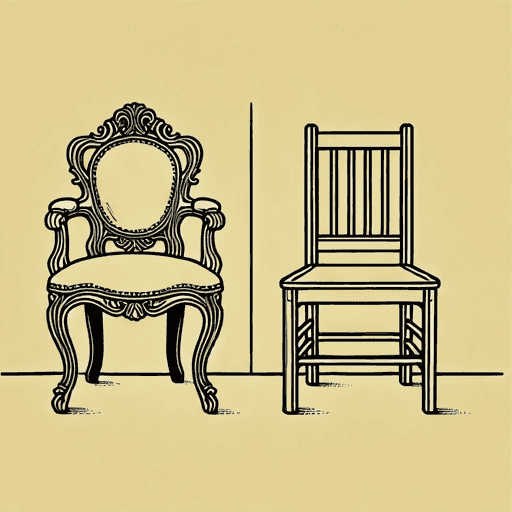
The title indicates the central theme, with “High to Low” representing a Black person from a wealthy socioeconomic class (the speaker) and a Black person from an economic class absent of wealth (the addressee). As the speaker emphatically criticizes the addressee, the relationship is antagonistic. The speaker blames the addressee for the “troubles” of Black people (Line 2). Since class defines the identities of the speaker and the addressee, class is the reason for the conflict. The speaker tells the addressee, “[Y]ou talk too loud / cuss too loud / look too black” (Lines 4-6). Their behavior isn’t specific only to them but to their class as a whole. Thus, the “you” (Line 4) isn’t one specific person, but an entire class of people—the “low”-class Black people. Similarly, the speaker represents another group of Black people—those from the “high” class.
The plural pronoun “we” (Line 2) underscores the class rift. There are two instances of “we” in the poem. At the start, the speaker says, “God knows / We have our troubles, too” (Lines 1-2). Ostensibly, the “we” means Black people as a whole. Regardless of their class, Black people face violent, deadly racism. However, near the end, the speaker suggests that Black people aren’t a united “we” (Line 24). They state, “[W]ell, you can see, / we have our problems, too, with you” (Lines 23-25). Now, the “we” signifies Black people with wealth and status. The “we” juxtaposes the “you,” or Black people absent of status and wealth. The speaker reconfigures the conflict. Black people are not allies against the numerous prejudices facing them. The issue is socioeconomic class, so the wealthy Black people separate themselves from the less wealthy Black people. The former subjects the latter to the discriminative beliefs regularly associated with bigoted, intolerant white people.
How Behavior Links to Money
The poem connects a person’s behavior and their economic status, but the link is implicit. The poem never explicitly addresses wealth or poverty. The speaker doesn’t overtly boast about their income, nor do they explicitly call the addressee “poor” or another fraught economic term. The title reinforces the subtly, as Hughes cuts off the “class.” That is, instead of saying “High Class to Low Class,” Hughes says, “High to Low.” The latter is more sweeping, suggesting that a person’s socioeconomic class has an immeasurable impact on their identity and behavior. A person’s socioeconomic class isn’t limited to how much money they have—it extends to who they are. As the speaker has money and status, and the addressee doesn’t, the speaker is “high” above the addressee in terms of money and the greater social hierarchy.
The speaker displays their superiority and the addressee’s alleged shortcomings through their conduct. The speaker rebukes the addressee for speaking too loudly and using too many “cuss” words (Line 5). They tell them, “The way you send your kids to school / stockings down” (Lines 10-11). The addressee’s behavior doesn’t exist in a vacuum—it’s a direct reflection of their socioeconomic class. They can’t use appropriate language or dress their kids properly because their money makes them less than. The inequality forbids them from sending their children to “Ethical Culture” (Line 12), attending “St. Phillips” (Line 14), or living “at 409” (Line 17). The addressee can’t access prestigious spaces because their socioeconomic class creates behavioral patterns that turn them into imputed pariahs. The speaker and addressee aren’t peers because the addressee is a “clown” (Line 18). As the speaker tries to “uphold the race” (Line 21), their money produces behaviors that put them in a realm that the addressee can’t reach.
The Pressure of Representation
Though the poem works as a satire, the speaker retains elements of sincerity. However hyperbolic, the speaker wants to provide an honorable picture of Black people. Their exasperation with the addressee reveals their commitment to serve as a worthy ambassador for an entire, multifaceted group. As the speaker realizes it’s easier to blame a person than a vast network of laws and policies, they aim their ire at the addressee, telling them, “[Y]ou let me down— / me, trying to uphold the race” (Lines 20-21). The speaker thinks of themselves as the best representative of Black people. If the addressee could act like the speaker, then the entire “race” would have fewer “problems” (Line 24). The theme introduces an irony or a twist. The speaker presents themselves as different from the addressee. They belong to opposite socioeconomic classes, so they behave with a marked difference. However, the speaker subverts their apartness when they acknowledge the addressee is letting them down. Class severs them, but race links them, and the addressee, stigmatized by their “low”-class and indecorous behavior, undoes the speaker’s supposedly positive representation.
The theme yields an autobiographical reading, with the speaker illustrating the pressure Hughes felt to represent Black people. Throughout his career, Hughes arguably tailored his beliefs and conduct to make Black people seem amicable and nonthreatening. In the 1930s, Hughes was a vocal proponent of people with less wealth, and he was open to the ideas of communism. However, during the 1950s, when people in the United States government were demonizing citizens with any connection to communism, Hughes modified his stance. Like the speaker in “High to Low,” Hughes criticized Black authors like Richard Wright and Amiri Baraka for their bellicose language. While the addressee doesn’t reply in “High to Low,” Black writers responded to Hughes over time. The author James Baldwin thought Hughes was simple and accommodating. Baldwin and others believed a Black person, regardless of their class, should speak loudly and use whatever words were necessary to draw attention to the ongoing oppression of Black people.

Unlock every key theme and why it matters
Get in-depth breakdowns of the book’s main ideas and how they connect and evolve.
- Explore how themes develop throughout the text
- Connect themes to characters, events, and symbols
- Support essays and discussions with thematic evidence