Hitler's Daughter
41 pages • 1-hour read
Jackie FrenchHitler's Daughter
A modern alternative to SparkNotes and CliffsNotes, SuperSummary offers high-quality Study Guides with detailed chapter summaries and analysis of major themes, characters, and more.
Chapters 9-14Chapter Summaries & Analyses
Chapter 9 Summary: “Questions”
Content Warning: This section of the guide includes discussion of graphic violence, antisemitism, and religious discrimination.
Mark approaches his teacher, Mr. McDonald, and asks if he thinks children are exactly like their parents. Mr. McDonald answers that while children do inherit many of their parents’ traits, they usually do something completely different with them. Additionally, “bad” parents can raise “good” kids and vice versa. Mark asks if he thinks Pol Pot or Hitler could have a child that wasn’t evil, and Mr. McDonald answers that he thinks that’s possible. Mark’s most difficult question comes when he asks how a person can ever know they’re right, and Mr. McDonald isn’t sure how to answer. He suggests Mark talk to the priest instead.
Chapter 10 Summary: “Friday Afternoon”
Mark sits on the bus and dreads the upcoming weekend, knowing he will have to wait to hear more of the story. He tries to talk to his friend, Bonzo, about everything he’s been thinking, but Bonzo doesn’t seem to understand and thinks it would be fun to join the army. Mark wishes he had the courage to ask Anna and Tracey to come over to his house, but he can’t bring himself to do it.
Chapter 11 Summary: “Saturday, Sunday, Monday Morning”
The rain continues and is flooding the area. On the radio, Mark hears about genocide happening in various parts of the world, and it occurs to him that this sort of thing isn’t just history; it’s also happening now. Over breakfast, he asks his parents about genocide, and neither of them has much to say. They both admit they don’t pay attention or concern themselves with that sort of thing, and Mark’s dad gets frustrated when Mark asks about whether the farm they live on is stolen land.
The rain stops that night but starts again Sunday night. Mark has a harrowing dream in which all his friends and family are saluting Hitler as he gives a speech. Mark tries to tell them not to listen, but nobody pays attention to him. The next morning, Mark brings up Hitler again, annoying his mother. Mark’s mother just wants to get ready for the day and tries to tell Mark to drop the topic. Mark imagines a mother who is inquisitive and thoughtful and who listens to his points. He wonders whether it would be better to have a mother who stood up for what’s right and risked going to prison, or one like his mother, who remained quiet but safe.
Chapter 12 Summary: “The News”
Ben is still sick, and Mark is desperate to hear more of the story. Anna starts talking, becoming more serious with each word, and describes an important conversation between Frau Leib and Heidi. Frau Leib told Heidi that a farmer nearby was “taken away” because he was caught hiding a Jewish man. Heidi started to wonder how horrible the camps must be, and whether there were any Jewish people still nearby. Fraulein Gelber overheard the conversation and put an immediate end to it.
Chapter 13 Summary: “Heidi’s Plan”
Mark thinks Heidi should do something about the injustices she is learning about, and Anna explains that Heidi tried but to no real effect. Heidi cleaned out the hen house with the story that it would be for her rabbits and started slowly stocking it with jars of food. She set it up in the hopes that if a Jewish person came through the area, she could hide them there. Heidi didn’t know much about Jewish people, but she imagined they were different, just like her, and wanted to help. On the bus, Mark notices that Anna seems quiet, as though the story she is telling is affecting her as much as it affects him.
Chapter 14 Summary: “Wednesday”
Mark starts to wonder how Heidi’s story ends, if it ends at all, and he hopes it ends happily. Anna tells of a night when Heidi and Fraulein Gelber were called out to meet Hitler and driven to the outskirts of town. There, Heidi was asked to sit in the car with Hitler, and he told her she could trust Fraulein Gelber but no one else. He started to get angry as he talked about how everyone was beginning to betray him. Heidi wanted to say something but couldn’t bring herself to make much of a reply. On the way home, Fraulein Gelber told Heidi how lucky she was that Hitler took the time to see her, and Heidi felt seen for once.
Chapters 9-14 Analysis
Mark has a particularly symbolic dream that relates to The Importance of Questioning and his feelings of horror about the Holocaust. In the dream, everyone is saluting Hitler, and Mark is the only one who dares to question him. Nobody listens to him, emphasizing Mark’s isolation in his moral questioning in the real world (Mark’s parents, in particular, do not seem interested in his newfound inquiries). This scene reflects his internal struggle with the problem of not questioning authority. In contrast, characters like Ben and Bonzo are indifferent to the issue and see war as merely entertainment.
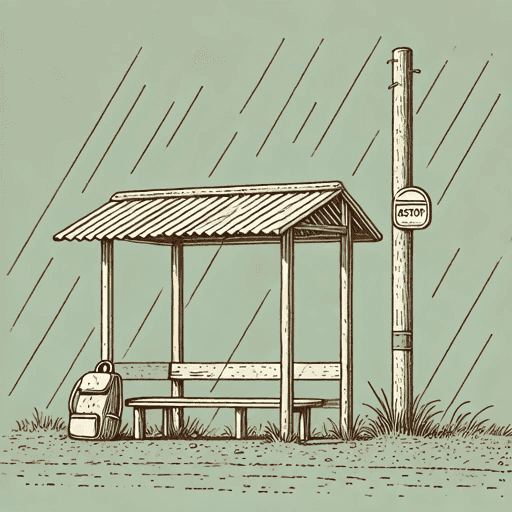
French uses imagery to reflect the characters’ emotions. For example, after the rain stops, the weather changes dramatically: “The clouds that had stretched tight and grey across the sky shrank into mushrooms that puffed and waddled through the blue. The trees shone tiny diamonds across their leaves and the creek shrank slightly under its edge of foam” (86). The imagery here emphasizes a moment of clarity or a reminder that there is still beauty in the world, comforting the tense Mark. However, the rain starts again, creating a cyclical pattern in the plot that reflects Mark’s continuous questioning. This cyclical structure is similar to the idea of history repeating itself. The framing device of the bus stop also plays a role, as it serves as a place of transition between the real world and the world of the story.
The theme of Storytelling as a Means of Understanding the World remains central to Mark’s development. As Anna tells Heidi’s story, Mark asks increasingly deep philosophical questions that challenge the simple answers he typically receives from adults. Anna’s storytelling serves not only as a vehicle for the plot but also as a means of prompting Mark’s self-reflection. He is captivated by Anna’s ability to make the story feel as though it’s a movie playing in her mind. Anna describes scenes in vivid detail, like “the bright green china jug with the flowers on it” (93), which creates a sense of being invited into the story and realism. Mark’s need to know what happens next is not only about the fate of Heidi but also about understanding the moral complexities that the story brings to light.
Mark’s attempts to discuss Hitler with his mother are met with indifference, showing the reluctance of adults to engage in uncomfortable discussions with children. When Mark asks his mom what she would do if she lived in Nazi Germany, she brushes it off, preoccupied with the day. Mark imagines a mother who would want to talk about it in depth and would listen to his concerns and take his points seriously. Mark hopes his mother will do the right thing, but he isn’t sure because she doesn’t seem to care about these weighty matters. His struggle to engage with his mother about such a serious issue adds to his sense of isolation and reinforces his growing understanding that not all people are willing to confront uncomfortable truths, including his parents. Mark is the opposite of his parents in this way, as he understands The Importance of Questioning while they do not.
As Heidi’s story progresses, so does her Awakening to the Horrors of the World. Heidi’s awareness grows, especially through her interactions with Frau Leib. Frau Leib tells Heidi that the Jewish people have been sent away and that a nearby farmer was arrested for hiding one. Fraulein Gelber, however, doesn’t want Heidi to know these things or question what’s happening. This tension between the older women’s conflicting attitudes shows how different people respond to the atrocities of the world. Heidi, trying to make sense of the world, does what she can by setting up a place for the Jewish people to hide, but none ever come. She sees them as being like her (rejected by the world) and demonstrates the same empathy that Anna has—something that sharply contrasts the Nazi regime’s ideology.

Unlock all 41 pages of this Study Guide
Get in-depth, chapter-by-chapter summaries and analysis from our literary experts.
- Grasp challenging concepts with clear, comprehensive explanations
- Revisit key plot points and ideas without rereading the book
- Share impressive insights in classes and book clubs