Hitler's Daughter
41 pages • 1-hour read
Jackie FrenchHitler's Daughter
A modern alternative to SparkNotes and CliffsNotes, SuperSummary offers high-quality Study Guides with detailed chapter summaries and analysis of major themes, characters, and more.
Important Quotes
Content Warning: This section of the guide includes discussion of religious discrimination, antisemitism, graphic violence, and emotional abuse.
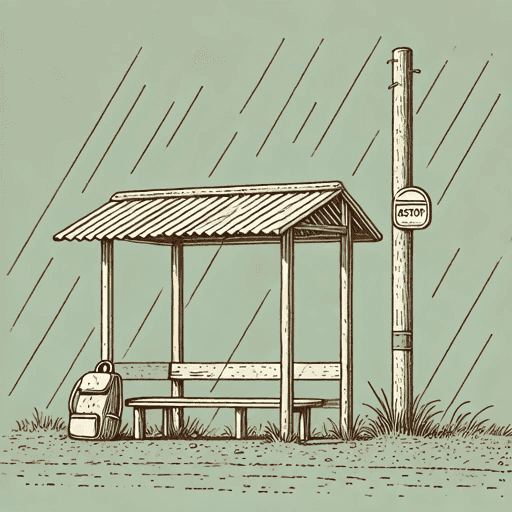
“The rain gurgled down the gutter, hiccupped at a bit of rock, then sped down and round the corner to the creek. A cow mooed sadly across the wet grass.”
(Chapter 1, Page 6)
This quote uses alliteration (“gurgled,” “grass”), vivid imagery, and personification to create sensory imagery with a hint of poetry. The rain “hiccupping” personifies the weather, and the cow’s mooing reinforces Mark’s simple but somber existence. The cows, appearing in the rain, symbolize Mark’s contemplative mood and the rural setting that shapes his somewhat isolated view of the world.
“But we can’t have a story about something that’s not real.”
(Chapter 1, Page 8)
This quote shows Mark’s struggle with the line between fiction and reality, and his unease with imagining a made-up story involving real historical figures. This is also part of Storytelling as a Means of Understanding the Past. His black-and-white thinking at this stage shows his limited understanding of how fiction can be used to reflect real emotional and historical truths.
“I bet Hitler never loved anyone.”
(Chapter 1, Page 12)
This statement shows Mark’s moral framework as it originally exists, in a simple form with black-and-white ways of thinking. He sees Hitler as a figure of pure evil, almost inhuman, and incapable of emotion. Mark’s ideas of good versus evil, a motif in the novel, and the line between them starts to shift as he hears more of Heidi’s story. This moment sets up the later conflict when Mark must grapple with the unsettling idea that evil is not absolute.
“Somehow Heidi had become real…no, she wasn’t real, not yet. It was as though she MIGHT be real, if Anna just told them more. And suddenly Mark wanted more than anything to know more.”
(Chapter 2, Page 16)
This moment is a turning point in Mark’s experience of the story. He becomes more invested, and he allows the lines of fiction and fact to blur. French emphasizes the power of Storytelling as a Means of Understanding the Past through this change, as Mark was initially quite stubborn and thought Anna’s method of storytelling was strange. He now wants to know more, and his attitude toward coming to the bus stop has changed completely.
“The rain gurgled along the gutter and into the tank outside the kitchen window, almost drowning out the yelling of the frogs in the creek.”
(Chapter 3, Page 19)
Alliteration, imagery, and personification set the mood with auditory imagery and onomatopoeia describing the scene. The rain, a recurring motif, mirrors the ongoing emotional turmoil within the characters, especially Mark. The imagery of the frogs’ “yelling” being nearly drowned by rain parallels how real voices or deeper truths are often overwhelmed or suppressed in the story. It also personifies the frogs and gives them human-like characteristics.
“‘How could she want someone like that to love her? Someone who did such horrible things.’ ‘He was her father,’ said Anna simply.”
(Chapter 4, Page 33)
This conversation between Mark and Anna showcases the emotional and moral complexity at the heart of Mark’s questioning. Mark’s confusion reflects his developing awareness of moral grays, while Anna’s quiet response shows her emotional connection to Heidi. The contrast between the two voices illustrates the difficulty of reconciling evil acts with human relationships.
“Sometimes…just sometimes…Heidi felt that maybe…maybe things weren’t always…right.”
(Chapter 4, Page 35)
This quote shows the early stages of Heidi’s moral Awakening to the Horrors of the World and the hesitation she felt upon learning of these truths. It is a crucial turning point in her character development, as she starts to question the truths she’s been taught in her isolated environment, laying the foundation for further revelations.
“The creek bubbled and twisted, brown and muddy in the growing dark just like the thoughts inside him.”
(Chapter 5, Page 41)
This quote uses simile, imagery, and personification to connect the setting with Mark’s inner emotional state. The creek’s “twisted” flow reflects Mark’s confusion and deepening moral uncertainty as he reflects on Heidi’s story and the doubts he now has about his own family. The imagery here emphasizes Awakening to the Horrors of the World and how this is a confusing and unsettling experience.
“Would you still love me? No matter what I did? Even if I killed hundreds and hundreds of people?”
(Chapter 5, Pages 44-45)
This question reveals Mark’s internal conflict and moral confusion as he grapples with Heidi’s story and how it applies to his own life. Using questioning and repetition, Mark explores the question of unconditional love versus moral responsibility. This shows The Importance of Questioning. It also draws a stark parallel between Mark and Heidi, as Heidi asks herself how she can love a man responsible for killing people.
“The cows chomped sadly at the wet grass. Today the air was still, so the rain fell straight and clear.”
(Chapter 6, Page 46)
French uses personification and imagery to communicate a mood of sadness and stagnancy, as though everything is slowly moving forward and signaling a brief, unsettling calm. The cows reflect Mark’s sense of sorrow and confusion as he thinks about good and evil, a motif in the novel.
“Would they hear the sound of a bomb falling before it hit their car and killed them, Heidi thought in sudden terror?”
(Chapter 6, Page 51)
This quote emphasizes Heidi’s growing awareness of the dangers and atrocities surrounding her. The use of internal dialogue showcases Heidi’s terror and confusion as she has no choice but to accept the realities of war. There is suspense and a feeling of helplessness. This moment is an important part of Heidi’s Awakening to the Horrors of the World.
“It was good to listen to Frau Leib’s conversation. There was so much to learn that no one had mentioned to her before.”
(Chapter 7, Page 61)
This line relates to Heidi’s growing awareness of the world around her, as she listens to Frau Leib, a character who shares information about the world of Nazi Germany. Heidi starts to realize her isolated life has left her with a narrow understanding of the world, and she is eager to have it burst open. Heidi learns not only about the war but also about her role and the complexities of moral choices.
“You just have to look at the statistics, but does anyone bother to do that? No, they just listen to what some twerp has to say on TV and take it like it’s gospel. Never mind if it’s true or not. People just don’t THINK, that’s the trouble. They don’t look at the evidence.”
(Chapter 8, Page 68)
This quote from Mrs. Latter, the bus driver, uses rhetorical questions to illustrate The Importance of Questioning. Her frustration reflects how people are often quick to accept information passively without thinking about it critically or questioning the source, paralleling how many German citizens accepted Nazi ideology without questioning its morality or truth. Ironically, even as she criticizes blind obedience, she reveals her own biases, showcasing the complexity and difficulty of truly thinking independently.
“People should do what they thought was right. But what if what you thought was right, was wrong?”
(Chapter 9, Page 76)
This line is from a key moment of philosophical reflection for Mark and reinforces the novel’s exploration of the motif of good versus evil and right versus wrong. Mark’s growing realization that doing what feels right isn’t always the same as doing what is right emphasizes an important difference when understanding historical events like the Holocaust. This thought deepens his internal conflict and shows his move from childish certainty to a more mature understanding of moral complexity.
“Anna would understand, he thought, his eyes on Anna in the seat in front. Anna really thought about things.”
(Chapter 10, Page 81)
This quote refers to Mark’s perception of Anna as someone wise for her age. The phrase “Anna really thought about things” reflects Mark’s admiration for Anna’s ability to engage deeply with difficult questions, contrasting with his other friends and even his parents. The interplay between his questioning and Anna’s ability to process these thoughts is what draws them together.
“The flood smelt like wet socks. Even the kitchen was full of the smell and it was stronger than the smell of last night’s pizza.”
(Chapter 11, Page 82)
Olfactory imagery and the use of simile communicate the flood’s smell to create a mood of discomfort and unpleasantness. The contrast between the flood’s smell and the lingering pizza scent highlights the disruption of normalcy in Mark’s current life. The more he learns, the more ordinary problems fade into the background of his thoughts.
“Mark blinked. For a moment he had thought he was back in the 1930s, the radio talking about all the people that Hitler was killing. But this was NOW. People were being killed NOW.”
(Chapter 11, Page 83)
This quote emphasizes Mark’s realization that the atrocities he learned about in history are not just in the past; they are still occurring. The shift from the past to the present serves to emphasize the way that humanity still inflicts violence based on hatred and prejudice. Mark blinks because he can’t believe what he’s hearing or that people never learned from the past’s atrocities.
“The things they teach kids nowadays…It’d make more sense if they taught everyone to mind their own business.”
(Chapter 11, Page 85)
This line shows how Mark’s parents fail to understand The Importance of Questioning and try to reflect that indifference onto their son. By suggesting that people should “mind their own business,” Mark’s father implies that apathy and avoidance are the healthier approach. Mark seems to be the only one who knows this isn’t true.
“They were laughing and cheering and excited, and no one was listening to Mark. They were wading into the creek, into the flood. They’d be washed away, thought Mark, and anyway, they shouldn’t be there at all.”
(Chapter 11, Page 87)
The imagery of the characters “wading into the creek, into the flood” is a metaphor for the problems with staying ignorant and failing to question authority. Mark’s dream reveals the isolation he feels as those around him seem not to care. The symbolism of the flood represents overwhelming chaos, and Mark is the only one aware of the danger.
“Anna began, and the story flowed as if there had been no break, as though it was as clear as a movie in her mind, and all she was doing was describing what she saw and heard on the screen inside her mind.”
(Chapter 12, Pages 92-93)
This quote uses simile and imagery to emphasize the power of Storytelling as a Means of Understanding the World, which, because of Anna’s skillful way of speaking and describing, makes Mark start to feel like he is part of it. The comparison to a movie in Anna’s mind illustrates how she brings the past to life. The story also “flows” just like the creek that runs alongside the bus stop and is still flooding with rainwater.
“What were Jews like? That’s what no one seemed to be able to tell her. Just that they were different.”
(Chapter 13, Page 98)
This line uses internal dialogue to show Heidi’s confusion surrounding Jewish people during Nazi Germany. The vague description of Jewish people as “different” reflects the dehumanization and othering that was central to Nazi ideology and which Heidi feels every day. This scene demonstrates Heidi’s gradual Awakening to the Horrors of the World and her decision to start questioning the world around her.
“Mark tried to empty his mind. He was missing the story. And anyway he was silly to worry. All of Anna’s stories ended happily.”
(Chapter 14, Page 103)
This passage illustrates Mark’s naivety and hope that things will resolve positively, as well as how his thoughts on morality become so in-depth that he even starts to become distracted from Anna’s telling. This attempt to empty his mind demonstrates his inner turmoil and his growing awareness that the world may not offer simple answers to these important questions. There is a clear tension between Mark’s longing for a happy ending and the harsh reality he must face.
“The engine of the Führer’s car muttered. The car pulled out onto the road. Heidi watched it as it passed. She lifted her hand to wave, but it was too dark to see if the Führer waved back.”
(Chapter 14, Page 107)
The darkness of the scene emphasizes the mystery and fear that define Heidi’s new existence, as she cannot even tell if the Führer acknowledges her and has no idea what will become of her now. The image of Heidi lifting her hand to wave reflects her longing for connection and recognition, even with someone as cold as Hitler.
“The planes passed overhead. No bombs dropped around them. There was silence, apart from the engines of the cars. Heidi relaxed. For the moment they were safe.”
(Chapter 16, Page 115)
This moment of temporary relief showcases the brief moments of safety and respite that can occur during times of war. The silence is palpable and relates to Heidi’s fear and uncertainty. While Heidi feels safe for now, there is a constant sense that something could go wrong.
“She sat there trying to listen for her father’s voice, but all she could hear now were the bombs.”
(Chapter 17, Page 122)
This quote highlights Heidi’s sense of loss of her father as the war reaches its breaking point. The bombs drowning out her father’s voice symbolize this loss. Where her father was once at the forefront of her attention, it is now the war he caused that influences her thoughts.

Unlock every key quote and its meaning
Get 25 quotes with page numbers and clear analysis to help you reference, write, and discuss with confidence.
- Cite quotes accurately with exact page numbers
- Understand what each quote really means
- Strengthen your analysis in essays or discussions