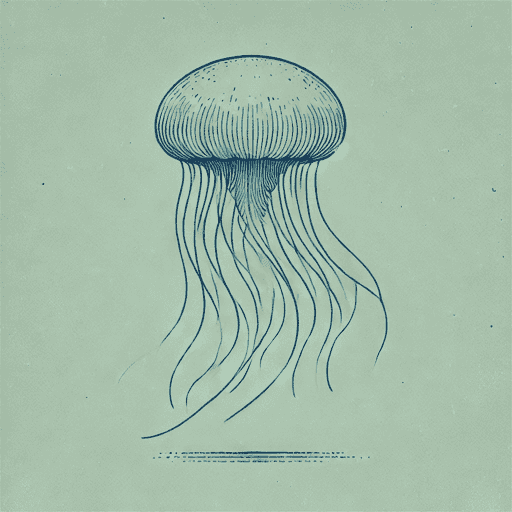
Hot Milk
53 pages • 1-hour read
Deborah LevyHot Milk
A modern alternative to SparkNotes and CliffsNotes, SuperSummary offers high-quality Study Guides with detailed chapter summaries and analysis of major themes, characters, and more.
Important Quotes
Content Warning: This section of the guide includes discussion of illness, sexual content, emotional abuse, animal cruelty and death, mental illness, and ableism.
“She will wake up and shout, ‘Get me water, Sofia,’ and I will get her water and it will always be the wrong sort of water. I am not sure what water means any more but I will get her water as I understand it: from a bottle in the fridge, from a bottle that is not in the fridge, from the kettle in which the water has been boiled and left to cool. When I gaze at the star fields on my screen saver I often float out of time in the most peculiar way.”
(Chapter 1, Pages 1-2)
Sofia getting Rose water is a motif in the text that reflects the monotony and servitude of Sofia’s daily life. The fact that the water is never the “right” water adds a layer of hopelessness to Sofia’s position that is further shown in her unfinished doctoral thesis. The star fields on her screen are only displayed when she has not unlocked the computer, showing how she is frozen in place. Sofia’s emotional inertia is thus immediately linked to Rose’s demanding ostensible health issues, introducing the theme of The Blurred Line Between Physical and Psychological Suffering.
“Yes, we are limping together. I am twenty-five and I am limping with my mother to keep in step with her. My legs are her legs. That is how we find a convivial pace to move forwards. It is how adults walk with young children who have graduated from crawling and how adult children walk with their parents when they need an arm to lean on.”
(Chapter 2, Page 14)
The limp that Sofia periodically develops is a sign of the codependence between her and Rose. Just as Rose is dependent on Sofia for attention, Sofia is dependent on Rose as an excuse to keep her from growing. Sofia’s comparison of this psychosomatic limp to an anthropological assessment of parents and children reflects Sofia’s true goals in her education.
“‘I used to say to my classes that the ways to get insight are to study infants; to study animals; to study primitive people; to be psychoanalyzed; to have a religious conversion and get over it; to have a psychotic episode and get over it.’ There are 5 semicolons in that quote. I remember making the ;;;;; on the wall with the marker pen, I had underlined ‘religious conversion’ twice.”
(Chapter 2, Page 24)
Though Sofia does not do all six of Mead’s methods, she does study Evangeline, Pablo’s dog, her father, and herself, who are an infant, an animal, a man who went through a religious conversion, and a person getting over a “psychotic episode.” Sofia underlines “religious conversion” because she blames her father for leaving her to take care of her mother, but this only shows her deflection away from her own responsibility
“I sound like such a loser. For some reason, I want her good opinion, but I’m not very impressive […] ‘I have a house here with my boyfriend,’ she says. ‘We come here most summers. I’ve got a pile of repairs to do for the shop today. After that, we are driving to Rodalquilar for supper. I like driving at night, when it’s cool.’ Her life is the sort of life I want.”
(Chapter 3, Page 35)
Sofia wants to impress Ingrid because Ingrid appears to be an independent woman, someone Sofia cannot see herself becoming as she faces The Struggle for Independence. However, Ingrid’s description of her life is mundane, involving living with a boyfriend, working, and going out. This contrast is intentional, since Sofia is not looking to live a glamorous lifestyle. She only wants the strength and freedom to live for herself.
“My cracked lips were on her full soft lips and we were kissing. The tide was coming in. I shut my eyes and felt the sea cover my ankles and what came to mind was the screen saver on my laptop, the constellations in the digital sky, the swirls of pink light, which are gas and dust. The phone was still ringing but we kept on kissing and she was holding onto my shoulder with the medusa sting, squeezing the purple welts. It hurt but I didn’t care, and then she broke away from me to answer her phone.”
(Chapter 3, Page 38)
The initial scene of Ingrid and Sofia’s sexual relationship involves imagery of the tide coming in and the devaluation of the screen saver on Sofia’s laptop. These images imply a swell of emotion which could destabilize Sofia’s complacency. At the same time, Ingrid squeezes the medusa sting, which represents Sofia’s growing boldness, before answering her phone, revealing her split attention. This passage speaks to The Complexities of Sexual Desire and Identity for both Sofia and Ingrid, as Sofia is fully committed to the moment while Ingrid pulls away.
“Now she was saying something about needing the three pills she had been asked to abandon and how coming to Spain to heal her lame legs was like crying for the moon. By which I think she meant we were searching for a cure that was beyond our reach. If I were to look at my mother just once in a certain way, I would turn her to stone. Not her, literally. I would turn the language of allergies, dizziness, heart palpitations and waiting for side effects to stone. I would kill this language stone dead.”
(Chapter 5, Page 55)
Though Sofia and Rose agree that they will not likely find a cure for Rose, Sofia realizes that boldly confronting her mother about her hypochondria could end the cycle of developing and curing illnesses. The root of both Sofia and Rose’s problems is that they are complacent in their codependent relationship, and one of them needs to break free from this cycle to end it.
“Rose stands naked under the shower. Her breasts droop, her belly folds and folds again, her skin is pale and smooth, her silver-blond hair is wet, her eyes are bright, she loves the warm water falling on her body. What is her body supposed to want and who is it supposed to please and is it ugly or is it something else? She is waiting for withdrawal symptoms from the lack of the three pills that have been deleted from her list of medication. So far they have not arrived.”
(Chapter 6, Page 61)
Sofia muses about Rose’s body because she is struggling to relate to her mother’s experiences. By envisioning Rose’s body the same way she envisions her own, as something made to please and be pleased, she starts to understand Rose better. However, they are still trapped in their toxic relationship, in which there is always a medical issue on the horizon.
“He was shouting, like a brother, perhaps like a lover, I don’t know. Something weird was happening because I wanted to pull him down to the floor and make love to him. I had been stung into desire. An abundance of desire. I was turning into someone I did not recognize. I was terrifying myself.”
(Chapter 7, Page 72)
Critically, Sofia confuses family roles because she is trying to locate herself and her parents within her anthropological understanding of family. As a result, terms like “brother” and “lover” become confusing. As Sofia grows and learns more about her desires, she becomes more like the “medusa” or Medusa, which scares her while enticing her. Her growing awareness of her own sexuality in this passage reflects The Complexities of Sexual Desire and Identity.
“The Greek side of my family, from Thessaloniki, did not need Google to tell them how to gut a fish. I opened its belly and cut away at the guts, which were white and slimy. The ancient Greek side of my family would have caught plaice in the shallows of the Aegean. The Yorkshire side of my family bought fish from the trawlermen at the docks, men who had survived the Arctic seas and were on deck for ten hours in the raw winds.”
(Chapter 8, Page 79)
Sofia thinks about her ancestors because she cannot relate to them, much as she cannot relate to her parents. She feels she has not inherited the strengths and knowledge of her parents, when the reality is that she does not want to inherit anything from them. She wants to view herself as independent, but she is still gutting fish just as her ancestors did.
“We ate the dorado sitting opposite each other at the table laid for two on the terrace. […] Later, we swam naked in the warm night and he kissed every medusa sting on my body, the welts and blisters, until I was disappointed there were not more of them. I had been stung into desire. He was my lover and I was his conqueror. It would be true to say that I was very bold.”
(Chapter 9, Page 87)
This passage directly connects the symbolic medusa stings with Sofia’s growing boldness. Though the stings are painful, they represent a process of growing and becoming more powerful, as displayed in terms like “conqueror.” Sofia does not love Juan, but she makes him her lover as a part of this growing process.
“It was her responsibility to stop wild animals sneaking in through the door and terrifying her child. It was as if this sad house was a spectre she carried inside her, the fear of not keeping the wolf from our door in Hackney, London. I had been entitled to free school meals at my school and Rose knew I was ashamed. She made me soup in a flask most days before she left for work. I carried it in my heavy schoolbag while it leaked all over my homework. That flask of soup was a torment but it was proof to my mother that the wolf had not yet arrived.”
(Chapter 10, Page 98)
Part of Sofia’s struggle is understanding that her mother cared for her to the best of her ability, but that care does not excuse the toxicity with which Rose now treats her. Sofia reminds herself that Rose used to be competent and caring, even if she was unable to provide luxuries to Sofia as a child. Even though Sofia’s life was hard, Rose worked and tried to improve it.
“If Ingrid is a bridge leading me across the swamp beneath it, she keeps taking a few of the bricks out every time we meet. It is like an erotic rite of passage. If I manage to cross the bridge without falling into the swamp, perhaps I will be compensated for my suffering? Ingrid’s lips are luscious, soft and full. She is poised, a woman of few words, but the word she has chosen, Beloved, is a big word.”
(Chapter 11, Page 102)
Sofia compares Ingrid to a bridge that gradually degrades as she tries to cross it, referring to the way Ingrid appears to keep her distance from Sofia and hinting at The Complexities of Sexual Desire and Identity with which Ingrid wrestles. Sofia places a lot of weight on the term “Beloved,” which she interprets as a sign that Ingrid is as romantically interested in Sofia as Sofia is with her. However, the uncertainty of the imagery of a falling bridge foreshadows Ingrid’s later violence and frustration with Sofia.
“You have become used to administering your mother’s medication. So perhaps it is as if you are coming off medication, too? You are using your mother like a shield to protect yourself from making a life. Medication is a ritual which I have now erased from both your lives. Attention! You will have to invent another one.”
(Chapter 12, Page 111)
Gomez directly confronts the implied stasis in which Rose and Sofia live through the lens of medication, hinting at The Blurred Line Between Physical and Psychological Suffering as he addresses Sofia. Medication is usually taken at regular intervals and needs to be tracked and maintained. Sofia has a responsibility to care for her mother, but, like medication, this care has become a routine in which she and Rose are trapped. Gomez’s prediction is that Sofia will not live a new life but will find another excuse to avoid living.
“I did not need to go to Samoa or Tahiti like Margaret Mead to research human sexuality. The only person I have known from infancy to adulthood is myself, but my own sexuality is an enigma to me. Ingrid’s body is a naked light bulb. She puts her hand over my mouth but her mouth is open, too. I have seen her face before I met her, once in Hotel Lorca and then in a mirror when the day was slow and now she lifts her back and we change position.”
(Chapter 14, Page 121)
Though Sofia claims she only needs to know herself to learn about sexuality, she is revealing her inherent misconception tying herself to anthropology. In reality, Sofia is learning about herself, not humanity, and her emerging sexuality is only one part of her growing “boldness.” Her recollection of Ingrid’s face, in this passage, refers to times that she has found another woman attractive, since her attraction to Ingrid forces her to confront her own divergence from heteronormativity.
“She was waiting. Waiting every day for something that might not appear. A rhyme I had learned in junior at school came to mind.
As I was going up the stair
I met a man who wasn’t there.
He wasn’t there again today
I wish, I wish he’d stay away.
‘Whatever you are waiting for may not arrive,’ I said. ‘It wasn’t there yesterday, and it is not here today.’”
(Chapter 15, Page 126)
Sofia’s short poem repeats a couple of times in the text, evoking the sense that something imaginary is causing a real problem and reflecting The Blurred Line Between Physical and Psychological Suffering. In the poem, the speaker is disturbed by the man who is not there, much as Rose is disturbed by an illness that does not exist, and Sofia is bound by an obligation to that imaginary illness. They are both waiting for something to change, but neither of them is doing anything to create that change.
“Truest love will be her first language. She will learn to say ‘Papa’ from an early age and mean it. I have more of an ear for the language of symptoms and side effects, because that is my mother’s language. Perhaps it is my mother tongue.”
(Chapter 16, Page 135)
This passage compares the love and contentment in Christos’s new family with the harsh life Sofia has led with her mother for many years. However, two later elements in the story shed a different light on Sofia’s thoughts. First, Sofia knows Greek and has chosen to suppress it, showing that she, too, knows her father’s language. Second, Alexandra reaches out to reveal that Christos does not intend to provide for his family after death, casting doubt on the love Sofia once perceived in their family.
“Why would my father do anything that was not to his advantage? She had said it so lightly, but her question is like a wind blowing through the calm blue folds of their homely sofa. A wind that has even brought the squirrel from the tree to the window. Do I do things that are not to my advantage? I lean against the soft, blue cotton with my hands behind my head, and stretch out my legs.”
(Chapter 17, Page 142)
Part of Sofia’s experience in Christos’s home is noticing the link between relaxation and self-interest. Since Christos, Alexandra, and Evangeline are supposedly happy, they are always napping. Sofia’s tension, then, is a sign of selflessness, and she reflects on how she lives for other people rather than herself. The imagery of wind, blue couch, and squirrel further create a pastoral, relaxing scene.
“The men stood further back while the women did the expressing for them. My problem is that I want to smoke the cigar and for someone else to light it. I want to blow out smoke. Like a volcano. Like a monster. I want to fume. I do not want to be the girl whose job it is to wail in a high-pitched voice at funerals.”
(Chapter 19, Page 151)
Though Sofia confuses issues of gender, sex, and sexuality in the text, she does not want to be a man, as could be drawn from this passage. Instead, she wants to embrace the power of what she perceives to be “masculine” without losing her femininity. She wants to be a “girl” but not “the girl” who must “wail” at funerals.
“I have no plan B to replace my father because I am not sure that I want a husband who is like a father, though I can see this is part of the mix in kinship structures. A wife can be a mother to her husband and a son can be a husband or a mother to his mother and a daughter can be a sister or a mother to her mother who can be a father and a mother to her daughter, which is probably why we are all lurking in each other’s sign. It’s my bad luck that my father never showed up for me, but I had not changed my surname to Booth, even though it was tempting to have a name that people could spell.”
(Chapter 20, Page 159)
Sofia’s evaluation of her father’s role in her life culminates in a mixture of all the anthropological and lived understandings of gender and family that she has encountered. She realizes that no role is exclusive and that people can occupy more than one role for themselves and to others. Even if her father did not perform the role she expected, she sees how her connection to him still informs her identity and the way she can occupy roles in other people’s lives.
“Ingrid wipes the sand out of her eyes. ‘You are obsessed with me,’ she says. I am certainly obsessed with her power to confuse me. To lift me out of all my certainties, even though I know she does not respect me. I am intrigued by the way she is served by the men who worship her beauty as I do, and how she likes to repair rips and tears with her needle as if she were doing some sort of surgery on herself.”
(Chapter 22, Page 171)
Sofia senses that Ingrid is avoiding an awakening that is similar to Sofia’s own growth, reflecting The Complexities of Sexual Desire and Identity. Sofia is confused by Ingrid in the same way that Ingrid is confused by Sofia, since they both see the other person’s desires and wonder why they will not pursue them. Critically, Sofia does not envy the way men serve Ingrid, instead choosing to serve her as well, highlighting how Sofia does not want to be the same kind of woman that Ingrid is.
“There was one thing I knew. I was the most important person in the room. Ingrid’s mock-flirtation with Leonardo was designed to hide her desire for me. She was a voyeur. Of her own desire. I understood now that Ingrid Bower did not literally want to behead me. She wanted to behead her desire for me. Her own desire felt monstrous to her. She had made of me the monster she felt herself to be.”
(Chapter 22, Page 176)
From the beginning of Ingrid and Sofia’s relationship, Ingrid has been involved with other men, specifically Matthew and Leonardo. Sofia’s realization that Ingrid is only masking her attraction to Sofia allows her to see how Ingrid’s inconsistent affection and violence are emblematic of her internal struggle with The Complexities of Sexual Desire and Identity. Sofia can embrace the “monster” she feels she is becoming because she understands the importance of living authentically.
“I regard you as a sister, but then I remembered it is my daughter who is your sister. Your papa has told me he will leave all our money to the church when he dies. I tell you this as a sister. Although I too have faith, I need to take care of my daughter, who is your sister too. You should know that I lost my job at the bank in Brussels. I am concerned that my two daughters, yes, one of them is you, and his wife, that is me, will be sacrificed to his god and we will lose our investments and our home.”
(Chapter 24, Page 187)
Alexandra’s email reveals two key components in Sofia’s extended family. First, Christos has not abandoned Sofia and Rose for Evangeline and Alexandra, since he is already planning on leaving them for God. Second, Sofia is not the only one who is confused by familial roles and functions, since Alexandra often mistakes Sofia for a daughter or sister. This email implies that Alexandra, too, despite appearing content, is undergoing a process of discovering herself, just as Sofia is.
“By the time I had finally climbed down the mountain path that led to the beach, I had journeyed as far from myself as I have ever been, far, far away from any landmarks I recognized. I was flesh thirst desire dust blood lips cracking feet blistered knees skinned hips bruised, but I was so happy not to be napping on a sofa under a blanket with an older man by my side and a baby on my lap.”
(Chapter 27, Page 202)
Even though Sofia and Ingrid have interacted for the last time and Sofia is about to discover her mother’s dishonesty, this moment marks Sofia’s embrace of her transformation and The Struggle for Independence. She accepts that she is imperfect, but she is happy that she is growing and developing, unlike Alexandra, who is trapped with Christos and Evangeline. In the beginning, Sofia wishes she had Ingrid’s life, but she is now happy with her own identity.
“It was a long haul to push her wheelchair to the car. It was Saturday night and the village was crowded with families and their children. I suppose she and I are a family. All the heavy lifting felt like nothing to me. I could have lifted the chair above my head with my new monster fury. My mother had chosen to keep her daughter in her place, forever suspended between hope and despair.”
(Chapter 29, Page 209)
Sofia does not see herself and Rose as a true family because of the contention between them, which is highlighted by her “new monster fury,” which is the strength she has developed through confidence and self-discovery. She sees that Rose is acting against her interests, and she intends to confront her.
“‘I will try to do things that are to my advantage, but in the meanwhile I can imagine you finishing your doctorate in America.’ And what did I imagine for her? I imagine that she is wearing smart shoes with straps over her ankles. She is pointing to her diamond bling watch, inviting me to walk faster so we will not be late for the cinema. She has booked the tickets. Yes, she has chosen our seats. Walk faster, Sofia, faster (she points to her watch), I don’t want to miss the trailers.”
(Chapter 31, Page 217)
Rose rarely says good things about Sofia, but this passage shows Rose rising into the “mother” role that confuses Sofia throughout the novel. The scene of walking quickly to the cinema illustrates how Sofia wants Rose to take on this role and take control of her own life, allowing Sofia to return to her role as Rose’s daughter. The passage implies hope for both women, with Sofia finishing her education in America and Rose finally “do[ing] things that are to [her] advantage” instead of clinging to Sofia.

Unlock every key quote and its meaning
Get 25 quotes with page numbers and clear analysis to help you reference, write, and discuss with confidence.
- Cite quotes accurately with exact page numbers
- Understand what each quote really means
- Strengthen your analysis in essays or discussions