I Love Yous are For White People
I Love Yous are For White People
A modern alternative to SparkNotes and CliffsNotes, SuperSummary offers high-quality Study Guides with detailed chapter summaries and analysis of major themes, characters, and more.
Summaries & Analyses
Quizzes
NEWReading Tools
Important Quotes
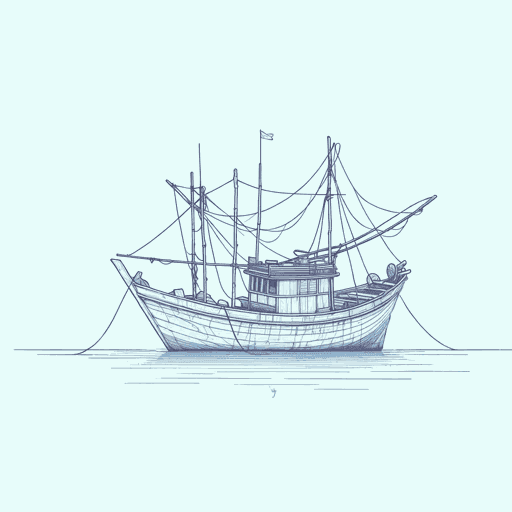
“American religious organizations had set up shop in Hong Kong to find converts in exchange for sponsoring their emigration to America. Pa didn’t believe in Heaven, but he longed to provide his family the same opportunities described by the American soldiers during the war. Being an atheist didn’t stop him from joining all four religions to better our chances of getting sponsored. Each week he shuffled us among Buddhist, Catholic, Protestant, and Baptist services, and he and Ma constantly took visits from evangelists who would stop by our hotel to preach to us.”
(Chapter 2, Page 20)
Pa’s willingness to attend different religious services attests to how far he will go to secure his family’s safety. Ma accepting visits from proselytizers, surely at her husband’s request, furthers this goal. The behavior is consistent with Pa’s history as a self-made man and provider. Pa overcame odds as a child through hard work, becoming a successful business owner by his early twenties. Feigning devotion despite being an atheist demonstrates his readiness to do whatever it takes to survive, just as he did when he was young.
“I miss Da Nang and long for the days when I could roam the streets freely with my best friend, Vu. In Vietnam, I didn’t even have to ask to leave the house. Ma and Pa knew where to find me.”
(Chapter 2, Page 27)
The trauma of displacement manifests itself in myriad ways. In addition to experiencing violence and deprivation during the journey to the US, and to sharing living quarters with prostitutes, gang members, and drug dealers in Los Angeles, Su is a homesick boy. He misses the normality of his old life, when he was afforded freedom to play with his neighbor, Vu. Pa and Ma fear their crime-ridden neighborhood and thus forbid Su from playing outside with local children.
“Ma stares out the window in silence. I don’t disturb her because I know that she, too, is in a happier place.”
(Chapter 2, Page 29)
Su’s memoir contains far less information about Ma than it does about Pa. This quote provides rare insight into a woman who was forced to leave home simply because of the man she chose to marry. Like Su, she yearns for the life she left behind. In addition, she misses her parents and siblings, despite having been disowned. One of the most devastating effects of the Sus’s forced displacement is that it tore their families apart.
“I want Pa to tell his refugee friends that I was a good boy and I didn’t cry on my first day of school. That’s what Pa and his friends do—they obsessively compare their children’s progress in America. Some of them have boasted that their kids have ‘adapted to the white lifestyle right away.’”
(Chapter 3 , Page 49)
Su is desperate to make his father proud. Even at a young age, he knows his father expects him to be brave simply because he is a boy. Su feels pressure to live up to his father’s expectations, which are informed by those of other Vietnamese immigrants. Su’s lack of progress in school and timidity disappoint Pa, who seems oblivious to his son’s trauma, which is evidenced by his recurring nightmares.
“With the bamboo shoot in hand, Pa is like a firecracker with a testy fuse; I can tell when the flame has burned the fuse down to nothing, and I wait with apprehension for him to pop. He chain-smokes and twitches his legs while he asks me questions. When I struggle to find the answer, he breathes hard, grinds his cigarette into the ashtray, and waits. If my answer is wrong, he goes to work on me with the bamboo shoot. When I cry, the blows grow harder.”
(Chapter 4 , Page 62)
This quote addresses two important themes: child abuse and toxic masculinity. Although Pa beats Su for many reasons, most of the abuse occurs during their evening study sessions. Su’s tears make Pa angrier because of his traditional views about gender, which stigmatize and limit the emotions boys and men can express, while valorizing others, such as anger.
“I haven’t even completed the third grade, but Pa wants me to become a man. The small doses of nurturing that I’ve learned to wait for and cherish are no more.”
(Chapter 4 , Page 63)
Driven largely by a loss of power and anxiety about the future, Pa pushes Su beyond his capabilities. He expects Su to control his emotions, perform well in school, and be a model to his siblings. In other words, he expects Su to be mature beyond his years. Pa imparts lessons with harness and impatience. He was occasionally tender with Su in Da Nang, but this side of his personality disappeared soon after their arrival in the US.
“I lie there like a lifeless corpse that’s being devoured by a starving vulture. And then, suddenly, Crazy stops touching me, rolls over, and falls asleep. I lie awake most the night, hugging my brother and crying.”
(Chapter 5, Page 79)
Su uses imagery related to death and scavenging to describe his molestation. He feels helpless to stop the abuse, both because his mother brushed his concerns aside and because he fears Pa will kill Crazy and go to prison. He wants more than anything to protect his brother, going so far as to place his body between Vinnie and Crazy after his cousin crawls into their bed.
“The real poverty is inside my house—where I go to bed hungry most nights, where I’m starved for affection, and where my father’s unpredictable anger has us walking on eggshells.”
(Chapter 6, Page 81)
Su’s family lives in impoverished neighborhoods during their first years in the US. Their apartments in Hollywood and West Los Angeles are rundown, rodent-infested, and populated with prostitutes and drug dealers. Su adapts to the sights and sounds of poverty, but he wrestles with the shortages inside his home. Pa frequently withholds dinner to make Su work harder during their study sessions. He also refuses to show or receive affection. What Pa fails to realize is that Su is not motivated by harshness and deprivation, but by love and encouragement.
“They’re like a big happy family—always playing music, laughing, and telling stories on the porch. They give each other tattoos with a sewing needle and a bottle of Indian ink.”
(Chapter 6, Page 85)
Su admires the closeness and camaraderie of the Kingsley Street Gang. He yearns for a similar rapport with his family, or to have a close-knit group of friends, but he can’t replicate the gang’s relationship. Su’s solitude at home and school leads him to seek acceptance from other sources, including the Kingsley boys and Javi. The Street Ratz fill this void after Pa moves the family to Alhambra.
“Pa opens the window and yells out to the street in Vietnamese, ‘Look everybody! We have a thief here! Come look at him! A thief! A thief!’”
(Chapter 7, Pages 116-117)
After a vicious beating, Pa locks Su out of the apartment naked as punishment for stealing food stamps and money from Ma’s piggybank. This quote conveys Pa’s intention: to shame his son in front of neighbors to deter future bad behavior. The punishment is extreme, even by Pa’s standards. Su makes it clear that he is humiliated, but he does not mention the complex mix of emotions he must have felt, nor does he provide insights into his mother’s reaction.
“It’s strange to see Pa so uncertain about something and looking so nervous. Pa can do anything. His vulnerability makes me anxious.”
(Chapter 8, Page 121)
Pa buys a car without knowing how to drive. He practices going back and forth in the driveway, but even this proves challenging. Su is unaccustomed to seeing his father, the undisputed head of the household, struggle or show uncertainty. This quote thus marks an important moment in the memoir: Su’s realization that his father is not all-knowing or all-powerful.
“On the surface Asians might not seem so bad, but they remind me too much of my family. At least in Hollywood, whenever I’d had enough of my family, I was able to leave the house to be with other people—people who didn’t remind me of the ugliness of my own.”
(Chapter 8, Page 123)
Escapism plays an important role in Su’s book. His unhappiness at home leads him to reject the local community in Alhambra and to seek refuge in non-Asian spaces. Notable in this regard is Su’s long bike ride to City Terrace, a predominantly Hispanic area that calls to mind his former neighborhood. Although his attempt to hang out with Mexican boys ends badly, he remains committed to making Hispanic friends, as evidenced by his close relationship with Art. Su only changes his mind about fraternizing with Asians when he meets Dragon Head and the Street Ratz.
“Just put your family first and your education above all else. Without them, you’re just another poor, stupid Vietnamese refugee living in the white man’s country. You’ll spend your whole life picking up trash for the white man if you don’t finish school.”
(Chapter 8, Page 125)
Although Pa’s methods are questionable, he sincerely wants to equip Su with the tools to succeed. He focuses on education as a means of getting ahead in life. Every evening after school, Pa quizzes Su in math and Chinese, sending him to bed without dinner when he fails to perform adequately. Pa is aware that his own lack of education was an obstacle to advancement in Vietnam (though one he was able to overcome through tenacity and hard work). In addition, not having a degree, combined with his poor command of English, limited his job opportunities in the US. Pa stresses the importance of education and forbids Su from dating girls, fearing they will distract him from his studies.
“‘What the fuck?’ Pa leaps up from the creeper and kicks it back against the garage door with his heel. He gets right in my face. ‘Motherfuck! What did you just say? Who the fuck do you think you are? Who do you think I am? Are you trying to imitate those white people by telling me those fucking words? Stop that shit! Don't you ever say those weak words to me ever again, you hear me?’”
(Chapter 9 , Page 150)
Su based the title of his memoir on this passage. Su’s childhood is largely defined by a lack of affection from his father. At the age of 14, after witnessing caring interactions between Art and his family, Su comes to the conclusion that expressing his love for Pa will mend their relationship. He is excited to say the words “I love you” until he sees Pa’s angry reaction. Orphaned at the age of 12, Pa lacks role models for parental love and intimacy. For him, expressing love is not only unfamiliar and distinctly un-Asian, but also unmanly.
“Don’t stand there and tell me stupid things and then start crying. Show me you love me…through actions, not with pussy words. Words are useless—they do nothing but piss me off.”
(Chapter 9 , Page 151)
This quote elucidates Pa’s traditional understanding of gender. Words are feminine, while actions are masculine. At the end of the memoir, Su comes to realize that his father loved him all along, he simply expressed his love in nonverbal ways.
“[T]he Street Ratz have treated me like family, even though I’m not a member of their graffiti gang. It’s comforting to have peers with the same interests, which these days are mostly art and drinking.”
(Chapter 10, Pages 157-158)
“Striving to meet my father's expectations is like climbing out of quicksand: the harder I try to get to the top, the more I'm sucked back down by his unrelenting criticism.”
(Chapter 10, Page 162)
This analogy captures the hopelessness Su feels in the face of his father’s criticism. Pa’s harsh treatment of his son is counterproductive. Su does not thrive under pressure. Rather, Pa’s demands scare him to the point of paralysis. The few times Pa encourages Su, on the other hand, yield positive results.
“We spread out and move through the darkness, searching for Beemer Guy’s hiding places. As children of Asian immigrants, we know how mistrustful our people are of banks. If Beemer Guy is half as rich as he lets on, there will be plenty of valuables stashed inside this house.”
(Chapter 11, Page 172)
Burglarizing Beemer Guy’s house is a critical moment for Su. Before this point, his involvement with the Street Ratz was restricted to house parties and vandalism. Breaking and entering is a far more serious crime, one he comes to regret after learning Beemer Guy is a classmate’s father. The Street Ratz target Beemer Guy because he is Chinese. They capitalize on their familiarity with Asian immigrants, many of whom keep cash and valuables in their homes.
“Snooky still won’t let up on Veasna. ‘Can’t fuck with the Street Ratz, homie!’ he yells in Veasna’s face. ‘You fuck with one of us, you fuck with all of us! Fuck you!’ He gives Veasna a last kick in the ass and spits on him. I hawk a loogie of my own and spit it in Veasna’s face.”
(Chapter 12, Pages 192-193)
The Street Ratz are both violent and deeply loyal. Thus they do not hesitate when Su asks for their help teaching Veasna a lesson for bullying him. Su is an active participant in the beating, despite its savagery. The incident has important repercussions later in the book, when Veasna’s older brother attacks Su and puts a gun to his head.
“What am I going home to? A cursing and a beating? What else is new? I must obey my father. The day will come when I will win Pa over. I will chip away at his anger until it no longer shrouds him from seeing me for what I am.”
(Chapter 12, Page 193)
No matter how close Su feels to Dragon Head and the Street Ratz, acceptance from his friends is no replacement for the lack of acceptance from his father. Pa goes to great lengths to mold Su in his image: He berates his son every time he cries to toughen him up; he whips him to make him a better student; and he compels him (albeit wordlessly) to eat goose blood in a display of unfettered masculinity. Su is constantly trying to live up to his father’s expectations. Even his surreptitious trip to Vietnam is an attempt to please his father. He eats dog meat in Ho Chi Ming City not because he is curious about the taste, but rather, because he has something to prove, both to himself and Pa.
“Nhau is a rare moment when these new Americans can share what they’ve been through with like-minded souls. Pa always says people drink to forget, but at the nhau I see them drink to remember. The older I’ve become, the more I’ve grown to appreciate it.”
(Chapter 13, Page 199)
Memories of Vietnam make up a significant portion of Su’s book, despite his departure at a young age. Fueled by alcohol and traditional Vietnamese dishes, the nhau presents a unique opportunity for immigrants to reminisce about their old lives, and to discuss their shared experiences in the US. The older Su gets, the more he appreciates the nhau. The gathering allows him to spend time with his uncles and provides fresh insights into his father from those closest to him. This passage underscores the interrelated themes of belonging, community, acceptance, and identity.
“Something comes over me like a train in the distance that is barreling down upon me. I realize one thing—I am my father. The thrill of beating Bo turns over into guilt. I can no longer hear her cries. Now, all I can see is her helpless face, the terror in her eyes, and her tears—massive clear droplets running down her face, over her chin, and onto her neck. I drop the rod to the ground like it doesn’t belong in my hand and leave the room.”
(Chapter 14, Page 220)
Su whips Bo with one of Pa’s rods when she and Vinnie fight over the remote control. Although the adage, violence begets violence, is wholly appropriate in this context, it fails to tell the whole story. No sooner does Su beat Bo than he becomes remorseful. He knows what it feels like to be on the receiving end of the rod. The pain he sees in Bo’s face mirrors the pain he felt every time his father beat him. He cries while he apologies to Bo the next day, but his sister seems unphased.
“He comes in close. His eyes are vacant and bloodshot, and I can smell the alcohol on his breath. I want to cry and plead and beg, but something Pa told me takes hold. He has prepared me for situations like these—for silence when you’re controlled by someone in the throes of anger. Words only add fuel to the fire. I stay frozen. I say nothing. I close my eyes and await my fate.”
(Chapter 14, Page 225)
“I watch him sitting there, fidgeting his legs while he ponders. As clever as Pa thinks he is in hiding his love from me, I’m learning to read between the lines. I love you, too, Pa.”
(Chapter 14, Page 229)
“As a father, I want my children’s eyes to sparkle with happiness. I want them to feel content. When Sky looks at me, she sees eyes full of acceptance, love, and trust. Everyone says that Sky has my eyes. I never want them to see the fear, terror, and desperation that mine witnessed.”
(Epilogue, Page 246)
Su rediscovers his childhood journal in college, but he sets it aside for over a decade because the memories are too raw. Only when he is on the cusp of fatherhood does he begin writing his memoir. The prospect of becoming a father makes him reflect on his upbringing, and on the kind of parent he wants to be to Sky. He rejects Pa’s model of fatherhood in favor of a more loving and demonstrative approach to parenting. Su was shot at and nearly drowned on his journey to the US. He lived in squalid conditions in refugee camps and Los Angeles. He endured harsh lessons and painful beatings from his father and rival gangs. His goal is to protect his daughter and shelter her from needless suffering.

Unlock every key quote and its meaning
Get 25 quotes with page numbers and clear analysis to help you reference, write, and discuss with confidence.
- Cite quotes accurately with exact page numbers
- Understand what each quote really means
- Strengthen your analysis in essays or discussions