I Survived the Hindenburg Disaster, 1937
37 pages • 1-hour read
Lauren TarshisI Survived the Hindenburg Disaster, 1937
A modern alternative to SparkNotes and CliffsNotes, SuperSummary offers high-quality Study Guides with detailed chapter summaries and analysis of major themes, characters, and more.
Chapters 1-6Chapter Summaries & Analyses
Content Warning: This section of the guide contains depictions of serious illness.
Chapter 1 Summary
On the evening of May 6, 1937, as the Hindenburg prepares to land in Lakehurst, New Jersey, a massive explosion tears through the craft, throwing 11-year-old Hugo Ballard to the floor. He struggles to free himself from a pile of fallen passengers and faces a scene of chaos. Flames and thick smoke fill the passenger area as molten metal rains from the ceiling. Hugo calls for his parents and younger sister, Gertie, but the noise drowns him out. He sees other passengers smashing windows and leaping from the burning airship. As the Hindenburg plummets, Hugo crawls across the hot floor, certain he is about to die.
Chapter 2 Summary
The narrative flashes back three days to May 3, at the airfield in Frankfurt, Germany. As the Ballard family waits for baggage inspection, German guards announce that no matches or lighters are allowed on board. Hugo’s mother expresses nervousness about flying, and his father explains the hydrogen powering the Hindenburg is flammable. He reassures her that it has a good safety record. When she says that she’d rather travel by ship, he notes that the Titanic was also considered safe.
Hugo thinks about recent airship disasters that occurred in the US, but he is primarily concerned for his four-year-old sister, Gertie, who is very ill. He’s upset that she won’t get to play with their dog, Panya, who has been taken to the cargo hold. To distract Gertie, Hugo suggests they look at the enormous Hindenburg from a viewing area.
Chapter 3 Summary
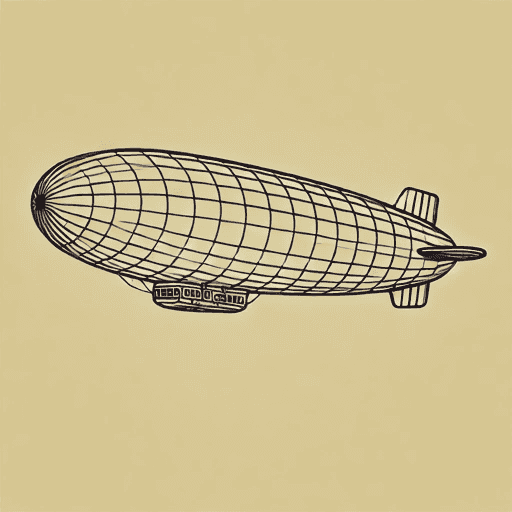
From the viewing area, the massive Hindenburg captivates Gertie, who compares its shape to a sausage. Hugo points out the airship’s features, notes that airships are also called “dirigibles,” and explains how they work. It doesn’t float like a balloon: Four engines power giant propellers, which push the airship forward.
A flashback reveals the family is traveling back to New York after a year in Kenya, where Hugo’s parents worked as science professors studying the region’s lions. It’s where they found Panya, a little stray whose name means “mouse.” Hugo remembers the zebras, pythons, baboons, and hippos, noting that he saw more that year “than most people see in their whole lives” (12). He looks forward to returning to New York and seeing his favorite Yankee, Lou Gehrig.
During their time in Kenya, Gertie contracted a severe case of malaria. They traveled to Germany to seek treatment from a famous doctor, who warned the family they were running out of time and urged them to get to New York quickly for a new medicine to save Gertie’s life. Holding his frail sister, Hugo understands the urgency of their voyage.
Chapter 4 Summary
While Gertie sleeps in the waiting room, Hugo observes the other passengers, including several Nazi soldiers wearing swastika armbands. He thinks about Adolf Hitler, whom parents called “evil,” and feels a deep unease, comparing the soldiers’ calm appearance to dangerous hippos lurking under water. His mother’s comment that he looks pale triggers a memory of finding a cobra on his pillow in Kenya, and how Panya saved him by scaring it away. Hugo tells his parents he is fine but wishes the journey was over. His father responds that their voyage will be unforgettable.
Chapter 5 Summary
Later that evening, the Ballards board the Hindenburg with other passengers and tour the luxurious decks. At a viewing window, Hugo meets Marty Singer, a girl his age whose father—a man with “puffy hair and round glasses” (22)—works for the Zeppelin Company. Hugo is excited because he didn’t make any friends in Kenya and wants to tell Marty about his experiences there. Gertie soon joins them and starts an animal comparison game.
After the command “Up ship!” is given, the ground crew releases the ropes, and the Hindenburg rises silently. Once airborne, the engines roar to life. Seeing the ground fall away, Gertie laughs with joy for the first time in months, filling Hugo with hope.
Chapter 6 Summary
The next day, the Ballard family has a luxurious lunch with Marty, her father Mr. Singer, an older American woman named Miss Crowther, and a British man named Mr. Merrick. Hugo reflects on the previous night when he and Marty stayed up late sharing stories. Marty confided that her mother died four years earlier, and she and her father are “a team” (27).
Gertie entertains them by comparing the passengers to different animals. As they enjoy the smooth ride, a German passenger, Mr. Lenz, talks about his dislike of flying on airplanes, which are loud and need to stop often to refuel. The pleasant atmosphere is disrupted when three Nazi officers enter. Lenz identifies their leader as the vicious Colonel Joseph Kohl. As Colonel Kohl passes their table, Gertie loudly compares him to a cobra.
Chapters 1-6 Analysis
The novel’s narrative structure, which opens in media res before flashing back, establishes dramatic irony and heightens the emotional stakes of the Ballard family’s journey. Chapter 1 immerses the reader in the chaos of the Hindenburg’s explosion, detailing Hugo’s fight for survival and establishing the theme of Acting Courageously in the Face of Fear. By revealing the catastrophic conclusion at the outset, the narrative frames the subsequent chronological account as a countdown to a known tragedy. This structure transforms otherwise mundane moments—boarding the airship or meeting fellow passengers—into scenes imbued with tension. The characters’ optimism becomes poignant, as the reader is aware of the fate that awaits them. This technique shifts the central narrative question from what will happen to how the characters will face the inevitable, focusing attention on character development and interactions. The structure creates a dual timeline: the characters’ linear experience and the reader’s retrospective knowledge of the disaster.
The Hindenburg itself functions as a symbol of the duality of technological ambition and inherent fragility that characterized the early 20th-century. Initially, the airship is depicted as a height of luxury, a “fancy hotel from the future” (20) that seems to float effortlessly. Its silent ascent inspires a laugh of “pure joy” from Gertie, positioning the zeppelin as a vessel of hope. However, this illusion of security is systematically undermined by explicit references to the flammable hydrogen gas, a persistent reminder of its catastrophic potential. This internal vulnerability is mirrored by the external political threat of Nazi officers. The swastika, a symbol of a gathering global conflict, intrudes upon the civilized microcosm of the passenger lounge, transforming the vessel from a sanctuary into a container for the dangers the Ballard family seeks to outrun. The Hindenburg thus becomes a metaphor for the interwar period—an era of progress masking deep-seated vulnerabilities and encroaching ideologies that would soon erupt into global destruction.
The narrative uses the motif of wild animals to explore the theme of Childhood Innocence as a Moral Compass, employing the unfiltered perceptions of its young protagonists to distill the moral landscape of the adult world. This device is most prominent with four-year-old Gertie, whose game of matching people to animals serves as a simple moral barometer. While her comparison of a passenger to an ostrich is comedic, her identification of Colonel Kohl as a “big cobra!” (32) is an immediate insight. She instinctively bypasses the colonel’s superficial civility and identifies the predatory essence of his character, something the adults perceive with more nuanced apprehension. Hugo engages in similar analogical thinking when he observes the Nazi soldiers, comparing their deceptive calmness to the hidden danger of “[h]ippos lurking in the waters of the Thika River” (17). By filtering the story’s antagonists through the lens of the animal kingdom, the narrative translates the abstract political evil of Nazism into a tangible threat. This technique validates the children’s perspective as a source of uncorrupted truth, suggesting that innocence can provide a moral clarity often lost in adult sophistication.
Underpinning Hugo’s psychological journey is the theme of The Protective Power of Family Bonds, which functions as the primary motivating force for the narrative. The family’s trans-Atlantic voyage is not one of leisure, but a high-stakes mission undertaken to save Gertie’s life. The urgency is established when Hugo overhears a doctor’s warning that they are “running out of time” (15), a phrase that transforms the Hindenburg into a lifeline. This context establishes Hugo’s role not just as a brother but as a deeply concerned protector. His anxieties throughout these early chapters center on his sister’s well-being, and his hope upon hearing her laugh during takeoff underscores how deeply his emotional state is tied to hers. This familial devotion is the bedrock of his character, laying the groundwork for his later development. The narrative demonstrates that Hugo’s capacity for fear is directly proportional to his love for his family. This connection reframes bravery, suggesting that the courage he will eventually display is motivated by his sense of responsibility for those he loves.

Unlock all 37 pages of this Study Guide
Get in-depth, chapter-by-chapter summaries and analysis from our literary experts.
- Grasp challenging concepts with clear, comprehensive explanations
- Revisit key plot points and ideas without rereading the book
- Share impressive insights in classes and book clubs