Ingram: A Novel
54 pages • 1-hour read
Louis C.K.Ingram: A Novel
A modern alternative to SparkNotes and CliffsNotes, SuperSummary offers high-quality Study Guides with detailed chapter summaries and analysis of major themes, characters, and more.
Part 4Chapter Summaries & Analyses
Content Warning: This section of the guide includes sexual content and depictions of emotional abuse, sexual abuse, sexual harassment, graphic violence, physical injury, substance use, addiction, and death.
Part 4, Chapter 21 Summary: “Oil and Fire”
On their third day in Brownsville, Ingram and Bart secure jobs as pipe and drill men at Matawaki Oil. When a hiring official refuses to process Ingram without a last name, Bart claims Ingram is his brother, Ingram Grover, and negotiates half wages. The next morning, they ride in the back of a truck to the oil fields, which Bart explains is corporate territory with no government oversight or legal protections.
They arrive at a perpetually dark place lit by harsh electric lights, where black fog obscures faces and a constant mechanical screaming fills the air. Bart leads Ingram to their sparse living quarters. That night, Bart expresses deep regret for bringing Ingram, calling himself no good and predicting Ingram will die there.
Ingram becomes “a nut hugger” (217), part of a three-man crew operating massive wrenches on drill pipes under immense pressure. At lunch, he meets Jelly, a one-armed man who warns that all nut huggers die unless they lose a limb first. In their room at night, Ingram reads Moby-Dick aloud while Bart explains whaling and oil extraction.
Then one night, Bart climbs into Ingram’s bed, holding him close and saying it feels better than being alone. The next day, Bart avoids Ingram and declares that what they did was wrong, warning Ingram to fight off any man who gets in his bed. A lone in bed that night, Ingram explores his body and masturbates for the first time, experiencing vivid visions during orgasm.
A supervisor soon asks for workers with small engine repair skills. Ingram volunteers and successfully fixes a broken engine, earning a promotion and pay raise. Wanting to share the news with Bart, he finds him struggling with a difficult drill pipe. When Ingram calls out, Bart looks at him. The pipe bursts, cutting Bart nearly in half, and the spraying oil ignites. Jelly tackles Ingram under a fireproof blanket. Ingram consciously tries to block the memory of Bart burning to death.
Part 4, Chapter 22 Summary: “Pa”
Over the following years, Ingram witnesses many more deaths. The company moves him to a smaller single-bed room. He loses interest in fiction and reads only engine repair manuals. The perpetual darkness and toxic fog damage his health, causing chest pain and constant headaches. He forgets his past, his only escape being masturbation while thinking of Sinema, a girl he met in Houston.
One day, Sinema’s father, Pa, arrives at the fields with new workers. Ingram clutches the knife Pa gave him when he left Houston, but Pa doesn’t recognize him. Later, an angry man attacks Ingram in the lunch line. Pa intervenes, subduing the attacker, and shares his meal with Ingram. Observing that Ingram has aged beyond his years, Pa urges him to leave the fields now that he has a marketable skill. Pa opens up about his difficult life, providing for his eight daughters, and losing his frail son who was crushed by circumstances.
When Ingram begins performing preventative maintenance on engines, a supervisor fires him. Moments later, a massive explosion occurs. Ingram dives under a table as the blast scorches his body. Pa is also critically injured in the blast. Ingram loses consciousness, experiencing the sensation of the gray creature eating him headfirst. Weeks later, he wakes in an Austin hospital.
Part 4, Chapter 23 Summary: “Burnt, Alive”
Ingram wakes in an Austin hospital sharing a room with severely burned men. A nurse named Abigail shouts at Ingram because his hearing was damaged in the blast. She explains a phosphorus explosion killed 97 men and that a hero named Jelly rescued survivors. A doctor checks Ingram’s healing nerves by asking him to report pain, which Ingram does calmly despite feeling intense agony.
For days, Ingram lies in bed, feeling emotionally numb, without thoughts or dreams. A man in a red suit visits, claiming someone is always watching over him. Ingram considers this the most untrue thing he has ever heard, but the visit breaks his apathy. He begins remembering and thinking again, inventing his own ending to Moby-Dick where the crew mutinies and sails home safely.
During a sponge bath, Abigail offers to masturbate Ingram. He instinctively pushes her away, feeling strongly that he does not want her to do that. Two people from the oil company and Erica, his state-appointed lawyer, arrive to discuss restitution. She explains the company owes him substantial compensation for pain and suffering. Over subsequent visits, Erica questions him about his suffering. When he describes his pain poetically, she calls him a poet and brings him The Complete Poems of Emily Dickinson. He falls in love with poetry and decides never to read fiction again.
Erica delivers an envelope to Ingram containing his back pay in cash—enough to buy a truck. The next day, Ingram finds Sinema crying in the cafeteria. She embraces him tightly.
Part 4, Chapter 24 Summary: “Sinema”
Sinema tells Ingram that Pa is hospitalized with severe injuries, including the loss of his hands in the blast. She feels guilty that Pa went to the oil fields for her sake and that she is the only family member present. Ingram recounts how Pa protected him in the fields. Days later, Pa dies.
When Ingram mentions buying a truck with his back pay, Sinema explains she can no longer afford to finish her education with the money left for Pa. She describes a world splitting between those moving forward to a better future and those falling behind. Impulsively, Ingram proposes marriage, offering to support her with his engine repair skills and explaining his understanding of sex and procreation. Sinema gently refuses, citing that he is white and she is Black, and that they are on different paths.
She tells him his real responsibility is finding his mother, not pursuing her. When Ingram protests that he has no family, Sinema scolds him for not considering whether his mother is suffering or needs him. She tells him he must live in reality, not fantasy, and that “[r]eality is what you make real” (250-51). Their serious conversation ends with laughter.
Sinema’s words give Ingram a new purpose: finding and caring for his mother. Though thoughts of returning home bring anxiety about the gray creature, he commits to the journey. On his last hospital day, he sees his grown, scarred body in a mirror for the first time and is discharged.
Part 4, Chapter 25 Summary: “My Truck”
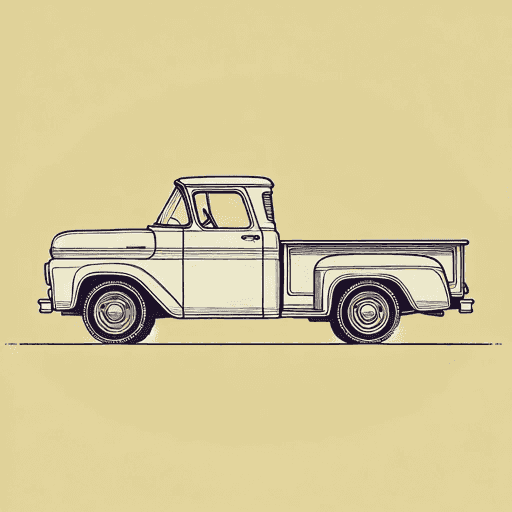
In Sinema’s kitchen, she and Ingram count Ingram’s money—totaling $2,000. She teaches him budgeting, and he makes a list of needs. Ingram buys new clothes and distinctive snakeskin cowboy boots. Following directions west, he finds Pete’s Filling Station, where a broken yellow truck sits among wrecked vehicles.
Pete, a Black man who owns the station, offers to sell the truck for $100 if Ingram can fix it. Ingram inspects the engine and determines he can repair it. When Ingram offers to help pump gas, Pete refuses, explaining he cannot have a white boy visibly working for a Black man’s business. Instead, Pete mentors Ingram in brake repair. Ingram proves a quick learner and begins working on customer vehicles, improving business flow.
Each night, Ingram works on his truck while Pete reads nearby. Pete shares his philosophy about his late father’s business and the changing world, where gasoline vehicles and roads are being phased out. He sees Ingram as part of a generation that will preserve old skills. Ingram works tirelessly, sleeping in the truck’s cab when exhausted, longing for the day it will be running.
Part 4, Chapter 26 Summary: “Home”
With his truck running, Ingram drives Sinema to Houston. They stop at the diner where he met Marion, but no one remembers her. Using a map, they locate Draper Road near Liberty, Texas, where Ingram grew up. At Miss Maw’s house, Sinema gives Ingram a dictionary. He gives her the knife he received from Pa. The emotional exchange ends with Sinema reassuring him they are friends who will meet again.
Ingram drives through Houston past landmarks from his journey and sleeps in his truck. The next morning, he finds his childhood home collapsed into ruins. The shed where his father made him sleep still stands, but his mother’s blanket is gone. At Liberty’s town hall, a records clerk reveals his full name: Ingram Kessler. His father is Phillip, his mother is Sarah, and he had an older brother, Albert, who died of pneumonia when Ingram was six. The records show his father lives in Liberty.
Ingram finds Phillip drunk outside a bar. He takes him to a motel, demanding information about his mother. Phillip only rants about hardships. When Ingram confronts him about his weakness, Phillip calls him a devil and accuses him of causing Albert’s death by stealing his dying brother’s breath. This unlocks Ingram’s repressed memories: a happy early childhood with his beloved brother, Albert’s illness, the gray creature of death taking Albert, and his father banishing him to the shed.
Ingram gets his father drunk until he passes out, and then finishes the bottle himself. Intoxicated, he experiences vivid flashbacks of Albert. The next morning, his memories of Albert are clear and peaceful, and the gray creature’s haunting presence is gone. He cries for the first time as a young man, mourning his brother. Ingram wakes his father, puts him in the truck, and says they are going to find his mother. They drive east toward Beaumont.
Part 4 Analysis
The novel’s final section brings its central inquiry into The Transformative Power of Repressed Trauma to a resolution. Ingram’s journey concludes with a confrontation with the foundational trauma that has governed his life. His experience in the oil fields serves as a macrocosm of this psychological state; the perpetual darkness, toxic fog, and constant threat of annihilation mirror his internal landscape of unremembered pain. His conscious decision to suppress the memory of Bart’s death—“I could feel myself putting what I saw […] into some place outside of my mind” (226)—provides a direct link to his past. This act of willed forgetting demonstrates a learned coping mechanism, mirroring Ingram’s deeper, unconscious repression of his brother Albert’s death. The result is years of emotional numbness where Ingram loses connection to the truth of his own past. The gray creature, the recurring symbol of this trauma, finally recedes only when Phillip’s accusation gives the abstract horror a specific context. Remembering the details of his past transforms Ingram’s nameless dread into a concrete memory of loss and rejection, allowing Ingram to integrate the trauma into his life story rather than be haunted by it. His ability to cry for his brother signifies Ingram’s ability to recover his humanity, suggesting that healing is achieved through integration, not erasure.
Ingram’s psychological recovery parallels the evolution of his relationship with language, illustrating the theme of Literacy as a Tool for Self-Creation. In the dehumanizing environment of the oil fields, Ingram abandons fiction for the purely functional language of engine repair manuals. This shift reflects his own state: He is a component in a system, and literacy is merely a tool for survival, stripped of imagination or emotional resonance. His lawyer, Erica, reintroduces Ingram to the expressive power of language by calling him a poet and giving him The Complete Poems of Emily Dickinson. This moment validates his internal experience and offers Ingram a framework for articulating suffering that transcends simple reporting. This developmental arc culminates in two final acts of literacy. First, Sinema gives him a dictionary, a tool for naming and understanding the world. Second, Ingram officially recovers his identity through reading his family’s records in the Liberty town hall. Literacy becomes the mechanism that unlocks Ingram’s history and solidifies his selfhood when he learns his last name, discovers his father’s whereabouts, and reads the documented facts of his brother’s existence.
The narrative also interrogates various forms of masculinity to chart The Formation of a Moral Compass in a Lawless World. The oil fields, a corporate territory beyond government or law, function as a testing ground for character. Bart embodies a form of failed masculinity; his declaration that there is “[n]othing more dangerous to you […] than a man who is strong on the outside and weak on the inside” (222) is a self-indictment. His inability to reconcile his physical strength with his emotional vulnerability leads to shame, withdrawal, and ultimately, a violent death. In contrast, Pa and Pete model a resilient, responsible manhood. Pa endures the horrors of the fields out of familial duty and acts as an example of masculine caretaking and self-sacrifice. Pete, meanwhile, operates his business with pragmatism and integrity, becoming a crucial mentor to Ingram. These figures provide a moral blueprint which Ingram ultimately adopts. His confrontation with his father, Phillip, presents the antithesis of this model: a man broken by hardship who chose abdication over responsibility. Ingram’s final act—placing his father in his truck to find his mother—is a clear role reversal. He rejects his father’s legacy of abandonment and instead adopts the model of responsibility provided by Pa and Pete, thus cementing his own moral code.
The motif of machinery, particularly engines, serves as a sustained metaphor for Ingram’s psychological development and agency as he transitions from boyhood to manhood. Initially, the industrial world is a source of trauma and powerlessness; the drill pipe is an instrument of death, and Ingram is a mere “nut hugger” in service to it. His promotion to small engine repair marks a fundamental shift in this dynamic. By learning to diagnose and fix broken machines, he begins a process of mastering the very forces that once threatened to destroy him. This culminates in the meticulous rebuilding of his yellow truck. The project is an allegory for his own self-reconstruction; he takes a discarded, broken object and, through skill and persistence, restores its function and purpose. The truck becomes the tangible symbol of his autonomy. It represents both physical mobility and Ingram’s newfound capacity to direct his own life, a stark contrast to his earlier, more passive existence, carried along by events or other people. In the final scene, he is in the driver’s seat, exercising control over his vehicle and his new familial mission.
The narrative structure of these final chapters reinforces Ingram’s journey from anonymity to identity. He enters the oil fields as a nameless boy, given the false identity of “Ingram Grover” to be entered into the corporate system. This imposed name highlights his status as an interchangeable part, a non-person. The narrative methodically strips him of this false identity as he moves toward his origins. His reunion with Sinema is pivotal; her directive— “[r]eality is what you make real. For yourself. For your family” (251)—provides the purpose that fuels his final journey. By discovering his true name, Ingram Kessler, he reclaims his history, his lineage, and his connection to others. This discovery takes place at the end of his physical travels and just before the recovery of his repressed memory, suggesting that a stable sense of self is a prerequisite for confronting the past’s deepest traumas. Ingram’s journey ends where it began—searching for a place to call home— but now Ingram has been transformed from a helpless child into a self-possessed young man capable of shaping his own reality.

Unlock all 54 pages of this Study Guide
Get in-depth, chapter-by-chapter summaries and analysis from our literary experts.
- Grasp challenging concepts with clear, comprehensive explanations
- Revisit key plot points and ideas without rereading the book
- Share impressive insights in classes and book clubs