It's a Love Story
47 pages • 1-hour read
Annabel MonaghanIt's a Love Story
A modern alternative to SparkNotes and CliffsNotes, SuperSummary offers high-quality Study Guides with detailed chapter summaries and analysis of major themes, characters, and more.
Chapters 1-9Chapter Summaries & Analyses
Content Warning: This section of the guide includes discussion of death, bullying, and mental illness.
Chapter 1 Summary
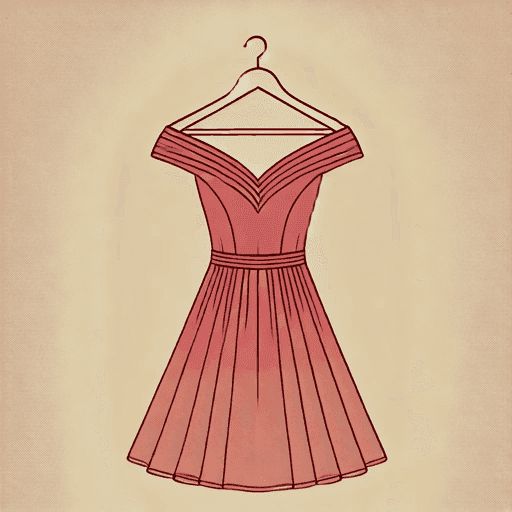
Thirty-three-year-old former child star Jane Jackson prepares for a meeting with her boss Nathan at Clearwater Studios in Hollywood, California. As Creative Executive, Jane is thrilled that Nathan might buy the script she recently fell in love with: True Story. She searches her closet for the right thing to wear, choosing her fourth-date red dress for the meeting.
Meanwhile, she reflects on her career. Although she appeared in Pop Rocks as a kid, the show was never syndicated, and Jane is still trying to prove herself in the industry. She hopes she can prove herself today. Before Jane leaves for the office, her roommate and best friend Clem comments on her outfit and wishes her luck.
On the way to work, Jane hears another Jack Quinlan song on the radio. She knew Jack through Pop Rocks, but she has no interest in thinking about him now. In the office elevator, Jane runs into her nemesis, the cinematographer Dan Finnegan, and is horrified to learn he’ll be working on True Story, too.
Chapter 2 Summary
Jane sits under her desk to calm down before her meeting. She writes “the word ‘please’” under the surface. She can’t stop thinking about her humiliating Janey Jakes role on Pop Rocks and can’t help feeling like a teenage girl. Meanwhile, her former Pop Rocks co-stars Jack and Hailey Soul have made lives and careers for themselves.
Jane calms down and heads to Nathan’s office with her assistant Mandy. Dan and his assistant Rodney join them. Although Nathan says he likes the script, he insists that Jane and Dan transform it into a more commercial film. Jane blurts out that she’s remained close with Jack since Pop Rocks and can convince him to write a song for True Story. She hasn’t talked to Jack in years but is desperate to make the film work. Nathan agrees that a song from Jack would sell the film.
Chapter 3 Summary
Back in her office, Jane reflects on the True Story meeting. She doubts she’ll be able to work with Jack but hopes True Story will come to fruition. She remembers her time with Pop Rocks, too. Although it was a difficult experience, she’d been proud to help her mother financially. She tries summoning this feeling now.
Chapter 4 Summary
That evening, Jane meets up with her mom for their weekly night at the movies. Although glad to see her, Jane feels annoyed when her mom mentions her boyfriend Gary. Her mom has consistently moved between romantic partners since Jane’s dad’s death when she was five.
After the movie, Jane and her mom return to Jane’s mom’s house for takeout and self-care. While doing each other’s makeup, Jane tells her mom about True Story and Jack Quinlan. Her mom assures her everything will work out, but Jane is skeptical. Her mom has always believed in happily ever after and has romanticized stories like The Notebook since Jane was little.
Chapter 5 Summary
Before work the next morning, Jane catches Clem up on the events of the day prior. Clem is surprised to hear that Jane promised Nathan a Jack Quinlan song, but she encourages Jane. She also suggests that it might be helpful to communicate with Dan more directly about the movie.
Jane calls Dan, and they make plans to meet up that afternoon to discuss True Story.
Chapter 6 Summary
Jane reports to Santa Monica Pier to meet Dan. She’s surprised to see Dan hanging out with a group of children and touched when she witnesses Dan comforting a young boy, Louis, when his dad is late to pick him up. After Louis leaves, Dan explains that he runs a pop-up art camp for kids on the beach in his free time. On their way to get food, Dan goes on to explain his artistic aspirations.
Over food, Jane and Dan discuss True Story. Jane is surprised that she and Dan agree on how it should be produced.
Chapter 7 Summary
The next morning, Nathan’s assistant emails Jane to follow up about Jack Quinlan’s involvement in True Story. Feeling desperate, Jane texts Hailey for Jack’s contact info. Hailey admits she isn’t in touch with Jack anymore either, but she suggests Jane call Jack’s manager, Lyle Anderson.
Jane procrastinates calling Lyle. All day, her mind races over the events of her past. When she was on Pop Rocks, the team discovered that Jane had a better singing voice than Hailey, who was the female lead in the show. Because Jane was the geeky side character, they used her voice for Hailey’s song, while Jack did the vocals for the male lead, Will. When Jane and Jack sang together, Jane felt suddenly beautiful and talented. She thought she and Jack had a connection, too, and told him she loved him. Jack was disgusted and insulted Jane for sharing her feelings. He also insisted that everyone on set hated her. Jane felt ashamed.
Now, Jane calls Lyle and leaves a message about True Story. When he calls back, Lyle insists Jack has no interest in doing the song.
Chapter 8 Summary
A panicked Jane hides in her closet with a stash of chocolate and calls Dan. She explains that she exaggerated her connection to Jack and needs help. She also reveals that she was a child star and explains how difficult it’s been to establish herself in the industry as an adult.
Dan apologizes for hurting her some months prior when she tried making Star Crossed with Clearwater; Dan hadn’t approved of the project and convinced Nathan not to buy the script. He then explains that his friend is on Jack’s production team and told him that Jack will be doing a show in Dan’s hometown of Oak Shore in the coming week. Dan suggests that he and Jane visit Long Island together, track down Jack, and convince him to work with them.
Jane makes arrangements to leave for Long Island, informing her mother and Clem of her plans. Clem reminds her to be herself when she sees Jack and not to use her clothing as a mask.
Chapter 9 Summary
On the flight to New York, Jane reflects on the start of her and Dan’s relationship, four months prior. One day, Jane and Mandy were at lunch at a café when they saw Dan almost get hit by a car across the street. They raced to see if he was okay and discovered he hadn’t seen the car because he was trying to photograph a hawk.
Jane and Dan talked jokingly and exchanged numbers so Dan could send her the hawk photograph. While texting in the following days, they made plans to go on a date. Then, on the morning of their scheduled date, Jane and Dan ended up appearing in Nathan’s office to discuss Jane’s new film Star Crossed. Jane was furious when Dan disparaged the project and convinced Nathan not to buy the script. They got into an argument about romance stories, The Notebook, and the meaning of love. Tensions rose, and Dan insulted Jane, accusing her of being mentally unstable. When the meeting ended, the two canceled their date. Until True Story, they hadn’t spoken.
Chapters 1-9 Analysis
The opening chapters of It’s a Love Story introduce the central characters, stakes, and themes of protagonist Jane Jackson’s first-person narrative account. At 33 years old, Jane is desperately trying to prove herself in the competitive Hollywood film industry. Although a grown woman with a history in television and cinema, Jane is still Reconciling Past and Present Identities. In the past, Jane was known as Janey Jakes, the geeky outcast teenager on Pop Rocks. This role required Jane to don “prosthetic braces” that disguised her “perfectly straight teeth” and to “contort [her]self into some comically awkward position” (49). Although Jane at times understood that “underneath Janey Jakes, there was someone else” (49), she is still trying to claim this alternate, mature, and autonomous identity in the narrative present (49). Her past life and identity threaten to hold her back as an adult. Jane has dreams of making films that she cares about and believes in, and she hopes to establish a reputation and to garner respect in the industry. However, her constant reversion to her teenage Janey Jakes version of self comes between her and her future.
The author uses distinct images and symbolism to reify Jane’s internal battle between her past and present identities. Such imagery includes Jane hiding in her closet, hiding under her desk, eating chocolate, writing “please” on her office furniture, and disguising herself using clothing that defies her true self. These images and behaviors symbolically convey Jane’s emotional anxiety. With regard to Jane’s appearance, she believes that she has to don a costume to prove to others that she is, in fact, a capable, talented, self-possessed professional with a vision. While preparing for her meeting with Nathan at the novel’s start, she stares into her closet and assesses her wardrobe, “which [she’s] chosen with more care than any costume department ever did” (2). The allusion to the costume department implies that Jane sees her personal wardrobe as a collection of costumes or masks she can don to manipulate how others see her. This is why she chooses “the fourth-date dress” for her meeting (2)—it’s “red and silk” and Jane hopes it will bring “new energy” to her meeting (3). The dress highlights Jane’s insecurity; without it, she doesn’t feel confident enough in herself to communicate her needs and dreams to her boss. She also doubts that her true, unguarded self is good enough. Further, subsequent images of Jane hiding under her desk and in her closet imply that she is plagued by fear, an emotion often associated with childhood. Jane reverts to childhood patterns of behavior because she remains caught between her former and future selves. The imagery in these chapters subtextually implies that Jane cannot realize her desired adult self until she confronts her past trauma.
These chapters also introduce the novel’s primary romantic conflict, introducing Dan Finnegan’s character as both a source of tension and the novel’s male romantic lead. Monaghan employs the enemies-to-lovers trope to launch Jane and Dan’s entanglement. Jane’s interaction with him on the elevator prior to their meeting with Nathan establishes the animosity between the two characters. She is shocked and furious to learn that Dan will be involved in True Story, and experiences a physiological reaction to this discovery:
I bury my face in my hands and press my fingers into my forehead. I can feel the cog in my brain that’s popped out and snagged my entire system. Dan is a giant loose cog in my life, out of nowhere. I have no idea why he has this effect on me. […] I have to reply to his criticisms with be-that-as-it-mays instead of shut-up-you-stupid jerks (13).
Jane’s body language conveys the distress Dan causes her. She feels frustrated in his presence, as if she’s lost control and can’t articulate her needs and desires—the image of a cog in her brain loosening evokes notions of disruption and dismantlement. His involvement in True Story portends further personal and vocational conflict for Jane, and it also compels the characters into forced proximity, another trademark trope of the genre. Despite the enmity between them, however, Jane and Dan also need to work together to realize their vision for True Story. Their mutual project and shared trip to Long Island foreshadow challenges in their future dynamic. Further, Dan’s involvement in Jane’s life promises to compel her to change. Jane will have to set aside her insecurities of the past to communicate effectively with Dan in the present, tying the novel’s development of their relationship to Jane’s personal growth and establishing the theme of The Transformative Power of Friendship and Family. This network of dynamics sets the proverbial narrative stage and outlines the primary stakes for Jane’s forthcoming work on True Story and her dynamic with Dan on Long Island.

Unlock all 47 pages of this Study Guide
Get in-depth, chapter-by-chapter summaries and analysis from our literary experts.
- Grasp challenging concepts with clear, comprehensive explanations
- Revisit key plot points and ideas without rereading the book
- Share impressive insights in classes and book clubs