Junie
49 pages • 1-hour read
Erin Crosby EckstineJunie
A modern alternative to SparkNotes and CliffsNotes, SuperSummary offers high-quality Study Guides with detailed chapter summaries and analysis of major themes, characters, and more.
Symbols & Motifs
Content Warning: This section of the guide includes discussion of death, emotional abuse, and racism.
Bellereine Plantation
Bellereine Plantation, where Junie and her family are enslaved, is a symbol of entrapment. The plantation is located in Lowndes County, Alabama, just outside of Selma. Because of its geographical location, the property’s “earth is flat all around” (7). The towering main house is then situated in the middle of these sprawling, hill-less cotton fields. Its facade is “all refined right angles, slicing through the twisting oak trees and curving red dirt” (9). The house thus has an imposing figure; its looming Roman presence is a constant reminder that Junie’s life is controlled by the people who have enslaved her.
Junie’s life on the plantation affords her no freedom at all, and the plantation contributes to the theme of the Pursuit of Autonomy and Self-Emancipation. Her little acts of defiance afford her the illusion of autonomy but do nothing to actually liberate her from enslavement. Running into the woods, climbing trees, or reading in secret are ways for Junie to withstand her captivity, but they are all limited to the parameters of the plantation. Therefore, Junie remains entrapped until she finally crosses the property line, submerges herself in the river, and travels away from Bellereine.
Minnie’s Necklace and Box
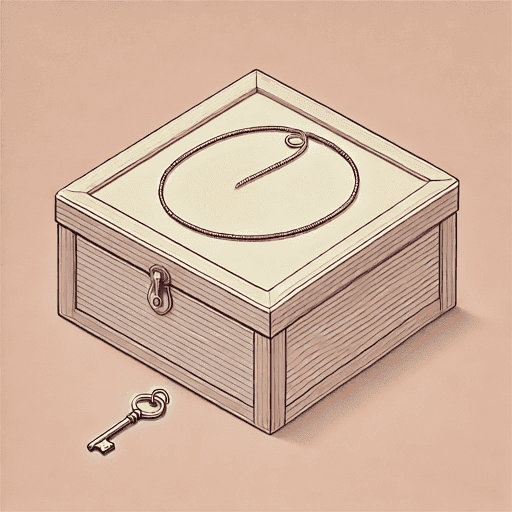
Minnie’s necklace and box are symbols of the truth. Although Junie remembers Minnie wearing the pendant when she was alive, she never knew what it meant or where it came from. It is not until after Minnie’s death that she begins to uncover the meaning behind the necklace, a discovery that leads her on a journey into her familial history and shows her the Power of Sisterhood and Ancestral Guidance.
Further, the necklace opens up Minnie’s box, becoming the literal and metaphoric key to finding out the truth of Minnie’s story. When Junie opens the box with the necklace, she finds answers about her mother’s and Minnie’s fates. The box contains William McQueen’s letter to Charlotte, which alludes to William’s obsession with and violence toward her. It also contains Minnie’s freedom papers, which reveal Minnie’s paternity and her plans to free herself. These objects overwhelm Junie with new information about what Charlotte and Minnie suffered, but they also clarify where she came from, what her loved ones survived, and thus what her purpose might be. The objects also lead her toward her self-emancipation, reiterating the adage that the truth will set you free.
Old Mother
Old Mother is the name that Junie has given her favorite climbing tree in the woods, and the tree is symbolic of Junie’s pursuit of autonomy and self-emancipation. Whenever Junie is upset or feels trapped by her circumstances, she races out to the woods to climb Old Mother. The way the narrator describes one of her climbing experiences conveys the tree’s symbolic significance:
Junie launches herself onto the first bumpy branch. The tree is a maze, with each choice leading to a victory or dead end. The darkness forces her to rely on touch, her skin prickling as she feels her way through Old Mother’s familiar limbs. The dawn light sneaks through the red and orange leaves, turning the forest floor from black to a twilight blue. […] She is home again (143).
The narrator compares the tree to a maze, asserting that each movement Junie makes to navigate this maze will lead “to a victory or dead end” (143). The same is true of Junie’s pursuit of freedom. She doesn’t know which of her choices will lead to her freedom, but she must “rely on touch” and use her instincts to navigate her impossible circumstances (143). Furthermore, the glinting light “through Old Mother’s familiar limbs” symbolizes hope (143). When Junie reaches the top, she feels like she is home, a metaphor that suggests that being at the top of the tree and looking out over the plantation affords her a sense of freedom.
Stories, Books, and Poetry
The recurring allusions to stories, books, and poetry throughout the novel act as symbols of survival. As an enslaved person, Junie is not allowed to read. However, as soon as Violet taught her, Junie took “to literature like a fish to water, thrilled to spend her playtime with Violet in the imaginary world of their shared stories” (18).
Over time, however, these stories have transcended the bounds of Junie and Violet’s relationship. Junie developed a personal relationship with literature. The poetry and fairy tales she loves most offer her a sense of peace, hope, and/or possibility. Her love for literature is a way for her to withstand her circumstances. When she is upset, she turns to her favorite poets. When she wants connection, she uses books and stories to form relationships, as evidenced by the way that she and Caleb connect through Snow White. In these ways, literature helps Junie make sense of and survive her enslavement.

Unlock the meaning behind every key symbol & motif
See how recurring imagery, objects, and ideas shape the narrative.
- Explore how the author builds meaning through symbolism
- Understand what symbols & motifs represent in the text
- Connect recurring ideas to themes, characters, and events