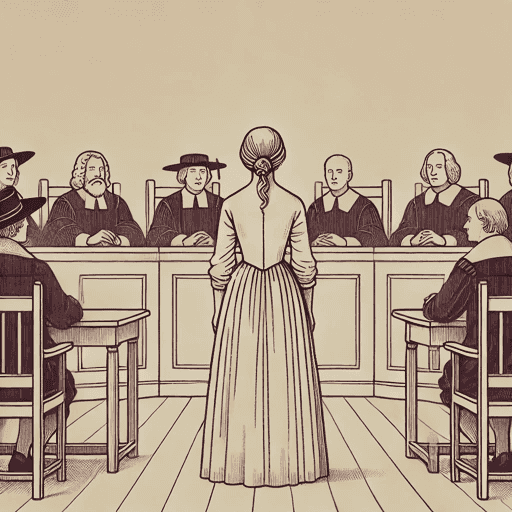
Killing the Witches: The Horror of Salem, Massachusetts
51 pages • 1-hour read
Bill O'Reilly, Martin DugardKilling the Witches: The Horror of Salem, Massachusetts
A modern alternative to SparkNotes and CliffsNotes, SuperSummary offers high-quality Study Guides with detailed chapter summaries and analysis of major themes, characters, and more.
Essay Topics
How does the experience of the Pilgrims aboard the Mayflower foreshadow the terrible experience that their descendants will suffer in the Salem Witch Trials? How does this early struggle with religious and political authority shape the Puritan worldview that later enables the witch trials?
In what ways were the Salem Witch Trials a reflection of the precise historical context? What specific factors helped make a people more likely to a bout of mass hysteria? Consider the role of war, religious extremism, and political instability in creating a culture of fear.
How did the witch trials serve the interest of certain powerful actors, and what did they do to make sure that the trials continued? Examine the motivations of key figures like Cotton Mather and Judge Stoughton—were they driven by genuine belief, ambition, or a mix of both?
Why was there not more effective resistance to the witch trials among the citizens of Salem who knew better? How did the mob triumph over its best members? Discuss whether resistance was truly possible and how the consequences of speaking out may have shaped people’s choices.
How did the witch trials ultimately come to an end? Are there any lessons to apply to more modern-day “witch hunts” as to how it might be possible to end them? Are there patterns in how societies move past mass hysteria, and how might these patterns apply today?
Why do the authors spend only half of the book on the actual witch trials? What connections do the authors attempt to draw between Salem, the American Revolution, and modern history?
What particular role does Benjamin Franklin play in the narrative, after the section on the witch trials has concluded? How does Franklin’s skepticism contrast with the religious fervor of the Salem era, and what does this say about America’s shifting values?
Why do the final chapters conclude on the alleged source of the novel and film The Exorcist? How does this seemingly diverging story fit into the book’s overall themes? What shift occurs in the authors’ approach to supernatural belief between the Salem section and the exorcism chapters?
Assess the authors’ attempt to compare the witch trials with modern-day “cancel culture.” Do you find this comparison to be at all plausible? Why or why not? What rhetorical or political purpose do you think this analogy serves in the book?
Do you think the authors are able to make the argument that the Salem Witch Trials ultimately played a pivotal role in the development of religious freedom? Does this argument align with historical reality, or does it oversimplify the evolution of religious tolerance in America?

Unlock all 51 pages of this Study Guide
Get in-depth, chapter-by-chapter summaries and analysis from our literary experts.
- Grasp challenging concepts with clear, comprehensive explanations
- Revisit key plot points and ideas without rereading the book
- Share impressive insights in classes and book clubs