Killing the Witches: The Horror of Salem, Massachusetts
51 pages • 1-hour read
Bill O'Reilly, Martin DugardKilling the Witches: The Horror of Salem, Massachusetts
A modern alternative to SparkNotes and CliffsNotes, SuperSummary offers high-quality Study Guides with detailed chapter summaries and analysis of major themes, characters, and more.
Themes
Mass Hysteria and the Perils of Fear-Driven Justice
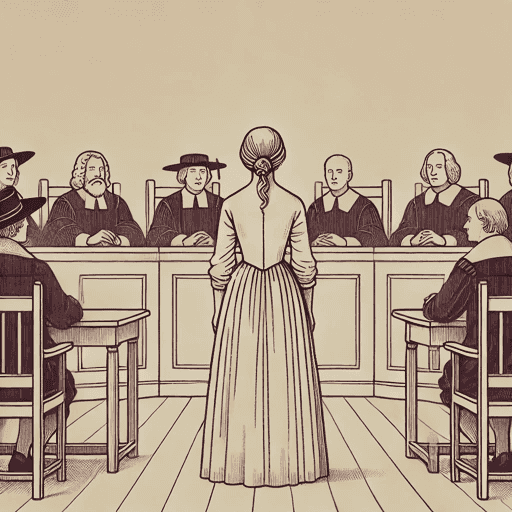
The Salem Witch Trials are such a well-documented and frequently studied example mass hysteria that they helped generate the term “witch-hunt” as descriptor for the misguided social persecution of a person or group based on false or wildly exaggerated perceptions of danger. In describing how Salem came to kill 20 of its own members, and subjected more to imprisonment, humiliation, and exile, the book underscores the role of fear as a catalyst for hysteria. Unsurprisingly, the foundational condition is one of fear, particularly fear of unknown forces. This fear was both ideological and material—rooted in religious teachings about the Devil’s influence, as well as tangible anxieties over threats to the Puritan way of life. While the existence of the Devil derived from a belief in the Christian God, and it was presumed that “it is witches and warlocks that do his bidding in the world” (41) the susceptibility to mass hysteria depended on specific social conditions that heightened anxiety and encouraged scapegoating. By 1692, the Puritans had seemingly overcome the worst that a harsh new environment could throw at them. With considerable help from the Indigenous peoples, they were able to overcome the brutal New England winter, which at first nearly wiped out the entire settlement, and enter a condition of not just comfort but prosperity. This newfound security, however, did not lessen paranoia—it exacerbated it, as Puritan leaders became more determined to defend their fragile dominance. Consequently, the native peoples were concerned “about the large number of immigrants settling on their land…the new settlers bring diseases from England, afflictions against which the tribe have no natural immunity” (38). As the natives became more hostile, Puritan society became increasingly insular, interpreting external threats as divine punishment for internal corruption. As dissenters like Roger Williams set up alternative, freer settlements, the Puritan authority felt their grip slipping and sought to reassert control through fear.
Once the first accusations fly, a savage kind of group dynamic takes place, where some people flock to the company of the supposed victim of witchcraft and join in condemnations of their alleged persecutor, most likely as a way of keeping suspicion off of themselves. This phenomenon, often referred to as “moral panic,” relies on individuals seeking social protection by aligning with perceived righteousness, even at the expense of reason or justice. Once underway, some people will sustain the atmosphere of crisis as a means of enhancing their own power and wealth. This aspect of the trials reveals how mass hysteria is often driven not just by belief, but by political and economic incentives. The sheriff stands to inherit the property of convicted witches, and Cotton Mather in particular builds a public reputation by showing how “no one fights the Devil harder than Reverend Cotton Mather!” (95). Those like John Proctor who questioned the veracity of the accusations, or the wisdom of the courts themselves, then invited the wrath of the powerful to make an example out of them. The trials thus illustrate how mass hysteria can be sustained by those in power, who manipulate fear to maintain control and silence dissent. It took a person with more power, and some degree of courage, the Governor William Phips, to put a stop to the madness, and even then, he intervenes only to save his own spouse. This suggests that hysteria does not subside due to reason alone but often requires an external authority with the will to reassert order.
When Faith Becomes Law: The Dangers of Theocratic Rule
The Salem Witch Trials are in large part a warning against the dangers of concentrating political power in the hands of a religious authority. By showing how Puritan leaders blurred the lines between governance and faith, the book critiques the consequences of theocratic rule.
In 1692, the Puritans were supposed to have joined the established Jamestown colony, but when they were blown off course, left in a place where “the charter granted by King James does not apply” (16). Without a clear governing authority, the Puritans relied on the moral authority of the church, which was at the center of their communal life. The result is a theocratic system where “the purpose of law is to ensure proper morality. The legal system is set up mostly to punish sinners. It includes a ten-shilling fine for ‘those who profaned the Sabbath.’ Moral failings are often treated as harshly as larceny” (28). By fusing religious doctrine with legal enforcement, Puritan leaders created a system that left no room for individual conscience or secular reasoning. This meant that challenges to the social order were tantamount to challenging God, and anyone with the gall to mount such an attack must be doing so in league with the forces of hell. The Salem trials serve as a dramatic example of how such a system can lead to widespread persecution, as accusations of witchcraft became a means of enforcing conformity and eliminating perceived threats to religious control.
Ultimately, the Puritan theocracy is overturned by a greater concentration of power within a secular government as represented by William Phips. However, the book highlights that this shift did not immediately dismantle the deep entanglement of church and state. But even as colonial governments stamp out the worst examples of religious fanaticism, some of them link their power to established churches, such as Anglicanism or Congregationalism. The ostensible purpose of their churches is to help regulate education and other forms of moral instruction, but in practice, it leads to corrupt arrangements between government and clergy, and can spill over into persecution of minority sects.
The book presents this ongoing religious-political struggle as a central theme in American history, arguing that the lessons of Salem extended well beyond the 17th century. After the Great Awakening rallies grassroots religious resistance to the established churches, “all thirteen colonies now have religious controversies” (186) between both Protestants and Catholics and members of more established Protestant sects against Baptists and even the nonviolent Quakers. This religious pluralism eventually forces a reckoning with the question of state-sponsored faith, culminating in the First Amendment’s protection of religious freedom. As the Constitution contemplates and ultimately settles on the decision to forbid the establishment of a church at the federal level, and to permit free expression of religion, the authors argue that a central cause of that outcome was the legacy of fanaticism most vividly seen by the Puritans, and echoed through the decades in colonial religious strife. By linking the Salem trials to later struggles over religious liberty, the book positions them as a foundational moment in America’s path toward secular governance. The separation of church and state thus becomes a necessary precondition for freedom.
Demons, Justice, and the Supernatural Legacy of Salem
The authors make it explicitly clear that those executed at Salem were innocent of the charges brought against them. However, this does not mean, in the authors’ view, that demons—whether literal or metaphorical—do not exist. Instead, the book frames “demons” as both supernatural entities and symbolic representations of the evil that manifests through human actions.
This blending of supernatural elements with historical analysis culminates in the book’s final chapters, which lean toward a more overt endorsement of demonic presence. At the same time, the authors suggest that higher forces may have intervened to correct, in some measure, the injustices committed by the witch hunters. For example, they recount the legend that Sarah Good’s curse on the gallows led to her accuser’s death by hemorrhage 25 years later.
The authors also track the fates of several key figures involved in the trials, searching for signs that they ultimately paid a price for their actions. Sometimes this comes through poetic justice rather than formal punishment. Sheriff John Corwin, who personally profited from the convictions, died of a heart attack at just 30 years old, cutting short his life of cruelty. Even Increase Mather, a powerful figure in the Puritan establishment, meets an ironic end: The site of his former home is eventually occupied by a 7-11 convenience store.
The final chapters take a sharp turn toward a much more definitive affirmation of the supernatural, including demons. The case of Ronald Hunkeler, allegedly the real-life inspiration for The Exorcist, is presented as evidence of a genuine demonic possession that nearly destroys a young man—until his salvation comes through the intervention of Jesuit priests, who perform an exorcism and encourage his conversion to Catholicism. By contrasting Hunkeler’s case with the Salem trials, the authors suggest that while the Puritan witch hunters were misguided, supernatural forces are indeed real. In fact, the Hunkeler case is the only instance where the authors come close to explicitly endorsing the literal existence of demons, though they stop just short of outright confirmation.
This supernatural turn reaches its unsettling conclusion in the Author’s Note, where the authors link the legacy of witch hunts to the rise of cancel culture, describing it as “a new kind of witch hunt” (265). Here, the roles of the witch hunters and the demons blur together, as the authors imply that those who engage in public shaming and online mob justice are not only acting as witch hunters—they are also acting demonically themselves. The book’s final suggestion, that “something is generating all this. Something” (267), leaves readers with the chilling notion that the demons are no longer merely the accused, but also the accusers.

Unlock every key theme and why it matters
Get in-depth breakdowns of the book’s main ideas and how they connect and evolve.
- Explore how themes develop throughout the text
- Connect themes to characters, events, and symbols
- Support essays and discussions with thematic evidence