Symbols & Motifs
Content Warning: This section of the guide features discussion of death.
Elwood Hondo
The ghost of Elwood Hondo symbolizes the power of shared belief. He is first introduced in Part 1, Chapter 8, as the result of an experiment led by Llewellyn Wren. The object of the experiment was to conjure a ghost through the power of shared belief. The resulting artifact, a film documenting Hondo’s summoning, is such a powerful demonstration of this experiment that it briefly projects poltergeist activity into the library at The Briars when screened 30 years later. From then on, Colin uses Hondo as shorthand to refer to any inexplicable phenomenon. Hondo also sets the precedent for the summoning of King Sorrow as Arthur and his friends emulate the film to focus their communal imagination on the entity they are trying to evoke.
For Colin specifically, Hondo also represents the illusory nature of power. During King Sorrow’s summoning, Hondo speaks to Colin alone, foreshadowing the deaths of Colin’s friends and ascribing to them Colin’s future prosperity. This prophecy drives Colin’s motivations, allowing his belief in Hondo’s vision of the future to justify his immoral actions. This belief also leads to Colin’s downfall as he assumes that he can conjure Hondo and weaponize him against his friends. Instead, Hondo subverts Colin’s will and kills him, proving that Colin’s power has been transitory all along.
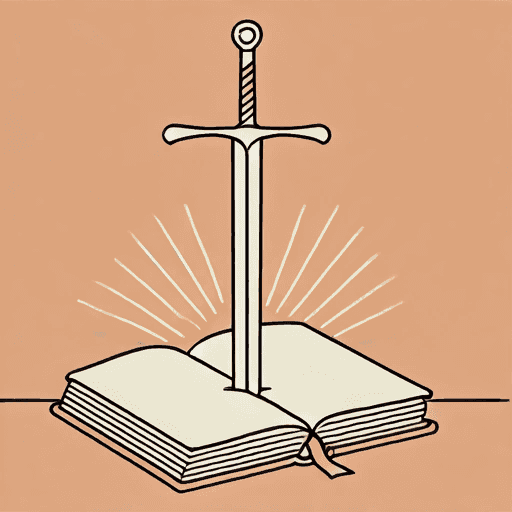
Swords
Swords are a motif playing into the theme of Faith in Human Goodness. Two important swords appear in the novel. The first is the Sword of Strange Hangings, which Arthur and Colin set out to find in Part 4. The second is the luminescent sword imbued with Arthur’s spirit that Gwen draws in Part 5. Both swords evaluate the moral characters of the people who wield them: “That’s how it judges, you know? Not what you’ve done before, but what you choose to do now. Maybe knowing my intentions will be sufficient” (648-49).
Arthur can draw the Sword of Strange Hangings because he wants to use it to take responsibility for his role in summoning King Sorrow to the world. Colin fails to draw the same sword because his primary motivation is to maintain power, which drives his desire to remain connected to King Sorrow. Meanwhile, Gwen draws Arthur’s soul as a sword because Arthur trusts in her ability to resolve their conflict with King Sorrow, despite the self-doubt that stems from Gwen’s guilt.
The Serpent Tattoos
The serpent tattoos mark Arthur’s friends with King Sorrow’s curse; like him, they offer a tempting but deceptive access to power, symbolizing the corruption that comes with it. Visually, the tattoos wrap around their bearers’ chests, as if to constrict their hearts. This resonates with the fact that the primary beneficiary of their power is King Sorrow.
The manipulative King Sorrow describes the tattoos as marks that the group can use to summon his intervention in moments of danger. He is not lying: In Part 3, Allie uses her tattoo to defend herself from Thermopylae. This convinces the group that King Sorrow really will answer their call in a helpful way.
However, the reverse is true. The sacrifices almost never achieve their intended purposes, as demonstrated when the death of Horation Matthews leads to Timothy McVeigh perpetrating the 1995 Oklahoma City bombing. Moreover, Colin uses the sacrificial candidate shortlist to advance his personal interests, meaning that none of the deaths they are offering King Sorrow actually affect the common good. Rather than serving the friend group, King Sorrow is the one the friend group serves by giving him opportunities to cause widespread suffering and death.

Unlock the meaning behind every key symbol & motif
See how recurring imagery, objects, and ideas shape the narrative.
- Explore how the author builds meaning through symbolism
- Understand what symbols & motifs represent in the text
- Connect recurring ideas to themes, characters, and events