Kingdom of the Blind
64 pages • 2-hour read
Louise PennyKingdom of the Blind
A modern alternative to SparkNotes and CliffsNotes, SuperSummary offers high-quality Study Guides with detailed chapter summaries and analysis of major themes, characters, and more.
Chapters 1-8Chapter Summaries & Analyses
Content Warning: This section of the guide includes discussion of cursing and death.
Chapter 1 Summary
On a winter day, Chief Superintendent Armand Gamache of the Sûreté du Québec drives to a remote, dilapidated farmhouse to keep an appointment for 10 o’clock in the morning. Currently on suspension pending an investigation into events from the previous summer, he sits in his car reviewing a strange letter he received the day before. It is an invitation from Maître Laurence Mercier, a notary whom, Gamache knows from research, died of cancer six months earlier. He calls his wife Reine-Marie to confirm his arrival and describes the crooked, abandoned farmhouse. He notes that another vehicle is already parked in the yard.
As Gamache prepares to exit his car, his phone rings with a call that wipes all amusement from his face. During the tense conversation, he is so focused that he fails to notice his surroundings. Inside the farmhouse, an unnamed man watches through a frosted window, recognizing Gamache, a controversial public figure. The observer hears Gamache warn the caller that they will “regret this,” just as a second vehicle pulls into the yard.
Chapter 2 Summary
The new arrival is Myrna Landers, a retired psychologist and bookstore owner from Three Pines, where Gamache and Reine-Marie also live. She startles Gamache, who had been too absorbed in his phone call to hear her approach. As he ends the call, she glimpses guilt on his face before his professional demeanor returns. They compare their letters and discover they are identical, both from the deceased notary. They both admit they came out of curiosity.
They proceed into the unheated kitchen. A man in a worn coat introduces himself as Maître Mercier. Gamache notes that the house was once a happy home, evidenced by pencil marks measuring children’s heights on a doorframe. When Mercier asks Gamache to sign a document, both he and Myrna refuse, demanding to know who he is and why they are there.
Before Mercier can answer, a third guest arrives: Benedict Pouliot, a cheerful young builder wearing a very long, red-and-white-striped hat made by his girlfriend. Benedict believes he is there to bid on a construction job, but he, too, has received an identical letter from the notary.
Chapter 3 Summary
Jean-Guy Beauvoir, Gamache’s son-in-law and the acting head of homicide for the Sûreté, is summoned to an official interview concerning Gamache’s actions during a covert operation (in the previous novel). Beauvoir had expected it to be a formality before Gamache’s reinstatement, but he realizes with alarm that the investigators are inviting him to distance himself from Gamache. Though Beauvoir’s own suspension was lifted months ago, the investigation into Gamache has dragged on for nearly six months.
That morning, Beauvoir told his wife Annie that he expected her father to be cleared. Annie expressed concern that the prolonged investigation has become political and that they need a scapegoat. Gamache had deliberately allowed a large quantity of deadly carfentanil into the country as part of a much larger, and successful, operation, but much of it remains unrecovered. As Beauvoir sits in the interview room, he fears Annie was right: They are preparing to sacrifice her father.
Chapter 4 Summary
The man in the farmhouse reveals he is Lucien Mercier, son of the deceased notary Laurence Mercier. Lucien announces that Gamache, Myrna, and Benedict have been named liquidators (or executors) in the will of Bertha Baumgartner, who died a month ago in a seniors’ home. None of the three has ever heard of her. When Benedict asks if their selection was random, Lucien clarifies that she chose them specifically, though he does not know why. Gamache notes that the will is a legitimate, registered document, written two years earlier.
Myrna flashes back to the previous day, when she received the mysterious letter. Over lunch at the bistro with her friends Clara Morrow and Gabri Dubeau, she was distracted by the letter while they discussed the upcoming winter carnival. Myrna had decided to let fate guide her: If it snowed, she would stay home; if it was clear, she would attend the meeting. The weather was clear when she left, but now, looking at the worsening snowstorm from the farmhouse, she curses fate for tricking her. When the notary refuses to let them read the will before deciding whether to accept, the three decide to discuss the matter in private.
Chapter 5 Summary
The three potential liquidators move to the dining room to discuss in private. Gamache notices pencil marks on the doorframe measuring the heights of three children—Anthony, Caroline, and Hugo—with little stickers beside Hugo’s marks. Benedict inspects the room, noting the leaking roof and warping floors. Myrna wonders about Benedict’s strange sweater—also handmade by his girlfriend. Gamache explains that liquidating a simple will requires minimal work, but contested estates can take years to resolve.
They decide to accept the role of liquidators. Just as they agree, the house shudders and cracks ominously. As the blizzard intensifies, they realize they must leave immediately. Lucien protests, insisting the will must be read in the house as stipulated, but Myrna dismisses this. Gamache’s phone has no signal.
Outside, the storm is raging. Benedict’s truck lacks snow tires, and Myrna’s car is too deeply buried. They frantically dig out Gamache’s Volvo using a shovel, Myrna’s hands, and Lucien’s briefcase. Gamache rips wooden planks from the house’s front steps and places them under the car’s wheels for traction.
When they reach the road, they find their exit blocked by a wall of snow left by a plow. Gamache accelerates through it, and the car skids violently. Benedict panics and tries to grab the wheel, but Gamache restrains him and brings it safely to a stop. Benedict angrily accuses Gamache of freezing and relying on luck. Gamache replies that he never gives up, and they head toward Three Pines.
Chapter 6 Summary
Gamache navigates the group safely to his home in Three Pines. After hot showers and dry clothes, they gather in the warm kitchen. Benedict admires the solid, centuries-old home and the easy intimacy between Armand and Reine-Marie. Reine-Marie takes her lunch to the living room with their dog Gracie, leaving the others to read the will. The Gamaches’ German shepherd, Henri, lies at Armand’s feet.
Myrna goes home to change clothes before the reading of the will; she stops at the bistro. She tells Clara, Gabri, and Olivier about being named a liquidator, but none of them recognizes Bertha Baumgartner’s name.
Gamache tries to use the landline in his study at 1:30 pm, but it is dead. He thinks of the angry phone call from three and a half hours earlier. When Myrna arrives and reports the blizzard is widespread but should end overnight, Reine-Marie notices Armand seems relieved.
In Montréal, Beauvoir tells Annie about his interview, confirming that the investigators wanted him to sign something against her father, which he refused. They discuss the large quantity of deadly opioids that remains unaccounted for in Montréal. Beauvoir agrees that the investigation is political, and they are looking for a scapegoat.
Chapter 7 Summary
Lucien begins reading the will aloud. When he reaches the clause bequeathing $5 million to each of Bertha’s three children—a total of $15 million—they are stunned. Myrna declares it nonsense, given the poverty evident in the farmhouse. The will also mentions a home in Switzerland, a building in Vienna, and a million-dollar donation to an animal shelter. It further states that a title will pass to the eldest son, Anthony. A confused Benedict asks what “title” means.
As they process this information, the lights flicker and then go out completely. Gamache lights storm lamps and candles and reinforces the fire in the woodstove, now their main source of heat. The group moves to the living room to gather by the fireplace. Myrna declares the will impossible to liquidate since the money clearly does not exist. Lucien counters with the story of Conrad Cantzen, a poor actor in 1920s Broadway who secretly amassed a fortune worth a $250,000 when he died. The notary suggests that Bertha might have similarly hidden her wealth.
Chapter 8 Summary
That night, Gamache and Reine-Marie sleep on a mattress in the kitchen near the woodstove, with their dogs Henri and Gracie beside them. Reine-Marie asks why he seemed relieved about the widespread blizzard. Gamache admits he was supposed to attend a crucial meeting at the Sûreté Academy that afternoon and had instructed them not to proceed without him. The blizzard means the meeting was canceled, buying him time. He gets up to add logs to the fire.
Earlier that evening, villagers had shoveled a path to Ruth Zardo’s house, but the elderly poet refused to leave. Gamache decided to go get her, and Benedict offered to help. As they opened the door to leave, Ruth was standing on the doorstep covered in snow, with her pet duck Rosa squirming under her coat. When Gamache asked if she knew Bertha Baumgartner, Ruth said no, showing no interest.
Ruth mentioned she had once met Lucien’s father, Laurence Mercier, about making a will. She quoted the stark opening line of a Philip Larkin poem, using the word “fuck.” To everyone’s astonishment, Benedict recited a cheerful, optimistic version of the same poem, which he sincerely believed to be the correct one. It was decided that Lucien, Myrna, Benedict, and Ruth would all spend the night.
In the present, as Gamache tucks the duvet around Reine-Marie, Ruth calls out that she thinks she knows who Bertha Baumgartner was.
Chapters 1-8 Analysis
The novel’s opening chapters establish a dual narrative that creates tension between Gamache’s suspended professional life and a new, personal mystery. The plot alternates between the strange summons to a dilapidated farmhouse and Beauvoir’s interview with Sûreté investigators, juxtaposing a seemingly low-stakes puzzle with a high-stakes political battle. This structure frames the central conflict around Gamache, connecting the external threat of unrecovered opioids to the internal, moral complexities of the Baumgartner will. The theme of The Burden of Accountability is introduced not through Gamache’s direct actions but through Beauvoir’s steadfast defense and Annie’s fear that her father will become a “scapegoat.” This parallel construction suggests that both the Sûreté investigation and the bizarre will are tests of Gamache’s character, forcing him to navigate ethical ambiguities in his public and private spheres. The contrast between the decaying, crooked farmhouse and the formal Sûreté setting symbolizes the two worlds Gamache must reconcile.
From the outset, the narrative is saturated with the idea that truth is often obscured, and this concept highlights the importance of Recognizing the Limits of One’s Perspective. The initial premise is built on a series of inversions: a letter arrives from a dead man, a seemingly destitute woman leaves a multimillion-dollar estate, and a man introduces himself to Gamache through his father’s identity. This pattern of misdirection extends to the physical environment and character perceptions. The farmhouse first appears derelict, yet Gamache intuits it was once a happy home, a perception later confirmed by the children’s height charts. Myrna curses fate for tricking her with the weather, and Lucien misreads Gamache’s expression through a frosted window. The characters are constantly forced to question their initial judgments. Benedict Pouliot, with his unusual, handmade hat and sweater, appears naive, yet his earnest recitation of poetry challenges the cynicism of the other characters. This pattern establishes a key narrative rule: Truth must be excavated from beneath layers of confusion and mistaken perception.
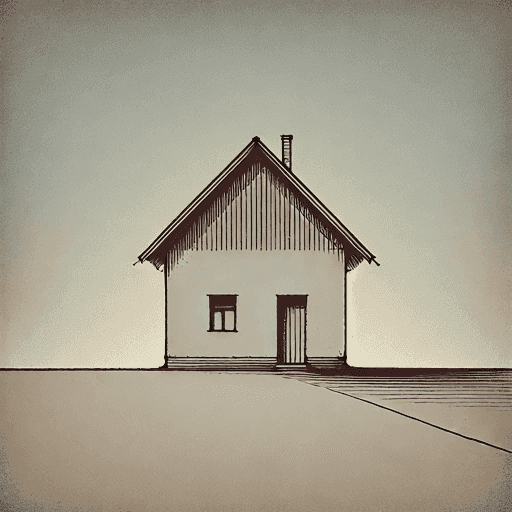
The dilapidated Baumgartner farmhouse functions as a central symbol, mirroring the state of the family it once housed. Gamache’s association of the leaning structure with a nursery rhyme about a “little crooked house” frames it as more than just a building (3); it is also a fractured domestic space. Its physical instability, from the broken step to the cracking walls, foreshadows the collapse of family secrets. The interior, stripped of valuables but marked with the faint pencil lines of children’s heights, evokes a sense of arrested development and lost happiness. This imagery introduces the theme of Choosing Forgiveness Over Conflict, suggesting that the will is about more than assets; it is the manifestation of the generational inheritance of bitterness and resentment. The farmhouse stands in opposition to the Gamache home, a centuries-old bastion of warmth and stability that represents the communal ideal that the Baumgartners have seemingly failed to achieve. The encroaching blizzard amplifies these dynamics, acting as a narrative catalyst that isolates the characters and forces them into proximity, using a mystery genre convention to move the plot forward.
The introduction of Benedict Pouliot and Ruth Zardo establishes a core philosophical tension through their function as narrative foils. Their impromptu poetry duel presents two diametrically opposed interpretations of Philip Larkin’s “This Be The Verse.” Ruth’s recitation of the original, bleak lines reflects a worldview steeped in cynicism and inherited misery. In contrast, Benedict’s earnest, optimistic version, in which parents “tuck you up” instead of “fuck you up” (58, 57), suggests a vision of inherited love and happiness. This exchange transcends characterization, articulating a central question of the novel: Is human legacy defined by inescapable trauma or by enduring kindness? Ruth’s demand, “Is he for real?” (58), becomes a recurring question for the other characters, whose world-weariness is challenged by Benedict’s seemingly unshakeable optimism. His perspective forces them to consider an alternative to the grim realities of their experiences, complicating their understanding of human nature.
The narrative repeatedly employs imagery of obscured vision to develop the theme of recognizing the limits of one’s perspective. Events are frequently viewed through distorting mediums such as frosted glass, falling snow, and flickering candlelight, and the same pattern can be seen in the characters’ use of technology, which sometimes highlights the limitations of the characters’ perception. For example, Gamache’s intense focus on a phone call renders him oblivious to Myrna’s approach. This literal limitation of his senses serves as a metaphor for the characters’ broader cognitive and emotional biases. At this point, the liquidators do not yet know Bertha Baumgartner’s true identity and motives, while Beauvoir fears that the Sûreté investigators are deliberately obscuring the context of Gamache’s actions. With all of these examples, the novel suggests that clear perspective is an active, difficult process that requires looking past surface-level absurdities to perceive the underlying human truths.

Unlock all 64 pages of this Study Guide
Get in-depth, chapter-by-chapter summaries and analysis from our literary experts.
- Grasp challenging concepts with clear, comprehensive explanations
- Revisit key plot points and ideas without rereading the book
- Share impressive insights in classes and book clubs