55 pages • 1-hour read
Kingdom of the Cursed
A modern alternative to SparkNotes and CliffsNotes, SuperSummary offers high-quality Study Guides with detailed chapter summaries and analysis of major themes, characters, and more.
Chapters 6-11Chapter Summaries & Analyses
Content Warning: This section of the guide contains depictions of graphic violence, illness and death, physical and emotional abuse, gender discrimination, and sexual content.
Chapter 6 Summary
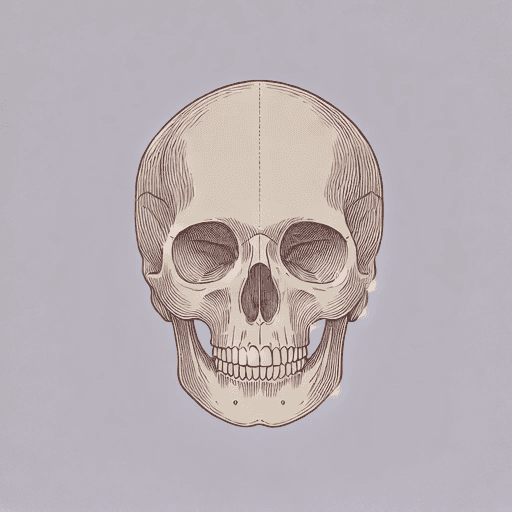
In her chambers, Emilia finds an enchanted skull that delivers a cryptic message in her sister Vittoria’s voice. It states that the “angelus mortis” (dead angel) lives and is almost free, mentions “Fury,” the Maiden, the Mother, and the Crone, and urges Emilia to find the past, present, and future. Emilia concludes that angelus mortis must refer to Wrath. When the skull’s magic fades, she hides it.
Emilia explores the grounds, discovering a cursed lake before finding a library called Haven. Wrath appears and informs her that his brothers have sent invitations for the Lupercalia, or the Feast of the Wolf. He reveals Emilia has been nominated as the guest of honor, a role that requires her to offer her greatest fear as a sacrifice before the demon court.
Chapter 7 Summary
In the Haven library, Emilia and Wrath argue about her contract with Pride. Wrath departs after hinting that her family kept secrets from her about her magic. Troubled, Emilia finds a grimoire and learns that her family line possesses elemental affinities originating from an internal “Source.” When she attempts to connect with her own Source, she senses a powerful, ancient energy.
A demoness named Fauna introduces herself and offers court gossip, telling Emilia that Wrath punished his lieutenant for speaking disrespectfully about her. Fauna then extends a formal invitation to a court dinner.
Later, Emilia secretly explores Wrath’s private library, finding his personal journals and noticing one is missing. She also discovers a serpent-shaped wax seal and a cryptic note.
Chapter 8 Summary
The following evening, Emilia prepares for dinner, choosing a blood-red gown. A second enchanted skull appears, delivering a new message about seven stars and seven sins. Emilia develops a new theory about her sister’s murder, speculating that the devil’s curse ended with the twins’ birth so the recent witch murders may not be connected to finding him a bride.
Before leaving, Emilia steals the journal for House Pride from Wrath’s library. Fauna arrives to escort her, but Wrath intercepts them. He returns Emilia’s cornicello amulet, claiming he only borrowed it. He then challenges her to deny the attraction between them and, recognizing her unspoken lie, kisses her passionately.
Chapter 9 Summary
After their kiss, Wrath leads Emilia to the royal dining hall. He introduces her to the court as their future queen and warns them to show her respect. At the head table, a courtier named Lord Baylor Makaden makes a series of insulting comments toward Emilia.
As Emilia prepares to defend herself with a concealed knife, Wrath intervenes. He cuts out Lord Makaden’s tongue and impales it to the lord’s plate. The court sits in silence. Having made his point, Wrath declares the dinner over and dismisses everyone.
Chapter 10 Summary
Anir escorts a stunned Emilia back to her suite. Her shock transforms into fury at Wrath for not allowing her to defend herself. Channeling her rage, Emilia successfully summons a ball of rose-gold fire for the first time. She confronts Wrath in his chambers, demanding a weapon and training. He agrees.
On Wrath’s private balcony, they share wine while looking at Pride’s distant castle. Wrath tells her about the Crescent Shallows, a magical lagoon whose waters reflect absolute truth but require bathers to be nude. Intrigued, Emilia insists he take her there immediately. Wrath teleports them to the spring, where she undresses and enters the water.
Chapter 11 Summary
Wrath’s clothes vanish and he joins Emilia in the lagoon. She traces the Latin tattoos on his body, and he translates two for her as “The stars incline us; they do not bind us” and “Actions, not words” (149). Emilia apologizes for having magically bound him in the mortal world, and they discuss fate and choice.
As the sexual tension between them escalates, Emilia initiates sex. She asks him to take her to his bed. Wrath teleports them, still entangled, directly to his bedchamber, where they continue.
Chapters 6-11 Analysis
These chapters mark a critical transition for Emilia, solidifying her transformation from a grieving victim into a strategic player, developing the theme of Asserting Feminine Power Through Rage and Desire. Previously, Emilia’s anger was an undirected response to loss; within House Wrath, it becomes a focused, tangible weapon. After Wrath disciplines Lord Makaden on her behalf, Emilia’s fury is not at the insult but at Wrath for denying her the agency to defend herself. Her anger and desire for agency is the catalyst for a magical breakthrough. She summons a ball of fire by channeling her intense emotion, concluding, “If the Prince of Wrath’s anger was a glacier, mine was a raging inferno” (134). This juxtaposition establishes her power as equal but opposite to Wrath’s, hinting that they are two halves of a strong future partnership. Wrath’s domain and temperament are consistently associated with ice and cold, while Emilia discovers an elemental fire magic sourced from her own infernal rage. This moment also reframes her anger as a “Source,” an internal wellspring of strength rather than a destructive impulse. In parallel, the novel shows Emilia also embracing her sexuality. In the Crescent Shallows, she consciously initiates a physical encounter for the first time, moving beyond the realm’s illusions to claim her own sexual agency. Her actions are not a surrender to temptation but a choice to explore desire on her own terms, a key part of the novel’s positive presentation of sexual desire and agency.
As the narrative unfolds more detail of Hell and its occupants, The Search for Truth in a World of Deceptions is deepened. Wrath’s consistent lies of omission—concealing the true nature of his bond with Emilia and the purpose of the Feast of the Wolf—establish an environment where the truth must be uncovered, not taken at face value. In response, Emilia, becomes an active investigator, moving from passively receiving information to actively seeking it, and keeping secrets of her own. Her analysis of the enchanted skulls’ cryptic messages and her growing suspicion of her own family’s secrets demonstrate her adaptation to this deceptive world. She learns to question every narrative, including those from her past. This complexity extends to the depiction of Wrath’s domain. Hell is not a chaotic pit of suffering but a structured kingdom with intricate politics, social hierarchies, and a code of conduct. The formal dinner, with its rules of etiquette and status, functions more like a human royal court than a den of pure evil. By presenting a demon prince who operates within a framework of loyalty and a warped sense of justice, the narrative challenges the reader to assess characters based on their motivations and allegiances rather than on preconceived notions of good and evil. The sustained use of a first-person perspective immerses the reader in Emilia’s state of uncertainty and heightens the impact of the story’s deceptions. By limiting the narrative to Emilia’s knowledge, the reader experiences Wrath’s calculated omissions and the court’s political machinations with the same confusion and suspicion she does. This technique makes the gradual unraveling of truths a shared journey of discovery, aligning the reader with the protagonist’s investigative process.
In these chapters, Wrath’s actions continue to defy simple classification and are the subject of Emilia’s continued uncertainty, as shown by her narrative. Emilia observes that his hands, capable of extreme violence, “were also capable of tenderness. Of protection” (138). His brutal severing of Lord Makaden’s tongue is a shocking act of violence, yet its clear motivation is the defense of Emilia’s honor, a grotesque form of chivalry that aligns with his assumed role as her protector. At this point in the novel, Wrath’s role follows traditional paternalistic patterns, providing Emilia’s character arc with obstacles as she achieves agency and equality.
The Crescent Shallows serves as a relief from this section’s growing tensions. Described as a place that can “reflect their truth,” as a subterranean hot spring heated by a lava field, the Crescent Shallows is a space where fire and water meet and their opposing natures find harmony (144). It is here, where both characters are physically and metaphorically naked, that their mutual desire can be expressed without layers of courtly performance or strategic manipulation. This adds a symbolic layer to the sexual intimacy of Wrath and Emilia in this scene, underpinning the idea that their romantic connection is a true indicator of their characters and feelings.

Unlock all 55 pages of this Study Guide
Get in-depth, chapter-by-chapter summaries and analysis from our literary experts.
- Grasp challenging concepts with clear, comprehensive explanations
- Revisit key plot points and ideas without rereading the book
- Share impressive insights in classes and book clubs