Last Patient of the Night
57 pages • 1-hour read
Gary GerlacherLast Patient of the Night
A modern alternative to SparkNotes and CliffsNotes, SuperSummary offers high-quality Study Guides with detailed chapter summaries and analysis of major themes, characters, and more.
Themes
Content Warning: This section includes discussion of death and graphic violence.
The Moral Duties Associated With Medical Work
The medical field plays a massive role in Last Patient of the Night. Doc’s role as an ER doctor shapes his characterization and his character arc, as his medical background and education have instilled within him a strong code of ethics. Throughout the novel, Doc’s quest for justice is shaped by the moral duties associated with medical work.
Doc feels his duty of care extends to caring for the entirety of the patient. For example, when Jenny first comes into the ER under the alias “Tracy Palmer,” Doc doesn’t just evaluate her fractured wrist. He immediately understands that Jenny’s in danger, and he asks her about her home life, even sending in Tom and Banshee to see if they can convince Jenny to talk. When Doc loses Jenny, he’s heartbroken because he feels he failed. Doc describes the “impersonal” way patients die in the ER: “One minute there were twelve people working intensely to save her, and the next minute they had all moved on to the next task. Death in the ER was stark and lonely” (33). Doc logically understands that there’s nothing more he can do to save Jenny, but he still feels grief for her death, though he doesn’t have as much time to grieve her while working his ER shift.
It is not just the fact that Jenny dies in the sterile environment of the ER that haunts Doc: He is also upset that she was entirely alone. Doc knows that sometimes he’s going to lose patients, as he acknowledges, “[Jenny] had died alone without family or even a name. And she had died horribly. I knew this one was going to sting for a long while” (41). Jenny has no family to be with as she dies, and she doesn’t even have anyone to claim her body from the coroner. Doc was one of the last people to talk to Jenny before she was murdered, and as her doctor, he feels a heavy sense of responsibility for her loss.
Doc acknowledges that this pain isn’t going away anytime soon, and the only way he can ameliorate his grief and guilt is to obtain justice for Jenny. He can’t change the circumstances of her death, but he can bring justice to the people who abused and murdered her. Though solving crimes is not typically within the scope of a doctor’s role, Doc’s moral code compels him to go above and beyond to obtain justice for Jenny.
Trust and Mistrust in Systems of Care
The medical system’s role in Last Patient of the Night is rife with complexity and nuance. While Doc and his coworkers strive to offer good care to their patients, the novel depicts the management as frequently untrustworthy and even corrupt, most especially in the case of VP Lou. Through these contrasting approaches to medicine, the novel examines trust and mistrust in systems of care.
Doc represents the best of the medical system, a doctor dedicated to his patients and coworkers who is worthy of trust. Jean, the charge nurse at Ben Taub, tells Skinny Jeans about Doc, “I have been here for twenty-six years and have seen a lot of docs come and go. Most of them, the job […] changes them. They can become bitter, angry, or selfish. But not Doc. He stays the same no matter what this place throws at him” (111). Jean sees firsthand how Doc remains a calming presence in the ER, regardless of how chaotic or difficult the situation becomes. Doc works tirelessly to save his patients and to guide and teach his fellow healthcare workers, and because of his dedication to medicine and his steadfast attitude, they place their trust in him.
Gerlacher also explores the other, less trustworthy side of the healthcare system through the character of Vice-President Lou Gallagher, or VP Lou. VP Lou thinks himself part of the same healthcare system as Doc and the other ER workers, but Doc disagrees. When VP Lou first arrives in the narrative, Doc asks him about his socks, and VP Lou says, “I have an entire set of child-friendly socks that I wear every day to remind me of the importance of our pediatric patients at the hospital” (13). Doc finds this response off-putting because it represents the performative elements of VP Lou’s character. He is not making any actual steps to help pediatric patients at Ben Taub; in reality, he’s defrauding the hospital and actively taking important money away from the healthcare system. VP Lou’s socks demonstrate the dichotomy between how he presents himself and how he actually works within the healthcare system. He wants to appear trustworthy and caring, but in reality, he violates the trust of the entire system through his criminal and fraudulent conduct.
Doc critiques VP Lou, but he also critiques the elements of the healthcare system that created VP Lou. In his lecture to his students, Doc says, “One out of three dollars is spent on administrators. Every hospital has an entire floor of thirty-something MBAs who are Vice President of this or that. Most of them don’t know anything about medicine, yet they make the important decisions that directly affect patient care” (183). Doc highlights the financial negligence that occurs in the medical field, as hospitals spend all their money paying administrators without actual medical experience. This poor financial decision-making demonstrates further untrustworthy elements in the medical system.
Thus, while Doc represents the trustworthy aspects of medicine, VP Lou and the administrators represent the untrustworthy aspects, illustrating the ethical complexity present in the medical field.
Heroism and Vulnerability in Frontline Professions
Frontline professions are central to Last Patient of the Night. Doc, as a doctor, is a frontline professional, as are Officer Tom and his neighbor, the military veteran Carl. These three characters and their experiences embody heroism and vulnerability in frontline professions.
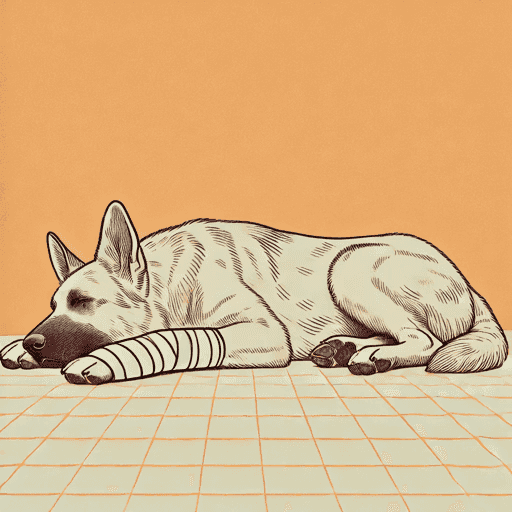
Officer Tom is crucial to helping Doc unravel the mystery around Jenny’s death, with Tom often engaging in risky activities in an attempt to expose the activities of the Ukrainian gang. His K-9 assistant, Banshee, is also depicted as offering important services in helping police conduct their work and keeping officers safe. After Banshee is shot, Doc observes, “[Banshee] had a police escort and every intersection on the way to the vet trauma center was blocked by officers, allowing a rapid journey for Banshee. I hoped it would be rapid enough” (91). Banshee is treated as a hero for taking a bullet for Doc, receiving a police escort to the emergency vet. Doc’s concern and care for Banshee also illustrate Doc’s softer, more caring side, as he demonstrates emotional vulnerability in the wake of the trauma of the shooting and potential loss of Banshee.
Though Gerlacher primarily depicts the heroic elements of frontline professions, he also explores the more negative side of the vulnerability that stems from serving on the frontlines. For example, when Doc is being chased by the Ukrainians in the shootout, Doc parks at the police station but recognizes he’s still at risk: “I slowly raised my hands, realizing I was not out of danger yet. A bunch of amped up cops out there couldn’t know I was friendly” (142). The adrenaline of being in a shootout makes the police officers at the scene unpredictable, as they may feel afraid and could view Doc as a potential threat and open fire.
Carl, as a former member of the armed forces, is also a frontline professional, as he served in direct combat with the Taliban during his tours of Afghanistan. Carl initially plays the role of the goofy neighbor who trims his trees badly, but he hides a deeper emotional vulnerability as a result of his service. After Carl heroically saves Doc from the Ukrainian shooters, he and Doc talk, and Carl admits, “All that time I was screwing around outside, I am watching people and looking for patterns […] Helps me to sleep at night if I’ve made some regular patrols of the area each day” (107). Carl’s traumatic past still lingers within him: He can never feel fully safe, even at home thousands of miles away from the frontlines of the war in which he fought.
Last Patient of the Night thus suggests that frontline professionals often behave with courage, but that such stressful and risky professions can take an emotional toll as well.

Unlock every key theme and why it matters
Get in-depth breakdowns of the book’s main ideas and how they connect and evolve.
- Explore how themes develop throughout the text
- Connect themes to characters, events, and symbols
- Support essays and discussions with thematic evidence