Mona's Eyes
54 pages • 1-hour read
Thomas Schlesser, Transl. Hildegarde SerleMona's Eyes
A modern alternative to SparkNotes and CliffsNotes, SuperSummary offers high-quality Study Guides with detailed chapter summaries and analysis of major themes, characters, and more.
Summary and Study Guide
Overview
Mona’s Eyes (2024) is a work of literary fiction by the French art historian Thomas Schlesser. The novel tells the story of 10-year-old Mona’s relationship with her grandfather, Henry (Dadé). One day, Mona experiences an inexplicable bout of temporary blindness which terrifies her parents and grandfather. Her doctor insists she is in good health but explains that she will need psychological counseling should she later lose her sight completely. Dadé decides to take her on regular trips to three of Paris’s museums each Wednesday. What ensues is a meaningful venture into art history, which changes Mona’s understanding of herself and her personal history. Written from the third person point of view, the novel explores Art Education as Emotional Formation, Navigating Self-Discovery Via Explorations of the Past, and Building Intergenerational Intimacy Through Teaching.
This guide uses the 2025 Europa Editions paperback edition.
Content Warning: Both the source text and this guide include depictions of illness, mental illness, substance use, substance dependency, bullying, death, and death by assisted suicide.
Plot Summary
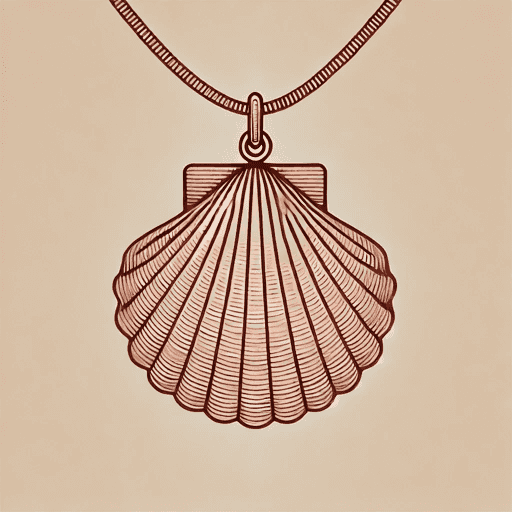
While doing her homework one day, 10-year-old Mona decides to remove her seashell pendant, given to her by her late grandmother, Colette (Mamie), when she was three. As soon as she takes it off, Mona’s eyes go dark and she cries out to her mother Camille that she cannot see.
Camille and Mona’s father, Paul, call the doctor, who guesses she’s had a transient ischemic attack (TIA) and reassures them Mona’s sight will soon return. They rush Mona to the hospital anyway, where, upon arrival, Mona’s sight comes back. Inside, Dr. Van Orst does some tests and determines that Mona’s eyes are strong and she is healthy. Nevertheless, he wants to see and work with her on a regular basis to determine the cause of the inexplicable TIA. He also recommends that Mona see a psychiatrist each week, as she’ll need support should she indeed lose her eyesight completely someday.
Camille calls her father, Mona’s grandfather, Henry (Dadé), to inform him of Mona’s attack and her doctor’s assessment. She asks that he facilitate Mona’s weekly psychiatry appointments, as Mona loves and trusts him above everyone else. Dadé agrees, but privately decides to take Mona to see Paris’s best museums each week instead.
Over the following weeks, Dadé collects Mona from school every Wednesday and shepherds her to the Louvre. Each week they see a different work of art housed at the former palace. They study Botticelli, da Vinci, Raphael, Titian, Michelangelo, Hals, Rembrandt, Vermeer, Poussin, Champaigne, Watteau, Canaletto, Gainsborough, Gérard, David, Benoist, Goya, Friedrich, and Turner. When Dadé leads Mona to each painting or sculpture, he tasks her with studying the work and drawing conclusions about what she sees and feels. Then he offers her historical facts about each artist and each particular work. Together, Mona and Dadé decide the overarching message behind the artworks. From the works she sees at the Louvre, Mona learns about choosing to be happy, achieving internal balance, controlling her emotions, and accepting others’ acts of kindness.
Meanwhile, Mona spends time with her father at his vintage shop. The worse Paul’s business does, the more he resorts to drinking to cope with his financial woes. Mona witnesses her father drinking heavily and passing out at the store in bouts of profound despair. Saddened herself, Mona resorts to exploring the shop’s basement, where one day she finds a curious lead figurine which she displays upstairs in the shop. Not long later, a customer comes in and buys the figurine for a high price, insisting it is very valuable. Paul is thrilled with this unexpected influx of cash.
Mona also continues to see Dr. Van Orst, who starts facilitating regular hypnotherapy sessions. He hopes the sessions will help Mona recall the circumstances surrounding her TIA. Mona’s parents are wary of the therapy, but Mona is eager to try. In each session, she experiences a new, mysterious memory—many of them featuring her late grandmother, whose death was sudden and unexplained to Mona.
After the Louvre, Mona and Dadé continue their art history lessons at the Musée d’Orsay, where they study the works of Courbet, Fantin-Latour, Bonheur, Whistler, Cameron, Manet, Monet, Degas, Cézanne, Burne-Jones, Van Gogh, Claudel, Klimt, Hammershøi, and Mondrian. Mona and Dadé each offer up their impressions of the works and extract life lessons from them.
Meanwhile, Mona’s curiosity about her late grandmother continues to grow. In the shop basement, she finds more collectibles, envelopes, and photographs featuring her grandmother. She is curious about who she really was and what really happened to her. When she tries to ask her mother or her grandfather, they deflect; the topic of Mamie has been taboo for as long as Mona can remember. However, she keeps summoning her presence during hypnotherapy. Finally one day, she recalls the last time she saw Mamie. Mamie gave Mona her pendant (which matches the one Dadé wears around his neck) and told Mona to let go of negativity and embrace the light.
Back at the shop one day, the customer who bought the figurine returns. Mona unearths a slew of similar figurines, which the man buys. Paul is thrilled and hopes his business will turn around. Meanwhile, he starts working on a new phone invention.
Dadé starts taking Mona to the Center Georges-Pompidou, where they study the works of Kandinsky, Duchamp, Malevich, O’Keeffe, Magritte, Brâncuși, Höch, Kahlo, Picasso, Pollock, Phalle, Hartung, Bergman, Basquiat, Bourgeois, Abramović, Boltanski, and Soulages. Mona develops a keener awareness of the work, impressing Dadé with her astute interpretations of each one.
After a year of art history lessons, Mona and Dadé’s weekly sessions come to an end. Around the same time, Dr. Van Orst informs Mona and her family that Mona’s bouts of temporary blindness are directly related to her grandmother’s death and her pendant. When she removes the necklace, she loses her sight. Eager to understand more about Mamie, Mona insists that her family unearth Mamie’s belongings from Paul’s shop basement— after she died, Dadé didn’t want them in his house. Mona confronts her grandfather, suggesting he resume ownership of the artifacts and write a story about Mamie. She also asks him to tell her about her grandmother.
Dadé takes her on a trip to the place where he and Mamie met and offers her the full story, explaining Mamie’s history and fate. When she began to lose her memory, Mamie decided to die by assisted suicide. Dadé was too devastated by losing Mamie to even speak about his wife in the years following. He and Camille also feared that the truth would upset Mona, as they weren’t sure how to tell her about the right to die when she was so young. Mona maturely digests this information.
On the beach where Dadé and Mamie found the shells for their pendants, Mona removes her necklace. Her eyes go dark and she sees a vision of Mamie—who urges her to let go of the darkness and return to the light. Mona cries, healing her own wounds, and recovers her vision. She twirls around the beach and she and Dadé exclaim at the beauty of their surroundings.

Unlock all 54 pages of this Study Guide
Get in-depth, chapter-by-chapter summaries and analysis from our literary experts.
- Grasp challenging concepts with clear, comprehensive explanations
- Revisit key plot points and ideas without rereading the book
- Share impressive insights in classes and book clubs