Life
A modern alternative to SparkNotes and CliffsNotes, SuperSummary offers high-quality Study Guides with detailed chapter summaries and analysis of major themes, characters, and more.
Literary Devices
Form and Meter
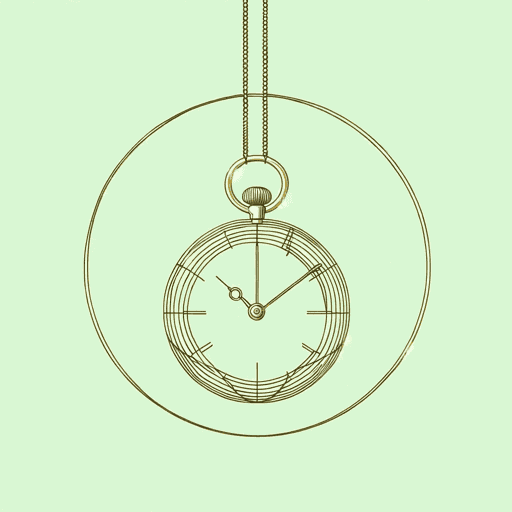
The poem is a single stanza of six lines, and it does not feature any set rhyme or meter. Each line ends with a different consonant or vowel sound, and there is no consistency in each line as to the stressed and unstressed syllables. The shift back and forth between the longer lines and the shorter lines mimics the swinging movement of the pocket watch in the poem. The abrupt shifts between syllable counts also reflect the uncertainty and unknown qualities of life; life can change in an instant without warning. Lastly, the fact that the poem ends with the two shortest lines (as far as syllable count) and begins with the longest line symbolizes the waning of life as it runs its course, becoming ever shorter as one day follows another.
The lack of rhyme scheme adds to the unpredictability of the poem and the overall theme of life’s oscillations. The altering patterns of stressed/unstressed syllables imitate colloquial speech and the natural flow of life, rather than the lines and words filling a particular format that might be restrictive or limiting given the topic of the poem. For example, the first line seems to follow more of a trochaic pattern, featuring a stressed syllable followed by an unstressed syllable, before switching to iambs: “Life is but a toy that swings on a bright gold chain.” The second half of the line switches to an iambic pattern, featuring an unstressed syllable followed by a stressed syllable. There are four trochaic units (or feet) to two iambic feet. The irregular meter adds to the conversational quality of the poem, making it feel like an intimate discussion about a serious topic.
Metaphor
A metaphor is a type of figurative language used to compare things or concepts typically deemed dissimilar. Often confused with similes, which compare two or more items using the words “like” or “as,” metaphors make this comparison without using these specific keywords. There are a few instances in “Life” where Madgett employs metaphor. In the first line of her poem, Madgett compares “Life” with “a toy that swings on a bright gold chain.” In the last line of the poem, this metaphor is restated and solidified as the speaker directly refers to “the watch” (Line 6) of life. Metaphors often “use ordinary things that people can relate to” and “designate[] one phenomenon or object using another, associating the first object with the qualities of the second” (“The Function of Metaphor in Poetry.” Owlcation, 2022). Using an object that readers are familiar with to form a comparison offers a new perspective on an object/concept, makes the object/concept more attainable, or simply adds aesthetic value to a text. In the case of Madgett’s poem, the usage of metaphor paints the concept of life in light of its brevity and inconsequentiality. The reference to life as a “toy” (Line 1) or a ticking “watch” (Line 6) makes this obscure, intangible force seem like no more than a bauble to be bandied about by a higher power.
Allusion
Allusions are defined as “textual references to an object or subject that exists outside of the text. They use readers’ prior knowledge and associations to enhance emotion or clarify significance” (“Allusion.” SuperSummary, 2022). Allusions can only “work” due to readers’ familiarity with and comprehension of them. In Madgett’s poem, she writes about “a very old man” (Line 4) who controls the swinging of the pocket watch. This reference alludes to the image of the Christian God as an old man. As stated earlier in the analysis, God is considered as part of the Trinity, the three Persons in One, in some Christian traditions. The Trinity is composed of the Father, Son, and Holy Spirit. God the Father, in various artistic representations, such as the ceiling of the Sistine Chapel, takes on the appearance of an older man with white hair. Though there is no exact description regarding God’s appearance in the Bible, Fergal Mac Eoinín explains, “[W]e have developed and promoted an image of God […] [as] an elderly man with a full white beard who usually wears white” (Mac Eoinín, Fergal. “An image of God the father.” The Irish Times, 2018). Because the old man in the poem represents God, “the keeper” (Line 4) of the metaphorical pocket watch, Madgett removes agency from the individual person. God, the Supreme Higher Power, controls all aspects of life, and it is futile for anyone to resist.

Get in-depth, chapter-by-chapter summaries and analysis from our literary experts.
- Grasp challenging concepts with clear, comprehensive explanations
- Revisit key plot points and ideas without rereading the book
- Share impressive insights in classes and book clubs