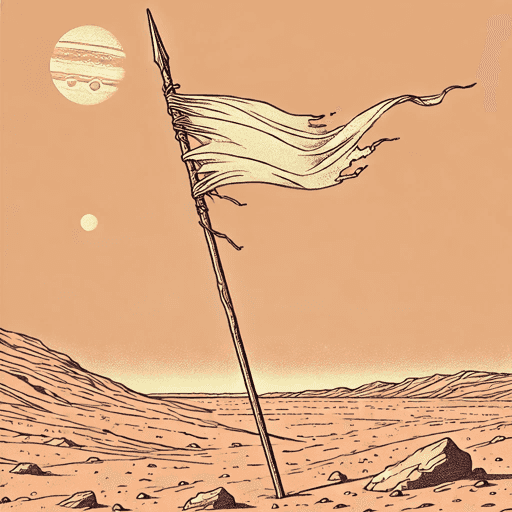
Light Bringer
75 pages • 2-hour read
Pierce BrownLight Bringer
A modern alternative to SparkNotes and CliffsNotes, SuperSummary offers high-quality Study Guides with detailed chapter summaries and analysis of major themes, characters, and more.
Background
Series Context: The Red Rising Saga
Pierce Brown’s Red Rising series—a sprawling space opera that combines elements of dystopian fiction, political intrigue, and mythological allegory—follows Darrow, a lowborn Red miner on Mars who infiltrates the ruling Gold caste to dismantle a brutal Color-based hierarchy. After the execution of his wife, Eo, Darrow joins a rebel group called the Sons of Ares, undergoes a painful transformation into a Gold, and rises through a brutal military academy in Red Rising (2014) and Golden Son (2015). By Morning Star (2016), he has helped topple the Society and established the Solar Republic alongside Virginia au Augustus—his former enemy who is now his ally and partner.
However, the rebellion breeds new instability. In Iron Gold (2018) and Dark Age (2019), the Republic splinters as Darrow wages unauthorized war, Virginia governs a crumbling system, and former heir Lysander au Lune returns to power in the Core. The once-loyal warrior Cassius au Bellona reemerges, attempting to mentor Lysander, who ultimately betrays him. Other characters—including Sevro, Darrow’s longtime friend and a Son of Ares; Volga, a genetically engineered Obsidian; and Lyria, a Red refugee—are drawn into the chaos of war, betrayal, and imperial resurgence. Dark Age ends in devastation: Cities fall, alliances fracture, and Darrow is stranded, a mythic hero now haunted and alone.
Light Bringer is the sixth installment in the Red Rising saga. Building on the events of Dark Age, Light Bringer continues the aftermath of the catastrophic fall of Heliopolis and the fracturing of the Solar Republic. While earlier books focused on the rebellion against the Society’s rigid Color hierarchy, Light Bringer deepens the consequences of that revolution, revealing the cost of systemic upheaval and the enduring scars left on individuals and civilizations. The once-clear lines between hero and villain are further blurred, as the consequences of Darrow’s uprising now reverberate through generations of rulers, rebels, and civilians alike.
The novel marks a pivotal point in the series. Where previous installments celebrated rebellion and victory, Light Bringer is a meditation on the cost of leadership, the burden of war, and the difficulty of forging lasting unity. Characters who once embodied idealism, such as Darrow, Sevro, and Virginia, now grapple with personal trauma, political betrayal, and the disillusionment that follows failed revolutions. Darrow is no longer the rising rebel but a haunted war hero; Sevro, the comic and violent heart of the early series, becomes a figure of loyalty forged through shared suffering; and Virginia must now embody the impossible ideal of peace in a system built for war. Meanwhile, Lysander’s transformation into a central antagonist explores how even those who begin with good intentions can become corrupted by power and fear. His betrayal of Cassius, a character who raised him, marks a turning point, emphasizing how legacy, mentorship, and ideology collide in tragic ways.
As part of the larger Red Rising narrative arc, Light Bringer sets the stage for the saga’s final confrontation in Red God, the planned final volume. Brown’s intricate world building, long-term character development, and layered thematic focus continue to evolve, challenging readers to reflect on cycles of violence, redemption, and the precariousness of empire. The novel bridges the series’ rebellious beginnings with its darker, more morally complex endgame, showing how victory often demands deeper sacrifices than war itself.
Geographical Context: The Core and the Rim
Set across the vast expanse of the solar system, Light Bringer builds on the intricate world established in earlier Red Rising novels while expanding its physical scope and emphasizing the loneliness of cosmic distance. The novel moves beyond the familiar battlegrounds of Mars and Earth, venturing deep into the Rim Dominion, the moons of Jupiter, and isolated human outposts like Tabula Rasa. The new settings—Europa’s underwater cities, Io’s decimated landscapes, and hidden asteroid laboratories—emphasize the epic scale of conflict and the adaptive resilience of humanity.
The brutal conditions of the Rim, especially the devastated surface of Io, reinforce the discussion of survival in a hostile universe. Darrow’s reflection on the Rim’s distance from the sun—how the Rim feels “forgotten” by the sun and life itself—captures the novel’s emphasis on isolation and existential vulnerability. Meanwhile, the continued exploitation of planetary and lunar resources, such as Mercury’s destroyed Garter and the biological devastation wrought by advanced weaponry, showcases the long-term consequences of endless war on both civilization and the environment.
This physical backdrop shapes the emotional and political landscape of the novel. Travel across these vast, war-torn regions is not merely a backdrop for action but a reflection of each character’s internal struggles and the broader collapse of empire. Brown’s detailed world building underscores that in Light Bringer, space is not the final frontier of exploration—it is a mirror of humanity’s broken ambitions and an arena where survival demands both brutality and hope.

Unlock all 75 pages of this Study Guide
Get in-depth, chapter-by-chapter summaries and analysis from our literary experts.
- Grasp challenging concepts with clear, comprehensive explanations
- Revisit key plot points and ideas without rereading the book
- Share impressive insights in classes and book clubs