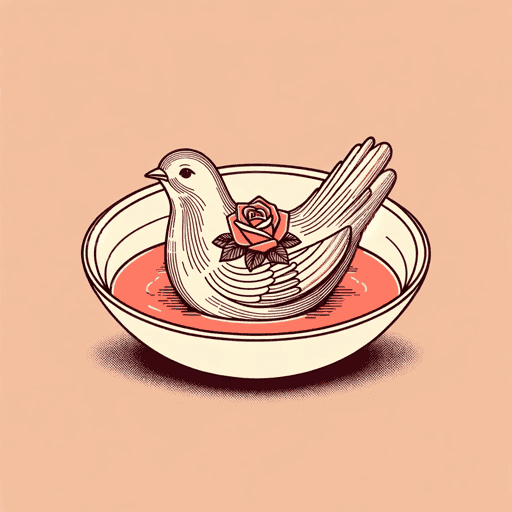
Like Water for Chocolate
Like Water for Chocolate
A modern alternative to SparkNotes and CliffsNotes, SuperSummary offers high-quality Study Guides with detailed chapter summaries and analysis of major themes, characters, and more. For select classroom titles, we also provide Teaching Guides with discussion and quiz questions to prompt student engagement.
Summaries & Analyses
Games
During Reading
Reading Questions & Paired Texts
Reading Check and Short Answer Questions on key points are designed for guided reading assignments, in-class review, formative assessment, quizzes, and more.
CHAPTERS 1-3
Reading Check
1. What ingredient triggers the narrator’s memory of the story of Tita’s birth?
2. In which room of the house is Tita born?
3. What unanticipated ingredient in the cake’s icing makes Nacha too sick to attend Rosaura’s wedding?
4. What does Pedro give Tita when she becomes the ranch cook?
5. What lie does Tita tell her mother about what happened to Gertrudis?
Short Answer
Answer each question in at least 1 complete sentence. Incorporate details from the text to support your response.
1. How does Nacha end up raising Tita?
2. Why is the sausage for Christmas rolls Tita’s favorite recipe?
3. Why is Tita put in charge of Rosaura and Pedro’s wedding feast preparations?
4. What does Pedro tell Tita about his motive for marrying Rosaura?
5. Why does Tita end up making the quail in rose petal sauce once a year?
Paired Resource
“We Need To Talk About Marianismo”
- In this essay from Luz magazine, Nicaraguan-American author Priscilla Blossom explores the harms of marianismo culture.
- This resource relates to the theme of Repressed Female Desire and Rebellion.
- What is “marianismo,” and how are the expectations of this culture enforced in Like Water for Chocolate? How does marianismo prevent women in the novel from expressing their true selves?
- In this 4-minute video, Lila Downs performs her hit song “La Cumbia del Mole.” An English translation of the lyrics can be found here.
- This resource relates to the theme of The Intersection of Family and Food.
- What is the central idea of this song? How does it compare to the novel’s portrayal of the relationship between food and emotion? What similar rhetorical strategies do you see in Downs’s song and in Esquivel’s novel?
CHAPTERS 4-6
Reading Check
1. What is the name of Pedro and Rosaura’s son?
2. Where does Mama Elena plan to send Rosaura, Pedro, and their son?
3. What unpleasant things are in Tita and Chencha’s sausage?
4. Where does Dr. Brown take Tita, instead of putting her in the asylum?
5. Who is the elderly woman who takes care of Tita while she is ill?
Short Answer
Answer each question in at least 1 complete sentence. Incorporate details from the text to support your response.
1. What causes Pedro to miss the birth of his son?
2. Why does Mama Elena begin hiding the ranch’s food and supplies?
3. What precipitates Mama Elena’s violence that results in Tita’s broken nose?
4. What does Tita spend a night doing that causes her mother to call Dr. Brown?
5. What did John’s grandmother say is the danger of people whose lives lack passion?
Paired Resource
- Walt Whitman’s poem celebrates the life-giving passion found in the union of the material and the immaterial; students need only read Parts 1 and 2 to appreciate its meaning.
- This resource relates to the theme of The Human Experience.
- What point is Whitman making about how the physical world acts on our spirits and emotions? How is this similar to the analogy that John’s grandmother drew between matches, candles, and people?
CHAPTERS 7-9
Reading Check
1. What smell makes Tita cry when Chencha visits her at Dr. Brown’s house?
2. What kills Mama Elena?
3. What do Rosaura and Pedro name their daughter?
4. Who returns to the ranch with a new husband in Chapter 8?
5. Who curses Tita after warning her to end her affair with Pedro?
Short Answer
Answer each question in at least 1 complete sentence. Incorporate details from the text to support your response.
1. What does Chencha decide to tell Mama Elena instead of Tita’s message?
2. Why does Tita change her mind and return to the ranch?
3. What makes Tita so angry that the bread rises too fast and spills over the sides of the bowl?
4. What worries Tita while she is making the Three Kings’ Day bread?
5. How has Gertrudis’s life changed since she left the ranch?
Paired Resource
“Why Do We Eat Rosca de Reyes on January 6?”
- This article explains the tradition of Three Kings’ Day bread in Mexico.
- This resource relates to the theme of The Intersection of Family and Food.
- What is the history of the rosca de reyes? How does Esquivel’s use of this tradition highlight both the love and dysfunction within Tita’s family?
- This journal article from Ethnic Studies Review explores the feminist aspect of the novel’s genre-defying composition. (Note: The final paragraphs give away the ending of Esquivel’s novel, so it may be more suited as a teacher-facing resource.)
- This resource relates to the themes of Repressed Female Desire and Rebellion and The Intersection of Family and Food.
- What point does this article make about Esquivel’s novel? How do the three sisters react differently to the repression of women in their society? How does Esquivel develop their characterizations through the emphasis on food and bodily functions?
CHAPTERS 10-12
Reading Check
1. Who causes Pedro’s burns?
2. What does Gertrudis tell Tita how to prevent?
3. When Tita refuses to end her affair with Pedro, how does Rosaura retaliate?
4. What event causes Rosaura to become sick with fury and eventually die?
5. What gift does John give Tita during the wedding preparations?
Short Answer
Answer each question in at least 1 complete sentence. Incorporate details from the text to support your response.
1. What is Gertrudis’s attitude toward Tita’s relationship with Pedro?
2. How does Pedro react to the news of Tita’s pregnancy?
3. What does Pedro believe about Tita’s rejection of him, and what is she really feeling?
4. Why does Tita sing to the beans she is cooking?
5. How do Rosaura and Tita differ in their approaches to Esperanza’s education?
Recommended Next Reads
Tita’s Diary by Laura Esquivel
- This sequel to Like Water for Chocolate continues the genre-blurring tradition, blending recipes, scrapbooking, and diary entries to reveal Tita’s world—and secrets—in greater detail.
- Shared themes include Repressed Female Desire and Rebellion, The Intersection of Family and Food, and The Human Experience.
- Shared topics include magical realism, genre-blending, cultural expectations of women, romance, Catholicism, cooking, and family dynamics.
Chocolat by Joanne Harris
- In this award-winning novel, the protagonist Vianne Rocher brings her delightful—and somewhat magical—chocolate shop to the small, conservative town of Lansquenet. There, she runs afoul of local religious authorities, brings passion and joy into many lives, and even finds a love of her own.
- Shared themes include Repressed Female Desire and Rebellion, The Intersection of Family and Food, and The Human Experience.
- Shared topics include magical realism, cultural expectations of women, romance, Catholicism, and cooking.
- Chocolat on SuperSummary
Garden Spells by Sarah Addison Allen
- Claire Waverley’s catering business serves food with magical effects—perhaps due to the very special garden her family tends. When her sister Sydney returns home after many years, it upsets the balance of Claire’s life, and she finds herself growing and changing in unexpected ways.
- Shared themes include The Intersection of Family and Food and The Human Experience.
- Shared topics include magical realism, romance, cooking, and family dynamics.
- Garden Spells on SuperSummary
Reading Questions Answer Key
CHAPTERS 1-3
Reading Check
1. Onion (Chapter 1)
2. The kitchen (Chapter 1)
3. Tita’s tears (Chapter 2)
4. Roses (Chapter 3)
5. Rebel troops kidnapped her. (Chapter 3)
Short Answer
1. Tita’s father dies two days after her birth, and her grief-stricken mother is unable to care for her properly. Her mother, Elena, entrusts her to Nacha, the family cook. (Chapter 1)
2. The elaborate recipe requires a full day and the whole family’s help. Making the sausage is a chance to spend time together and grow closer. (Chapter 1)
3. Tita is a gifted cook, and when she skips her sister’s engagement party, her mother chooses to punish her by making her cook the food for the wedding feast. (Chapter 2)
4. Pedro tells Tita that he married Rosaura so that he could stay close to Tita, as Tita is the only woman he really loves. (Chapter 2)
5. Tita makes the quail in rose petal sauce once a year to celebrate what she sees as Gertrudis’s liberation. (Chapter 3)
CHAPTERS 4-6
Reading Check
1. Roberto (Chapter 4)
2. San Antonio (Chapter 4)
3. Worms (Chapter 5)
4. To his own home (Chapter 6)
5. Dr. Brown’s deceased grandmother/ Morning Light (Chapter 6)
Short Answer
1. When he goes into town to fetch a doctor for Rosaura, Pedro is detained by federal troops. (Chapter 4)
2. The Mexican Revolution is happening, and soldiers are raiding ranches for supplies. (Chapter 5)
3. Roberto dies, and Tita accuses her mother of killing him by sending him and his parents to San Antonio. (Chapter 5)
4. Tita hides herself in the dovecote and repeatedly feeds the only remaining baby dove worms until it dies. (Chapter 5)
5. She told John that these people have cold breath, or spirits, and can suck the life out of other people just by being around them. (Chapter 6)
CHAPTERS 7-9
Reading Check
1. Onion (Chapter 7)
2. An ipecac overdose (Chapter 7)
3. Esperanza (Chapter 8)
4. Chencha (Chapter 8)
5. Mama Elena’s ghost (Chapter 9)
Short Answer
1. Chencha decides to tell Mama Elena that Tita escaped from the asylum and is now begging on the streets. (Chapter 7)
2. Mama Elena is attacked by rebels and left paralyzed. Tita returns to the ranch to take care of her. (Chapter 7)
3. Rosaura announces that Esperanza will not be allowed to get married, because—as Rosaura’s only daughter—the child will be expected to stay home and care for Rosaura, just as Tita was expected to do for Mama Elena. (Chapter 8)
4. Tita is worried that she might be pregnant with Pedro’s child, and that she will not be able to explain her condition to John. (Chapter 9)
5. Gertrudis is now married to Juan Alejandrez and has become a rebel general. (Chapter 9)
CHAPTERS 10-12
Reading Check
1. Mama Elena’s ghost (Chapter 10)
2. Pregnancy (Chapter 10)
3. She forbids Tita from seeing Esperanza. (Chapter 11)
4. Esperanza’s engagement to Alex (Chapter 12)
5. Matches (Chapter 12)
Short Answer
1. Gertrudis thinks that Tita should be with Pedro if she is in love with him, regardless of the family consequences. She pushes Tita to reveal her pregnancy to Pedro and urges them to talk to one another about the future. (Chapter 10)
2. He is shocked, but happy, and wants Tita to run away with him. He settles for a promise to talk more about it later and is relieved that Tita no longer plans to marry John. (Chapter 10)
3. When Tita reveals that she is no longer pregnant, Pedro interprets this as a rejection because of his burns. The truth is that Tita is feeling alienated from Pedro at this moment, but it is because of his jealousy over John. (Chapter 11)
4. She is angry at Rosaura, and the beans are not softening properly. She recalls Nacha telling her that food will not cook right when the cook is angry, and that the cook should sing to the food to encourage it. (Chapter 11)
5. Rosaura wants Esperanza to have a modern education that will impress others. Tita secretly supplements this with what she thinks is important: that Esperanza learn about food and practical skills, like how to talk to people. (Chapter 12)

Unlock all 73 pages of this Study Guide
Get in-depth, chapter-by-chapter summaries and analysis from our literary experts.
- Grasp challenging concepts with clear, comprehensive explanations
- Revisit key plot points and ideas without rereading the book
- Share impressive insights in classes and book clubs