Little Dorrit
Little Dorrit
A modern alternative to SparkNotes and CliffsNotes, SuperSummary offers high-quality Study Guides with detailed chapter summaries and analysis of major themes, characters, and more.
Summaries & Analyses
Quizzes
NEWReading Tools
Games
Book 1, Chapters 1-11Chapter Summaries & Analyses
Book 1: “Poverty”
Book 1, Chapter 1 Summary: “Sun and Shadow”
Content Warning: This section of the guide depicts suicide, ableism, and domestic abuse.
Little Dorrit begins in a blisteringly hot prison in Marseilles, France, in 1825. Two men—a jolly petty criminal from Italy named John Baptist Cavalletto and a morose gentleman named Monsieur Rigaud—sit in a prison cell. Rigaud confesses to John Baptist that he is in prison because he is accused of murdering his wife. Rigaud says that she jumped off a cliffside in an episode of hysteria, and he complains that hardly anyone believes him. When Rigaud leaves the prison for his trial, he is greeted by an angry mob that is upset by the horrific nature of his crime.
Book 1, Chapter 2 Summary: “Fellow Travellers”
Also in Marseilles, a ship has arrived from a country where there is a plague epidemic, and it sits in quarantine in the harbor. Aboard the ship, two Englishmen—Arthur Clennam and Mr. Meagles—are chatting. Mr. Meagles is traveling with his wife, his pretty but fussy daughter Minnie (whom they call Pet), and an orphaned maid they have nicknamed Tattycoram. Mr. Meagles asks Clennam what he plans to do after the authorities release them from quarantine, and Clennam tells Meagles that he lacks direction. He explains that his stern mother exiled him to China to work for his father’s business, even though he has no interest in it. He has been in China for 20 years, until his father’s recent death, and he now has no idea what he will do when he returns to England. Soon, the ship’s passengers are released from quarantine, and they meet other travelers like the cold and solitary Miss Wade. After leaving the Meagles, Miss Wade comes upon Tattycoram, who is in a temper against the Meagles, especially Pet, because she feels they have mistreated her. Miss Wade feels sorry for her, but Tattycoram tells her to leave her alone.
Book 1, Chapter 3 Summary: “Home”
Clennam arrives in the dreary city of London, where he hears the clang of church bells. These remind him of the Sundays of his boyhood and his mother’s strict, religious parenting style. He arrives at his mother’s house, which looks like it is falling down, and is exactly how he remembers it. The Clennams’ business clerk, Jeremiah Flintwinch, greets him and tells him that his mother is in a wheelchair and no longer leaves her room. Clennam finds his mother as cold and stern as always, and in her room, he sees a watch he had sent to her just after his father’s death. His father had given Clennam the watch on his deathbed, and he was only able to say the words “your mother” before he died. Mrs. Clennam changes the subject when Clennam notices the watch, and she gets ready for bed with her maid Affery Flintwinch.
Clennam talks with Affery and Flintwinch about his intention to give up the family business; he plans to tell his mother about this the next morning. Affery tells Clennam about how Mrs. Clennam insisted she marry Flintwinch for the convenience of it, though Affery had never intended to marry him. Clennam asks her about, Amy, the young seamstress he spotted in his mother’s room, and Affery tells him that she is called Little Dorrit. She also tells him that his ex-fiancée, Flora Finching—whose relationship with him had led to his exile—is now a widow.
Book 1, Chapter 4 Summary: “Mrs. Flintwinch has a Dream”
Affery often wakes up in the middle of the night and has trouble discerning if she is awake or dreaming. That night, Affery has a dream about Flintwinch in which she goes downstairs to find him in an unused room. However, she sees two versions of Flintwinch—one awake and one sleeping—and one of them leaves the house. She meets Flintwinch at the stairs, but when they walk up to their room, he shakes her and threatens her, saying she must never have a dream of this sort again.
Book 1, Chapter 5 Summary: “Family Affairs”
The next morning, Clennam tells his mother that the family business is failing and he wishes to leave it, though he knows his mother will continue it without him. He also tells her that he suspects his father had wronged someone and that he felt remorseful about it right before his death; he asks his mother if she knows anything about it. Rather than answering him, Mrs. Clennam summons Flintwinch and ridicules Clennam in front of him for suggesting that there might be someone who needed reparations from their family. She says Clennam must never again bring up his suspicions about his father’s misdeeds, and she hires Flintwinch as her business partner since Clennam has decided to quit the business.
During this time, Mrs. Clennam’s seamstress is in the room. Her name is Amy, though many call her Little Dorrit; she is a young woman of 22 though she appears to be half that age. Clennam notices her and is determined to learn more about her. In the meanwhile, he decides to stay at a nearby inn rather than at his mother’s house, though he plans to come back to discuss the business with her and Flintwinch.
Book 1, Chapter 6 Summary: “The Father of the Marshalsea”
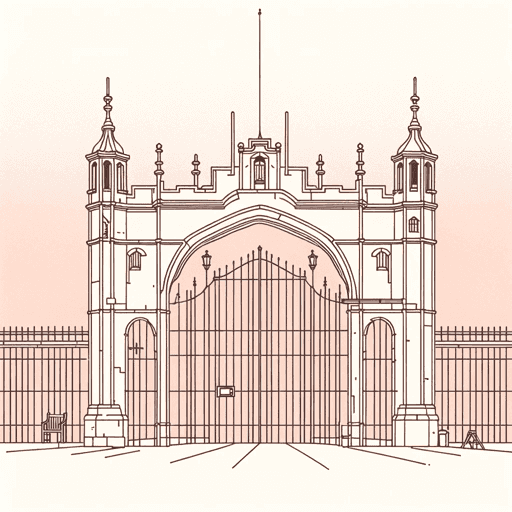
The narrator describes the Marshalsea debtors’ prison and its various failings. Prisoners from various social strata are incarcerated there until they repay their debts, which they can’t do since they are unable to work and earn money while imprisoned. However, some of the wealthier prisoners can buy extra comforts and even bring their families to live with them. Decades earlier, a nervous man named William Dorrit was arrested and he brought his pregnant wife and two children to the prison with him. William was part of a financial partnership of which he knew few details, and he expected to be out of prison in a few weeks, though he had no means of making money to repay his debts. Mrs. Dorrit gave birth to a small daughter named Amy in prison, assisted by a drunk doctor. Years pass, and prison guards (like Bob the turnkey) and prisoners alike become very fond of William and his youngest daughter Amy; they call Amy “Little Dorrit,” and they call William “the Father of the Marshalsea.” Twenty years later, Mrs. Dorrit and Bob die, and William is still in prison.
Book 1, Chapter 7 Summary: “The Child of the Marshalsea”
Bob, the prison’s turnkey, is Amy’s godfather. She is allowed to go in and out of the prison, and for as long as Bob is alive, she often asks him to explain the differences between prison and the world outside. Despite the peculiar environment of her youth, Amy grows into a kind and humble woman. At 13, she begins to work and sends her siblings Fanny and Edward to school. She also arranges for Fanny to get dancing lessons in prison and a job dancing at a theater at which their uncle, Frederick Dorrit, works. Amy also asks Bob to help her brother Edward, whom they call Tip, to find work, but after attempting various professions, Tip himself goes into debt and is also imprisoned in the Marshalsea. When she works outside the prison, Amy tries to conceal where she lives, but Clennam observes her going into the Marshalsea.
Book 1, Chapter 8 Summary: “The Lock”
Clennam sees an old man heading into the prison and asks him what the building is. The man introduces himself as Frederick Dorrit, Amy’s uncle, and Clennam tells him he is curious about Amy and would like to get to know her better. Frederick invites Clennam inside the prison, but he asks him not to tell William about Amy’s work as a seamstress; they don’t tell William anything about the world outside. In the prison, Clennam sees Amy sharing the food she got from his mother with her family. William, who is used to receiving money from those who come to visit the Father of the Marshalsea, insinuates that he expects money from Clennam, though Amy tries to silently discourage him.
Clennam gives William some money without Amy noticing. He finds Amy on his way out, and he tells her that he would like to be her friend and help her in any way he can. Amy is thankful but embarrassed and entreats Clennam to leave before he gets locked in for the night. However, Clennam is too late and ends up getting locked within the prison gates. He talks with Tip, who tells him that though Amy rents a room from the turnkey, she insists on staying in the prison with her father. Clennam finds a place to sleep but thoughts of Amy and the prisoners keep him awake. He also wonders if Amy has any connection to his mother outside of her employment, and he becomes convinced that their two families are somehow linked.
Book 1, Chapter 9 Summary: “Little Mother”
Clennam is released from prison the next morning, but he is determined to see Amy again. He sends a messenger to ask Amy to meet him at her uncle’s house. There, Clennam asks Amy if her father knows his mother—he believes that her father is the person his father had wronged. Amy says her father does not know Mrs. Clennam, and she speaks of her father proudly, which Clennam finds endearing. He asks her about her father’s creditors, and she tells him of one named Tite Barnacle. However, she tries to convince Clennam that her father does not want to leave the Marshalsea as he would not know how to live in the outside world. Clennam assures Amy that he can be a friend to her and that he wants to help her. As he walks her to the prison, they meet her friend Maggy, who calls her “Little Mother.” When Maggy was 10, she became sick, and she still looks and behaves like she is 10 despite being nearly 30. Clennam thinks that Amy seems so young and yet so mature.
Book 1, Chapter 10 Summary: “Containing the whole Science of Government”
The narrator describes the fictionalized Circumlocution Office. Its duty is to discover “the art of perceiving—HOW NOT TO DO IT” (139), something the narrator claims is a trait of every government office but one that the Circumlocution Office does best. The Barnacle family is intertwined closely with the Circumlocution Office, and Clennam goes there to find Tite Barnacle. However, when Clennam finds him and asks him about William Dorrit, Tite Barnacle sends him back to the Circumlocution Office. From there, Clennam is sent to various people and departments without receiving any information.
As he is leaving the Circumlocution Office, Clennam runs into Mr. Meagles, who is in the middle of scolding a small man named Daniel Doyce. Meagles tells Clennam that Doyce is an engineer who has brought an invention to be tested in the Circumlocution Office. The two invite Clennam to Doyce’s factory in Bleeding Heart Yard.
Book 1, Chapter 11 Summary: “Let Loose”
A man wanders the roads of France and finds an inn where he hears guests talking about a horrible man who has been released from prison in Marseilles. The man they are discussing is Rigaud, and the mysterious man who has wandered into the inn is Rigaud himself, though the people at the inn do not know it. The landlord shows him up to his shared room, and the other man sleeping there is John Baptist Cavalletto. Rigaud wakes John Baptist, who is startled to see him. Rigaud tells him that he has taken on the name Lagnier. John Baptist is planning to go to Paris and England, and Rigaud decides that they will go together. John Baptist does not like this plan and he escapes from Rigaud first thing the next morning.
Book 1, Chapters 1-11 Analysis
In this early section of Little Dorrit, Dickens introduces many of the social criticisms he will develop throughout the novel. He especially addresses the theme of Governmental and Bureaucratic Inefficiency in these first chapters. In Chapter 10, in particular, Dickens portrays the government’s style of working as a farce through his description of the Circumlocution Office. Though the narrator claims that, “How not to do it [is] the great study and object of all public departments and professional politicians” (141), the Circumlocution Office’s explicit goal is to slow down government operations and make them as inefficient as possible. Through Dickens’s portrayal of the Circumlocution Office, he criticizes the inefficacy of government processes and shows how it directly impacts its citizens. This argument extends to the Marshalsea: The prison houses people who cannot pay their debts, but because they are imprisoned, they are unable to work to pay off their debts. Dickens draws attention to the illogical nature of the punishment in this novel and in other works, including The Pickwick Papers. He shows how this senseless law puts people with even the smallest of debts in a bind, leading them to spend their entire lives in debtors’ prison.
Imprisonment in general is a motif that is introduced in this section and one that is significant throughout the novel. The novel opens by introducing two incarcerated people: Rigaud and John Baptist. Despite the great difference in their crimes, both of them are sharing a the same cell, which points to the unfairness of the legal system. This comparison becomes even more poignant when the Dorrits are introduced, especially as Dickens shows how characters like Amy and Rigaud suffer similar fates. The novel also notes more symbolic forms of imprisonment, such as Mrs. Clennam’s confinement to her home and the quarantine of the passengers on the ship in Marseilles. Through this, Dickens indicates that the human condition is characterized by a lack of true freedom.
The first few chapters of the novel also establish the importance of various settings throughout Little Dorrit. As in many of Dickens’s novels, settings often have symbolic associations. While Chapter 1 and Chapter 3 describe very different places—one describes the prison in Marseilles and the other describes the city of London—they both invoke a similar sense of dread and discomfort. Marseilles is described as “burning [...] blazing [...] [and] fervid” (7), while London is “gloomy, close, and stale” (42). Clennam, in particular, dislikes returning to the familiar house of his youth that continues to slope and crumple. Mrs. Clennam’s house stirs memories of confinement and monotony, likening it to a prison. Not unlike Clennam House, the setting of the Marshalsea also evokes feelings of confinement. There is a dichotomy to the life characters live inside and outside of its walls. As a child, Amy questions the borders of the Marshalsea, and this is a symbolic thread that she will follow throughout the novel.

Get in-depth, chapter-by-chapter summaries and analysis from our literary experts.
- Grasp challenging concepts with clear, comprehensive explanations
- Revisit key plot points and ideas without rereading the book
- Share impressive insights in classes and book clubs