Little Dorrit
61 pages • 2-hour read
Charles DickensLittle Dorrit
A modern alternative to SparkNotes and CliffsNotes, SuperSummary offers high-quality Study Guides with detailed chapter summaries and analysis of major themes, characters, and more.
Book 1, Chapters 12-23Chapter Summaries & Analyses
Book 1: “Poverty”
Book 1, Chapter 12 Summary: “Bleeding Heart Yard”
Content Warning: This section of the guide depicts sexism—in particular, dated notions about feminine propriety.
Meagles, Doyce, and Clennam go to Doyce’s factory in Bleeding Heart Yard. Clennam has heard that a friend of the Dorrits named Mr. Plornish lives here. Clennam goes to find Plornish, but only Mrs. Plornish is home and she tells him about her husband’s difficulties finding work as a plasterer. When Plornish arrives home, he is initially suspicious of Clennam but warms to him when he learns he knows Amy. Plornish is the one who helped Amy advertise that she was available for needlework, and the landlord of Bleeding Heart Yard, Mr. Casby, had referred her to Mrs. Clennam. Clennam asks Plornish to help him get Tip out of Marshalsea; Clennam says Plornish mustn’t tell Tip who paid off his debts, though Clennam plans to do so. Plornish agrees, and he tells Clennam about the Bleeding Heart Yard residents’ struggles and their cruel landlord, Mr. Casby.
Book 1, Chapter 13 Summary: “Patriarchal”
Clennam knows Christopher Casby of Bleeding Heart Yard as he was once engaged to his daughter, Flora. Casby had played a part in their separation. Clennam goes to see Casby, who tells the widowed Flora that Clennam is visiting. While he is there, a small man named Mr. Pancks—Casby’s debt collector—enters the house, and Clennam assumes that he is the brawn behind Casby’s financial operations. Clennam is surprised to find Flora changed for the worse, though Flora still seems to be interested in him. He tries to assure her that he feels no animosity toward her, but he says that their relationship is in the past.
Clennam stays for dinner and Pancks joins them, taking the liberty to tell Clennam about the treacherous people of Bleeding Heart Yard. Clennam walks back to the city with Pancks. On the way home, Clennam runs into a crowd helping a European man who had been struck by a post carriage. The man asks for water in Italian and French and Clennam, who understands these languages, assists him, helping him to the hospital. The man—who is later revealed to be John Baptist Cavalletto—only has a few fractures and Clennam leaves his card with him.
Book 1, Chapter 14 Summary: “Little Dorrit’s Party”
Amy and Maggy visit Clennam once he arrives at his lodgings. Amy tells him that Tip has been released from prison and says she wants to thank his benefactor, though she does not know who it could be. She reveals that this is the first time she has been out of the Marshalsea at night, and she has lied to her father, saying that she is going to a party. Amy is worried that Mrs. Clennam and Flintwinch know of her history and asks Clennam for advice on how to broach the subject with them.
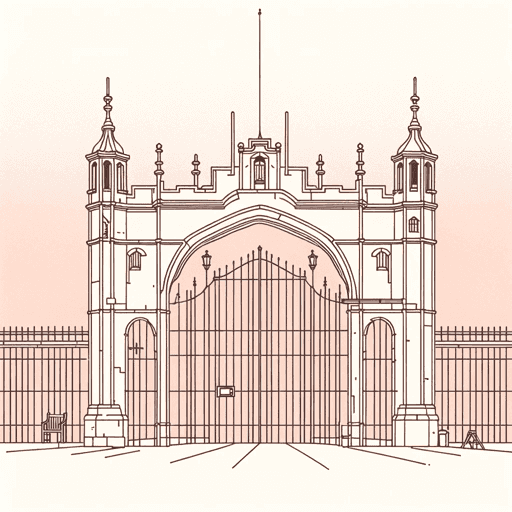
As the women head toward Maggy’s lodging, Clennam follows a few blocks behind to make sure they are safe, but he leaves before he learns that they are in fact houseless for the night. As Amy sits with Maggy in front of the prison gates, she wishes she could actually go to a party with Clennam. The two women come across many dangerous characters as they wander the streets, but they end up finding shelter for the night at a local church.
Book 1, Chapter 15 Summary: “Mrs. Flintwinch has another Dream”
Affery has a dream about an angry conversation between Mrs. Clennam and Flintwinch in which they discuss Clennam’s father in mysterious terms. They also discuss Amy, and how Mrs. Clennam intends to employ her as long as she remains quiet and industrious. Flintwinch suggests that he knows more about Amy’s living situation than Mrs. Clennam does; Mrs. Clennam, however, says she does not want to know more. She rings her bell for Affery, who is unsure if this is reality or her dream. She tells her husband about strange sounds she has been hearing in the kitchen and she suspects that ghosts are making them, and Flintwinch tries to persuade her that there are no ghosts.
Book 1, Chapter 16 Summary: “Nobody’s Weakness”
On his way to meet with the Meagles, Clennam contemplates what he wants to do with his life. He runs into Doyce, who is also going to see the Meagles, and the engineer tells him about his career and mentions that he needs a business partner. Once at the Meagles’ home, Clennam contemplates “whether he should allow himself to fall in love with Pet” (259). He decides not to, as he is twice her age and does not think Pet would love him back, though he respects the family and has tender feelings for her. Tattycoram reveals that she has recently seen Miss Wade and that she tried to convince Tattycoram to work for her. Later, before they all go to bed, Clennam tells Meagles that he is interested in becoming Doyce’s business partner.
Book 1, Chapter 17 Summary: “Nobody’s Rival”
The next day, Clennam meets a man named Henry Gowan, who he believes wants to court Pet. Gowan tells the Meagles that he has invited Clarence Barnacle—a relation of his—to dinner, and Clennam is surprised that Mr. Meagles does not object even though he does not like the Barnacles or the Circumlocution Office. Clennam thinks Gowan is foolish but affable; he sees that Pet is interested in Gowan, and Clennam tries to hide his jealousy.
Book 1, Chapter 18 Summary: “Little Dorrit’s Lover”
The son of a turnkey at Marshalsea, Young John Chivery, has fallen in love with Amy. Both families are aware of his interest in her. Young John tries several times to propose to her, but he always gets too nervous to see it through. One day, he meets her on the Iron Bridge and starts to propose to her. She asks him to stop, saying that he wrongly thinks that her family is superior to his.
Book 1, Chapter 19 Summary: “The Father of the Marshalsea in two or three Relations”
William and Frederick walk in the prison yard together, but Frederick quickly tires of this and goes home. When William returns to his quarters, he mentions that the turnkey, Chivery, was short with him, and says he is unsure why; he wants to imply that he knows Chivery’s cold manner is Amy’s fault. He tells Amy he wishes she could have seen him before he was imprisoned, and he grows increasingly distressed. She sits with him all night to comfort him, though he never asks about what he can do to comfort her.
Book 1, Chapter 20 Summary: “Moving in Society”
Little Dorrit goes to see her uncle and sister at the theater. Fanny is surprised when Amy comes backstage to meet her since society of the time considers dancers to be immoral women. Amy notices that someone has given Fanny an expensive bracelet, which Amy thinks is improper. Fanny takes Amy to the grand house of Mrs. Merdle, the pompous woman who gave her the bracelet. Unlike the Dorrits, the Merdles were not born to their fortune but gained it through business—this is something Fanny looks down upon despite her current circumstances. Mrs. Merdle tells Amy that she gave Fanny the bracelet as a bribe to stay away from her son, Edmund Sparkler, who is in love with Fanny. However, once Mrs. Merdle learned that Fanny is not interested in Sparkler, the two women became friendly. Fanny tells Amy she accepted the bracelet just to spite Mrs. Merdle, who thinks she is superior to Fanny. Amy is upset with Fanny for using Mrs. Merdle.
Book 1, Chapter 21 Summary: “Mr. Merdle’s Complaint”
The narrator describes Mr. Merdle and his great wealth but also his great speculations in risky investments. Mrs. Merdle’s only son, Sparkler, was from her first marriage, and he is described as affable but “dimwitted.” Many men of high social standing try to engage with Mr. Merdle’s business affairs or get money from him; they argue that society expects him to share his good fortune.
Book 1, Chapter 22 Summary: “A Puzzle”
As Clennam continues to visit William, William begins to like him less, thinking that he doesn’t have good instincts. Clennam becomes known around Marshalsea, and one day, Chivery the turnkey asks him to see his wife regarding Amy. At the Chiverys’ home, Clennam sees Young John dejected, and Mrs. Chivery asks for Clennam’s help to get Young John and Amy together. Clennam is surprised by this appeal, since he has never considered Amy’s love life. Mrs. Chivery says that Amy intends to work and help her family for the rest of her life, never marrying. Clennam finds Amy getting some air on the Iron Bridge, and the two of them run into Maggy who delivers letters from William and Tip, requesting to borrow money from Clennam. Amy is embarrassed by this, and Clennam agonizes over her sadness.
Book 1, Chapter 23 Summary: “Machinery in Motion”
Meagles has spoken to Doyce about making Clennam his business partner, and Doyce is interested in the prospect. Clennam buys his share in Doyce’s factory within the month and becomes well-known in Bleeding Heart Yard. Flora comes to visit him one day and continues to talk about their past despite Clennam’s protests. Flora tells him that she is considering hiring Amy, which makes Clennam happy. Casby and Pancks also arrive to wish Clennam well with his new business. After the group leaves Clennam’s office, Pancks returns and asks him what he knows about the Dorrits. Pancks promises that his intentions are good, and Clennam tells him what he knows. Clennam insists that Pancks must share anything that he learns about the Dorrits, as well.
Book 1, Chapters 12-23 Analysis
This section highlights the theme of Pride Versus Duty and shows how the two moral perspectives often interact within Little Dorrit. Several characters are markedly described as prideful and selfish, such as Mr. Casby, who cares greatly for his appearance and makes Mr. Pancks do all of his “dirty” work. The fight between Mrs. Clennam and Mr. Flintwinch in Chapter 15 also highlights both characters’ inflated sense of their own importance; though they work together, they are only motivated by selfishness and want to further their own interests. Other characters who are noted for their selflessness, like Clennam, also display a certain degree of selfishness. However, the way the narrator describes Clennam’s selfish actions—such as his jealousy of Gowan and his romantic feelings for Pet, despite knowing she would not reciprocate them—are detailed ironically. For example: “If Clennam had ever admitted the forbidden passion into his breast, this period might have been a period of real trial; under the actual circumstances, doubtless it was nothing—nothing” (407). Clennam feels hurt but strives to deny his feelings; the manner in which he tries to brush off his jealous feelings comes across as humorous since readers have more insight into his heart than he allows himself. In this way, Dickens complicates the dichotomy between selfishness and selflessness in the novel; while selfishness is worthy of mockery, so is selflessness, especially when it is dishonest. Another character who exemplifies this blurring of moral boundaries is William, who is often described as doing selfless things for selfish reasons. When walking through the prison with Frederick, he makes sure to assist his brother while they are in view of others so people can notice how benevolent and caring he is.
This sections also highlights The Complexities of Wealth and Class in Victorian England. Various families, such as the Merdles, Barnacles, Gowans, and Casbys, are far wealthier or have a higher social standing than the characters the novel foregrounds, such as the Clennams and Dorrits. However, social power is complex and is not solely determined by wealth. For instance, within the Marshalsea, the Dorrits hold social power since William was born into wealth and status. In prison, the Dorrits can still afford a nice apartment and other comforts, despite being imprisoned for a debt they cannot pay; however, other prisoners who don’t have the advantage of wealth and status starve in large holding cells. William is often offered tributes in prison by those who look up to him or pity him, and he tries to offer charity to others when he knows it will benefit his image. Characters like William and Rigaud often refer to their status as “gentlemen” before they were imprisoned, and this gives them a sense of superiority despite their circumstances.
Outside of the Marshalsea, the class system is equally complex, with certain families looking down on others based on how they obtained their wealth. “Old-money” families like the Gowans are concerned with the social status of the Meagles, who made their money in business. Yet, other “new-money” families like the Merdles thrive, but they are never fully integrated into the high society of those with titles and inherited wealth. At this time in Britain, lines between the land-owning gentry and the merchant classes were beginning to blur just slightly, and this depended on how much money someone had. Yet, certain barriers still existed within these systems, as Dickens explores in later chapters with characters like Mr. Merdle.
Enjoying this free sample?
Get in-depth, chapter-by-chapter summaries and analysis from our literary experts.
- Grasp challenging concepts with clear, comprehensive explanations
- Revisit key plot points and ideas without rereading the book
- Share impressive insights in classes and book clubs