Little Dorrit
61 pages • 2-hour read
Charles DickensLittle Dorrit
A modern alternative to SparkNotes and CliffsNotes, SuperSummary offers high-quality Study Guides with detailed chapter summaries and analysis of major themes, characters, and more.
Symbols & Motifs
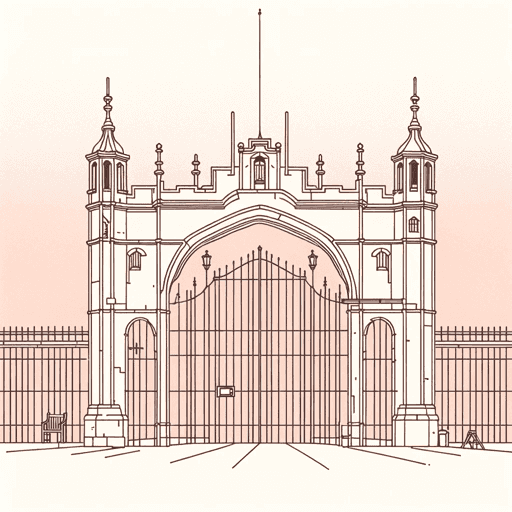
The Marshalsea
The Marshalsea debtor’s prison is an important setting in Little Dorrit, and it is a complex symbol, representing both imprisonment and freedom. At its face, it is a debtors’ prison and a bureaucratic structure, so it becomes a symbol for the inhumanity and inefficiency of the contemporary British government. The prisoners who enter it lose all hope of ever leaving since the system is rigged to ensure that they stay forever; the prison takes away their hope for freedom since they lose their ability to work and repay their debts. In this way, the Marshalsea is a dark symbol of a citizenry trapped under a cruel, illogical government.
However, the Marshalsea is also a symbol of true freedom—mental and spiritual freedom—especially as represented by Amy. The Marshalsea is specifically tied to Amy Dorrit as she is born and raised there, and this differentiates her from the rest of her family. Through her upbringing within the Marshalsea, Amy grows up free from the pressures and pretensions of London’s high society, so she remains a kind, honest person. Dickens shows that the walls of the prison in fact make Amy a freethinker, making it a site of mental and spiritual freedom. Afterward, when the Dorrits become rich and travel in Europe, Amy feels trapped by their new lifestyle of luxury and pretensions, and she longs for the simplicity and honesty of her life at the Marshalsea; significantly, the Dorrits’ freedom seems like imprisonment to her and she thinks of their lives at the Marshalsea as being truly free.
The Circumlocution Office
The Circumlocution Office is the most important symbol of Governmental and Bureaucratic Inefficiency. Throughout Little Dorrit, the fictionalized Circumlocution Office represents the Victorian British government as a whole as it claims that “How not to do it was the great study and object of all public departments and professional politicians” (141). The Circumlocution Office, however, does this best of all, as it has the explicit goal of slowing down government operations and making them as inefficient as possible. The name of the office itself—which means to use many words in place of a few—emphasizes the inefficient, pompous nature of bureaucratic work. The first family of the Circumlocution Office, the Barnacles, are satirized by Dickens and symbolize the greed that is inherent to the government’s mission. While the Barnacles’ wealth and status come from not doing anything at the Circumlocution Office, this branch of government is detrimental to those trying to make progress in their lives and those of their fellow Britons. The inefficacy of government agencies like this, along with the frivolity of the prison system, are frequent themes in Dickens’s novels. Here, the Circumlocution Office represents the corruption of the larger system.
Mrs. Clennam’s House
The Clennams’ London house—which leans to one side and looks like it might collapse at any moment—symbolizes the state of the of the Clennam family. The house represents the unsteady ground on which the family stands and the secrets they keep from one another threaten to destroy the family. The first thing Arthur Clennam notices about his mother’s house after being away for 20 years is that it looks unchanged, and this is also the first thing he notices about his severe, uncompromising mother. Yet, just like Mrs. Clennam, the house isn’t as immovable as Arthur first thinks. He notes that the house seemed to have decided “to slide down sideways; it had been propped up, however, and was leaning on some half-dozen gigantic crutches: which [...] appeared in these latter days to be no very sure reliance” (46). The crumbling structure symbolizes the precarious situation of Mrs. Clennam’s finances, as well as the Clennams’ business, which is also on shaky ground. The house also has many secrets: Affery Flintwinch believes that the house is haunted by ghosts and she continues to see mysterious figures and hear strange sounds. Though her husband insists she is just imagining these things, her predictions come to be true, at least in a symbolic sense. Though there are no actual ghosts in the Clennam House, the ghosts of the past and family secrets do haunt the family; Mrs. Clennam is unable to forget the secrets she keeps about Clennam’s birth mother. Clennam relives the confinement of his childhood when he enters the house, remembering being locked in its closets when he was young, when he was forced to adhere to his mother’s strict upbringing. Like Mrs. Clennam’s secrets, the house cannot withstand the forces of truth. When Rigaud brings the family’s secrets to light, the house collapses, paralleling Mrs. Clennam’s death at the same instant.
Enjoying this free sample?
See how recurring imagery, objects, and ideas shape the narrative.
- Explore how the author builds meaning through symbolism
- Understand what symbols & motifs represent in the text
- Connect recurring ideas to themes, characters, and events