Little Stranger
50 pages • 1-hour read
Leigh RiversLittle Stranger
A modern alternative to SparkNotes and CliffsNotes, SuperSummary offers high-quality Study Guides with detailed chapter summaries and analysis of major themes, characters, and more.
Symbols & Motifs
Olivia’s Hair
Content Warning: This section of the guide includes discussion of sexual violence, child abuse, and physical abuse.
From their early days as adopted siblings, Malachi likes to smell Olivia’s hair, which he frequently notes as smelling of strawberries due to her shampoo. Over the years, he becomes fixated on this shampoo and grows angry when Olivia tries to change her shampoo choice; when she does so, he intrusively replaces it with the strawberry shampoo he prefers.
Malachi’s fixation on Olivia’s shampoo and smelling it in her hair is a motif that draws a line from their comparatively innocent childhood interactions to their taboo adolescent and adult relations. While seeking sensory comfort from a new adoptive sibling as a child does not have clear sexual implications, Malachi continuing to smell Olivia’s hair after the advent of their sexual relationship supports his claim that he has felt an intense, possessive connection to Olivia from the moment they met. Though he does not explicitly state that this instantaneous connection was sexual when they were children, he implies that his sexual desire for her is an extension of this connection, which he presents as being so all-consuming that it transgresses the division of their sibling relationship.
When Malachi sniffs Olivia’s hair, it stands as an extension of his characterization that Olivia is not most accurately defined as “his sister” or his sexual partner but merely, as he repeatedly asserts, as “his.” This act represents his assertion that both his non-sexual and his sexual acts toward her are part of this all-encompassing relationship.
Spiders
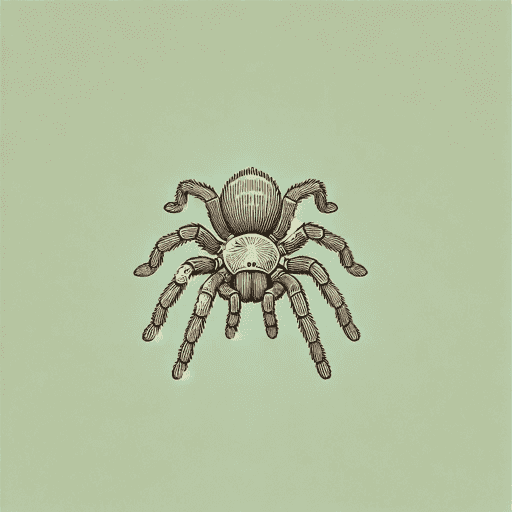
Spiders are a motif throughout the novel that comes to represent important elements of both characters’ development. Over the years depicted in Little Stranger, Malachi has three pet tarantulas. He has the first as a child, before his adoption by the Vizes. During this time, while he lives with a neglectful mother, the pet spider is his closest associate. When he is taken from his birth mother’s care by child protective services, his spider is killed, something Malachi considers an act of senseless violence. He owns his second pet spider during his time living with the Vizes; after he attacks Jamieson, this spider, too, is killed. The third spider he purchases after his incarceration.
Malachi puts this third spider on Olivia’s body while he has her chained up in the farmhouse basement after he abducts her. Olivia is terrified of spiders, and Malachi references that this form of terrorizing Olivia is for his own benefit, not because she finds sexual pleasure in this form of fear—as she does in other forms of fear, such as being pursued in the corn maze. This knowledge does not diminish his sexual pleasure but rather heightens it.
While the novel supports Malachi’s confidence that most of the sexual violence that he commits against Olivia aligns with her kink preferences and desires, he puts the spider on her knowing that this will disgust her. When Olivia discovers Malachi’s identity, she does not protest the kidnapping, sexual violence, or physical pain, but she does protest that he put a spider on her. Olivia’s lack of objection to other forms of violence supports the novel’s framing of Malachi’s violence as “dub-con” rather than non-romanticized sexual violence; it suggests that Malachi is right that she truly does desire the things that he has done to her. By protesting the spider, she shows that she is not afraid to voice complaints but rather shows that this is her primary objection. Moreover, Malachi’s lack of remorse about putting the spider on her body anyway reasserts his status as a dark antihero who does as he pleases by reminding audiences that he is not exclusively performing taboo or violent sexual acts for Olivia’s benefit.
Malachi’s Voice
Malachi’s voice and his use of it are a motif throughout the novel that illustrates his growth and maturation as he learns to deal with his issues surrounding control. Throughout most of Little Stranger, Malachi does not speak, preferring instead to use sign language to communicate. He emphasizes that this is due to psychological causes, not physiological ones. In childhood, Malachi uses his selective mutism as a defense mechanism against the uncontrollable circumstances of his childhood, in which he is neglected and abused by his birth mother and her associates. Choosing not to speak becomes one of the few things that young Malachi can control; keeping silent allows him to feel a sense of agency.
After Malachi is adopted by the Vizes, his emotions around using his voice become more complicated. Though he feels close to Olivia and wishes to express this closeness by speaking orally, he feels anxiety about his lack of practice, which leads him to struggle to pronounce words or use an even tone. In the second half of the novel, he uses oral speech to obscure his identity, which lets him feel safe practicing, as it frees him from judgment. Ultimately, his choice to put in the work to re-learn to use his voice represents how important Olivia is to him and parallels his process of forgiving her for speaking against him at trial.

Unlock the meaning behind every key symbol & motif
See how recurring imagery, objects, and ideas shape the narrative.
- Explore how the author builds meaning through symbolism
- Understand what symbols & motifs represent in the text
- Connect recurring ideas to themes, characters, and events